Barometer of Truth

Denial as Default

Just because something doesn’t make sense to me doesn’t mean it isn’t true.

Not at all! Depend on it: God keeps his word even when the whole world is lying through its teeth. Romans 3:4

For most of my life, before I joined recovery and started to actively work through the steps, I had inadvertently made myself the barometer for what was true. If something made sense to me, if it lined up with what I already knew and believed, then I would accept it. If it didn’t, I questioned it and usually found some reason to reject it. I thought I was being wise and using discernment. I was really just being arrogant and close-minded. I was relying on myself to determine truth.

Growing up in an alcoholic family, I learned that I couldn’t trust what others said. I had to determine for myself what was true. People I trusted often misspoke, made things up or simply lied, and there never seemed to be any consequences for it either. That just didn’t seem right to me. How could I ever trust someone who lied all the time? So, I learned to trust my own judgment. The problem was, I was still a child when I developed this way of determining what was true. I had limited knowledge, limited experience, and no healthy model to follow. I had to come up with my own way of figuring things out, and that became the foundation for how I judged everything. If something didn’t align with my knowledge, experience, and beliefs, I couldn’t accept it. I would reject it outright. Without realizing it, I had become the barometer for truth.

That contributed to me remaining in denial for so long. There were things about myself, the way I behaved, and what others said about me that I inherently knew were true. I wanted to change, I just didn’t know how to, so I refused to accept them as truth. If I admitted they were true then that meant I had to do something about them. But what? Instead, I told myself that was just their opinion. So denial became my default. Even though I would vehemently deny I was in denial. But the simple truth was I didn’t know how to fix it. Pretending it isn’t true and secretly hoping it would change on its own seemed like a reasonable option. That way I wouldn’t go crazy. The irony is, I had insane thinking. I just didn’t know it yet.

Working through the steps helped me with that, but honestly, “helped me” is euphemistic. Working the steps forced me to confront the truth, especially the truth about myself. With the help of my sponsor, I began to understand that I didn’t have to know how to fix something before admitting that it was true. I learned to accept reality, own my part, and trust God to show me what to do with it.

I don’t have to understand something before accepting that it could be true. I could be wrong. I could misunderstand something, which is very often the case. There are many things I don’t know, and that’s okay. My knowledge and experience are no longer the determining factor for what I am willing to accept. Before recovery, if something didn’t make sense to me, I rejected it. Today I am willing to consider that the problem wasn’t what was true. The problem was my way of thinking. I am not the barometer of truth anymore. God is. And that is the gift of recovery for me.

Prayer

God, help me to keep trusting You, for You are always truthful. Teach me to accept what is true about me, even when it’s uncomfortable and I don’t like what I see. Help me to change my thinking to become more like You. Amen.

Why So Much?

Taking a Closer Look

I’m realizing that I really do find what I’m looking for.

Let us look closely at our ways and examine them and then return to the LORD. Lamentations 3:40

The other day I was wondering why I always seem to have so much material to write about recovery. Almost every day I discover another lesson, another character defect, another attitude that God wants to change in me. My first thought wasn’t very encouraging. Maybe I’m still more messed up than I realize. Maybe my life is still full of turmoil. Why do I always seem to have so much material? I paused and meditated on it for a little while. I was surprised by the answer. It was pretty simple: Because I’m looking for it. At first that seemed obvious. I look for things in my everyday life that might become object lessons. But I realized there was something else going on. In my heart, I am genuinely looking for ways I can improve myself.

When I look back at the situations I’ve written about, most of them aren’t current trauma or turmoil. They’re ordinary things that happen in my everyday life. A conversation, a mistake, a disappointment, somebody’s reaction, or my own. But sometimes those ordinary situations trigger thoughts and emotions connected to trauma or turmoil from my past. Working my recovery program has helped me connect the two and recognize the cause and effect. Instead of beating myself up for what I’m feeling or how I’m thinking, I ask, Why am I feeling this way? If I can connect it to a character defect, then I surrender it to God and ask for His help. That helps me let it go. I find I’m making more discoveries and more adjustments in the moment. I don’t make as many of the same mistakes as I used to. And just as important, I don’t owe as many amends either.

It’s like I’ve developed a radar that detects things I never looked for before. That radar calls my attention to something while I still have an opportunity to address it, sometimes before it ever becomes a problem. I can keep the focus on me and remember that I’m the one who needs to change me. If I don’t like the way I’m feeling, I’m the one who needs to change my emotions. If my thinking is taking me somewhere I don’t want to go, I’m the one who needs to change the way I think. That’s not always as easy to do as it is to say, but the process itself is pretty simple. I look honestly at myself. I take an inventory. I look for my part. I admit my part. I own my part. Then I ask God to show me how to change.

God never lets me down. He always comes through with His part. And if I’m honest, most of the time there is already something inside me urging me toward what I need to do, but I sometimes suppress it or resist it. When I humble myself, become willing, and make the change, other things begin to fall into place. My emotions change. My thoughts become calm. I find peace and resolve where there might once have been chaos. Maybe I have so much to write about recovery because I’m working my recovery program. I’m looking for opportunities to grow, and because I’m looking for them, I’m finding them. That’s the gift of recovery for me.

Reflection
Am I looking for opportunities to practice recovery in my everyday life?

A Day of Discovery

I brought home a prize from the county fair. Discovering my wants mattered too.

Take delight in the LORD, and He will give you your heart’s desires. Psalm 37:4

The other day I was reflecting on my early days of recovery when one memory immediately came to mind. It was just a few months into my recovery journey. I saw the promo for the county fair and I wanted to go, so I decided to go, even if it meant going by myself. I remember driving there and sitting in my car after I parked, wondering if I should just leave and go back home. Before recovery, I never would have considered doing something like this. It wasn’t because I felt lonely or embarrassed. This was something I had chosen to do on purpose. It felt like one of those assignments that my sponsor would always give me. The only difference was this one I was giving myself. I was wondering if I could really do this recovery stuff. Could I really build a healthy life making my own right decisions?

As I walked through the fairgrounds, I meandered and drifted. I wasn’t in a hurry and I had no plan or agenda. I went wherever I wanted to go. I stopped at the exhibits that interested me. I stopped and listened to a band performing, after a few songs I moved on, even though they were still performing. In the past I would have stayed and listened to the whole set before moving on, even though I wanted to leave. I would have been concerned about what others might think about me for leaving prematurely. Not this time. Those may seem like ordinary decisions to some, but they weren’t ordinary for me. Growing up, I never got the manual on what was normal and ordinary. I was forging my own path. That day I was discovering what I liked and wanted. Then I came across a demonstration for a set of cookware. I was impressed with the presentation and quality of the product. I really wanted it, but immediately I started trying to justify why I should buy it. I remembered reading something in my recovery devotional that morning that encouraged me to do something for myself today. So I bought it.

At the time buying that cookware became a symbolic action for me. The cookware was very nice, but it was merely a representation of a day of discovery. I discovered what I liked and wanted. I gave myself permission to pursue it. The greatest gift I received that day was realizing that I could do something for myself simply because I wanted to. There was nothing wrong with thinking or feeling that way either. In fact, I learned it was actually healthy. I could make my own right decisions. Over time, as I continued working through the steps I felt empowered and confident that I could begin to trust my own decisions. I was no longer a victim worried about what other people thought of me, or even what I imagined they thought of me. I finally had permission to discover that my wants mattered and that acting on healthy wants wasn’t selfish at all. It was freeing.

Reflection

What is something I could do for myself today, just because I want to?

Course Correction

Back to Basics

It’s easy for me to recognize when something is obviously wrong. It’s much harder to recognize the small changes that quietly take me off course.

This is why it is so crucial that we be all the more engaged and attentive to the truths that we have heard, so that we do not drift off course. Hebrews 2:1

I haven’t completed and shared a new devotional in a couple weeks. That bothered me because sharing what I learn has become an important part of my recovery. Life was still happening and I was till having opportunities to practice the principles of recovery every single day. Unfortunately, I wasn’t having the same success. That should have been a clue for me right there. But, no I “know stuff”. And every time I sat down at my computer to write, I just didn’t have it. I felt empty. At first I thought maybe I had nothing new or authentic to share. I questioned if I should even be writing at all. I even wondered if I felt like a hypocrite because I had been missing some of my regular recovery meetings. So I did what I have learned to do in recovery when I don’t understand what’s going on inside me. I started writing about it.

I found it ironic and a bit humorous that while not being able to write, I decided to write as a solution. I began writing about why I felt I couldn’t write a devotional. I examined my motives. Once I started, I was able to write quite extensively. That’s when it dawned on me. My problem wasn’t not being able to write. I was writing. But not being able to share a devotional was a warning sign for me, signaling something else was wrong. What emerged from my inventory was that my routines and disciplines had shifted. I had taken on a second job that required me to work evenings. My life and my schedule had changed dramatically, and although I was still praying, reading, and spending time with God, it wasn’t with the same consistency or depth. I had stopped attending my regular meetings and, without realizing it, I had stopped journaling. I just kept expecting the same growth and results in my recovery although everything else had changed. My life had changed, but my recovery plan hadn’t adjusted with it. In fact, I didn’t even have a plan.

Every change I make, whether it is a conscious decision or simply a choice by default, has an impact on my life and produces an outcome. Working through the steps has taught me to pay attention to those outcomes because they often reveal patterns I haven’t yet recognized. I need to pay attention to those results whether they are welcomed and desired or unwanted. Not being able to write wasn’t my problem. It was the result of something else happening, or more accurately not happening. For me, journaling, inventory, prayer, meetings, and God’s Word are the foundation that keeps me grounded and spiritually healthy. If I were to completely neglect my recovery and conscious contact with God, I would recognize it almost immediately because the effects are obvious and I start acting sideways. But this was different. My recovery didn’t stop; it gradually diminished as I got busier and I didn’t even notice. I just felt a little off. I started to think differently. I had subtle changes in my behavior. When I seem to be acting or thinking differently, I need to resist the temptation to ignore it. I need to ask why.

I knew I needed to course correct and that meant getting back to the basics. Since my schedule had changed, I needed to implement changes to my recovery disciplines too. For me that means attending online meetings. It means getting up earlier to read and have my devotional time and making time to journal before bed. I can even use my lunch break time to listen to recovery speakers. The specific solution isn’t as important as recognizing when my spiritual tank is running low and responding to it. This time it took me a few weeks to discover what was going on. That is a tremendous improvement over the years I once spent living in denial. That is growth. Sometimes I don’t realize how much something has been helping me until I stop doing it.

Prayer

Lord, help me recognize when I begin to drift. Give me the humility to ask why, the wisdom to make course corrections, and the willingness to stay faithful to the things that keep me close to You. Amen.

Suddenly Important

Asking Myself Why

The gift isn’t that I never get hurt. The gift is that I recognize it sooner and ask myself, “Why did it bother me?”

We are all in love with our own opinions, convinced they’re correct. But the Lord is in the midst of us, testing and probing our every motive. Proverbs 16:2

The other day I logged on to Facebook and noticed that someone I know and care about deeply had made several comments on the posts of a few mutual friends. Almost immediately, a thought crept into my mind. “Why don’t they ever comment on my posts? I write all the time.” I began entertaining that thought and having a full two-way conversation in my head. Before long, I felt hurt and offended. I found myself replaying old hurts and creating stories in my head. As I sat there thinking about it, I suddenly became aware that I was going down a rabbit hole. I knew where those thoughts would take me if I let them go unchecked. It was an old familiar place I had worked hard to leave behind. Then I asked myself, why was this person’s approval suddenly so important to me? It wasn’t important five minutes ago. It only became important after I saw their comments on someone else’s post.

One of the gifts I have received from working a 12 Step recovery program is learning to pay attention to what is happening inside of me. Instead of focusing on the other person, I have learned to ask myself why I am feeling or reacting the way I am. When I looked honestly at what was going on, I realized I was seeking approval. And I was seeking it from someone who either couldn’t or wouldn’t give it to me. Somehow, I had attached my sense of worth to receiving that approval. When I can recognize that, things begin to change. I stop focusing on what the other person is doing and start looking at what is happening inside of me. The issue is no longer their comments, their behavior, or their choices. The issue is my hurt feelings, my need for approval, and the old wound that has been triggered. What I was thinking and feeling was all about me being affected by my old wounds. It wasn’t about what the other person did or didn’t do. It’s my responsibility to deal with what is happening inside of me. I am not a victim. I have choices.

I once heard someone say that I cannot stop birds from flying over my head, but I can stop them from building a nest in my hair. The same is true of thoughts and feelings. I cannot always stop them from showing up, but I do not have to let them take up permanent residence. I have a choice about what I do with them once they arrive. Today, when I feel hurt, I try not to just push it away or pretend it’s not there. Instead, I acknowledge it, feel it, and ask myself why it is there. If I discover that a character defect, fear, expectation, or old wound has been uncovered, I don’t ignore it. I embrace it and try to find out what I can learn about myself and how I can grow. It is not that I never get hurt anymore. I am now able to recognize it sooner. I get to my part quicker. The hurt does not hurt as much as it once did, and sometimes it does not hurt at all. I am learning that most people are not trying to hurt me. They are simply living their lives, and sometimes I get hurt by their actions. When that happens, I now have a process. I write about it and take inventory. This helps me change my perspective. I ask God for help and surrender outcomes to Him. I am no longer responsible for the universe, He is. When I can do that, I sense His presence and His peace soon follows. That is the gift of recovery for me.

Reflection

Has something recently caused an emotional reaction you weren’t expecting? What might be underneath that reaction?

Rethinking Love

What Love Looks Like

Just because something is true doesn’t mean it needs to be said. Sometimes love listens quietly as someone tells their story.

Knowledge puffs up while love builds up. 1 Corinthians 8:1

Recently I was reading through Recovery: A Guide for Adult Children of Alcoholics. One section that jumped out to me was talking about not beating ourselves up for the ways we learned to love and relate to other people. It wasn’t offering an excuse for unhealthy behavior. It was offering hope. It said that if I learned unhealthy behaviors as a child, I could also learn to replace those with healthy ones. As I started thinking about that, it led me to ask myself a few questions. Where did I learn how to love? How do I know what love looks like? How will I know if I am giving love and receiving love?

As I explored those questions, I finally started to see where my behaviors came from. For years I even dismissed my behaviors by saying, “That’s just the way I am.” Somehow, in my mind, that justified being dismissive, passive-aggressive, condescending, sarcastic, or critical. The confusing thing is that inwardly I really wanted to be caring, compassionate, and loving. Many times I honestly thought I was helping people. I would tell them what they needed to do, explain how they could fix their situation, or quote a scripture verse that applied to what they were going through. I’m not saying the advice was always wrong or that the scripture didn’t apply. But just because something is true doesn’t mean the way I delivered it was compassionate, or that it needed to be said at all. I was sharing from knowledge and not from experience. Then a Bible verse came to mind. Knowledge puffs up, but love builds up. That stopped me. I realized that I wasn’t always sharing because people needed to hear what I had to say. Sometimes I was sharing because it made me feel important to have the answer. It made me feel loved.

Looking back, I don’t think my parents were trying to hurt me. I believe they loved me and wanted what was best for me. They did the best they knew how. They had their own struggles, and I cannot tell their story, but they were probably just passing on many of the things they learned growing up too. What I can say though, is that much of the attention I received as a child was critical, corrective, and often punitive. Like all human beings, I craved love. I began to associate correction, the attention I received, with love. I learned that pointing out what was wrong with people was how you showed that you cared. Because that was the kind of attention I received most often, I began to interpret correction itself as love. Since that was what I experienced, it became how I practiced love.

Today I am glad that I am learning how to love in healthy ways. By practicing the principles of recovery I can accept that love looks different than I thought it did. Love doesn’t always have all the answers. Love doesn’t always correct others. Love doesn’t always point out what is wrong. Sometimes love just accepts people where they are. Sometimes love simply listens quietly as someone tells their story. I still sense myself wanting to correct others or give them advice. The difference is that now I see it. I have a choice. Every day gives me another opportunity to practice a healthier way of loving others. And when I do that I find that I am often the recipient of that same kind of love and acceptance. And that is the greatest gift recovery has ever given me.

Prayer

Father, thank You for not giving up on me. Thank You for teaching me how to love in healthier ways. Thank You for helping me see things I could not see before. Slow me down so I can listen and accept people where they are. Help me to show compassion instead of criticism. Thank You for the love and acceptance I have received from You and in the rooms of recovery. Amen.

Right But Still Wrong

Delivery Matters

I may not owe amends for the message, but I do for the delivery.

If you’re angry, don’t let anger control you or be fuel for revenge, not for even a day.
Ephesians 4:26

Have you ever said something you knew was true, believed was right, and meant with all your heart, but said it in a way that was not representative of the person you are trying to be? I have. In fact, I just did two weeks ago while coaching my daughter’s softball team.

For the playoffs, the league made some last-minute rule changes that I strongly disagreed with. In my mind, the decisions were unfair to the girls who had worked hard and played all season long. As the games unfolded, I became more and more frustrated because I felt like the rules kept changing and the decisions being made were affecting the outcome of the games. During the championship game I confronted the league president publicly and emotionally. And honestly, I still believe the reasons for feeling the way I did are valid.

The surprising part is that we ended up coasting through the playoffs and winning the championship game easily. It should have been a great night of celebration for our team. But instead, I was awake for hours replaying the situation over and over in my mind. I have learned through recovery that when I start spinning in my mind and cannot let something go emotionally, there is usually something deeper going on inside of me. As I prayed and thought about it more, I realized I felt attacked. I felt like I was being ganged up on and dismissed. That is when I saw that my character defect of feeling “not good enough” had been triggered. Before recovery, I never would have stopped long enough to examine that. I only would have focused on proving I was right.

One of the gifts recovery has given me is the ability to honestly look at my reactions instead of only defending them. I still believe in standing up for what is right, but not at the expense of hurting others. I have learned to look at my actions and not just my intentions. I am responsible for how I deliver the message, not just the content. I may not owe amends for what I said or why I said it, but I do owe one for the way I said it. That is something I never would have seen before recovery.

I saw the league president the following weekend at a tournament. I walked over to her, lowered my sunglasses, looked her in the eyes and humbly apologized for my tone and for raising my voice. I apologized for being disrespectful and putting her on the spot publicly. She said “ok”. I have no idea what that may mean. But I know I felt better and that weight was lifted off of my shoulders. The thing I couldn’t stop replaying in my mind finally let go from that moment on. That is the gift of recovery for me.

Reflection
Have there been times when you were so focused on being right that you never stopped to look at how you were delivering the message?

Accepting Life As It Is

Surrendering Control

I’m learning that peace is not found in controlling everything around me. It is found in learning to trust God in the uncertainty.

Father, if you are willing, take this cup away from me. However, not my will but your will be done. Matthew 26:39

I have two grown children whom I love very much. Unfortunately, they both live in another state, so I don’t get to see them as often as I would like. We talk a couple times a week, usually through text messages, and most of the time I am the one who initiates the conversation. Before recovery, that would have really bothered me. My thinking was very all or nothing. “If they won’t call me, then I won’t call them.” Or, “Why do I always have to be the one reaching out?” But through recovery I am learning to accept relationships as they are instead of demanding they happen on my terms. I am learning to stop rejecting people simply because things are not happening the way I want them to happen. That is what my sponsor says is learning to live in the gray. It is somewhere in between the all or nothing thinking that used to consume me.

Before recovery, I saw almost everything as black and white. Things were either right or wrong. Good or bad. Safe or unsafe. I liked certainty because certainty felt safe to me. If something fit neatly into a category, then I knew how to respond to it. I knew how to control it. Or at least I could plan and be ready in case things didn’t go as planned. It made me feel safe. But life rarely works that way. People are complicated. Relationships are complicated. Emotions are complicated. Things don’t always go as planned. Doing a fearless moral inventory has forced me to start facing the uncomfortable truth that much of life happens somewhere in the gray.

The gray makes me uncomfortable because I don’t know what will happen. I don’t know how to protect myself. I don’t know how to be prepared for or avoid potentially being hurt. Accepting the gray requires trust. It requires patience. It requires me to accept uncertainty instead of rushing to fix it or force it into a category that makes me feel better. Which I now do, although usually reluctantly. One of the things I have discovered through step work with my sponsor is that many times my attempts to “help” or “fix” people were not as selfless as I made them out to be. A lot of it was driven by my own need to feel in control. If I could manipulate and control the situation, calm the conflict, or get the outcome I wanted, it gave me relief. What I have learned since is that my need for control was really giving a dopamine release in my brain. That release temporarily soothed my anxiety and discomfort. It made me feel better, so I sought to feel better again. It was my addiction. I was trying to feel better by managing everyone and everything around me. That realization was hard for me to admit, but by staying honest with myself in my recovery I am learning to face my motives realistically instead of staying in denial about them.

Working through the steps has helped me realize that emotional sobriety or behavioral change is not found in controlling everything around me. It is found in learning how to live honestly, peacefully, and faithfully even when things feel uncertain. I still do not like the gray. I do not like not knowing what is going to happen. I do not like feeling unprepared or out of control. But I am learning how to accept being uncomfortable instead of trying to escape it. I am learning that as I relinquish control God is present in the gray ready to help. And strangely enough, by accepting the gray areas of life, I can now see and appreciate the vibrant areas of life that are full of color, depth and complexity. And that is the gift of recovery for me.

Prayer

Father, help me to stop fighting reality and demanding that life happen on my terms. Teach me to surrender the gray areas of my life to You. Help me to stop trying to control everything around me. Help me to trust You when I feel uncertain, uncomfortable, or afraid. Amen.

Learning How to Be There

Presence Over Control

I’m learning through my recovery that sometimes the most loving thing I can do is to stop trying to fix people and just be there with them.

Be happy with those who are happy. Be sad with those who are sad. Romans 12:15

I’ve heard it said that recovery is a selfish program. And honestly, it is. In the rooms of recovery I have learned that I need to start taking care of myself. Really taking care of myself. My whole self. Taking responsibility for my actions and facing my own issues. I had to learn that I needed to put on my own oxygen mask before trying to help everyone else with theirs. Before recovery, I was always trying to help everyone else get their oxygen while I was suffocating myself and could not breathe. I rarely focused on facing my own needs or healing. I focused almost entirely on what everybody else wanted, needed, or expected from me. Or at least what I thought they did. But I am learning that if I don’t take care of myself emotionally, mentally, and spiritually, I won’t have anything healthy to offer anybody else.

Somewhere along the way, I got part of that mixed up. My wife recently had surgery, and leading up to it, I wasn’t as supportive as I could have been. I meant to be and wanted to be, but I reverted to old behavior. I kept focusing on trying to help her “not be afraid.” I wanted to fix the fear she was feeling instead of simply recognizing that fear before surgery is normal. It’s human. Instead of just sitting with her in it, reassuring her, and being present, I kept trying to move her away from what she was feeling.

In recovery I am learning that sometimes people just need support, reassurance, and comfort. Sometimes they just need someone to be there. Sometimes they may need help that I actually have the ability and capacity to give. I have learned to stop trying to fix everybody else. If I want to fix anyone, I need to focus on fixing me. I can help without fixing or being in control. I can help even if things are not done my way. I can help by just being there and letting people be who they are. I am learning, slowly, that it is healthy to still care deeply about others even when I am unsure of outcomes. And that by doing that, I am taking care of myself too.

I am grateful and thankful for my recovery program and the tools I have learned. Fortunately, by using them, I was able to correct my behavior and do just that on the day of the surgery. I was supportive. I acknowledged the fear. We prayed about it together. I assured her she was not alone in this, not just with my words but with my presence. I was just there with her, and I let her guide the emotions and conversation instead of trying to control or redirect them. I truly felt supportive, like I was showing real compassion and care. I was showing her that she was important. In short, I was showing her love.

Working through the steps of recovery, I am learning that taking care of myself is important. But healthy recovery is not becoming emotionally distant from the people I love. Sometimes the people I love are afraid. Sometimes they are hurting. Sometimes they don’t need me to fix their emotions or talk them out of them. Sometimes they just need me to sit with them, care about what they’re feeling, and let them know they are not alone. That’s something I am learning a little more every day. And that is the gift of recovery for me.

Prayer

God, thank You for teaching me how to care for myself in healthy ways without becoming distant from the people I love. Help me to stop trying to control or fix everyone around me. Teach me how to be there and listen. Amen.

At Peace With Myself

I spent years trying to escape my thoughts. Recovery taught me how to face them honestly


You will keep him in perfect peace, whose mind is stayed on You, because he trusts in You. Isaiah 26:3

The topic at a meeting I attended recently was simple: “What do I feel when I’m alone?” As I listened to others share and thought about the question, I realized that I had spent most of my life trying not to answer that question. I stayed busy all the time, always doing something. Working, studying, reading, watching TV, playing video games, just going somewhere, anywhere. I consciously kept my mind busy and active so that I didn’t have to be alone with my thoughts and deal with my feelings. I didn’t have to think about how I felt. I didn’t have to feel “those” feelings. Because if ever I was alone and quiet, then the reality of what was really happening in my life would slap me in the face. And I just couldn’t face it. Really, I didn’t know how. My best thinking came up with this idea. I would literally exhaust myself on purpose until my body finally gave out and I fell asleep doing whatever it was I was still doing. Staying up as long as I could, until the wee hours of the morning, until I could no longer physically keep my eyes open or stay awake any longer. Then when I came to, usually around two or three in the morning, I would crawl myself into bed. It was the only way I could sleep. Because if I went to bed at a normal time, I would lay there alone with my thoughts. I would never fall asleep. My thoughts and feelings would haunt me, because I had no solution and no answer. I could find no way of escape. I never just sat quietly alone with my own thoughts. It was overwhelming. So, I avoided being alone. I was afraid. Scared. Hopeless.

I was trapped inside my own thoughts and emotions. This was a lie that I didn’t realize I was living. I thought by avoiding those thoughts and feelings, I was protecting myself, but what I was really doing was keeping myself trapped. Stuck in a world of denial and escapism. I just kept kicking that can down the road. Hoping that one day I would suddenly wake up and be all better. One day turned into years, decades and a lifetime of frustration and resentment. Until one day things did finally change, just not how I expected. There was nothing magical about it though. The pain finally got bad enough that I did something different. I went to a recovery meeting. I heard others share their experiences and in their stories it sounded like they were talking about me and how I felt. I felt like I was no longer alone. There was someone else who understood. Hope began to appear inside of me.

One of the things that helped me a lot in those early days was a simple little bookmark that I read every single day. It said: “Just for today I will have a quiet half hour all by myself and relax. During this half hour, I will try to get a better perspective of my life.” In the beginning, spending 30 minutes quiet and alone was a daunting task. I couldn’t do it. But I could do 5 minutes, then 10, then 20 and eventually 30. I grew to where sometimes I could even do more. Such a gift. Little by little, recovery taught me how to sit still without running from my thoughts and my feelings. I was really running from myself. Today, I cherish my quiet times and I actually look forward to them. They are no longer filled with fear and torment. They have become a place of solace for me. It’s where I get centered. It’s where I find peace, clarity, and perspective. Recovery taught me that being alone and being lonely are not the same thing. And that is the gift of recovery for me.

Prayer
Father, thank You that I no longer have to run from my thoughts and feelings. Thank You for the peace and freedom You have brought into my life through recovery. Help me continue to remain honest with myself and with You. Thank You for helping me feel safe. Amen.

My New Normal

Grateful For Peace

Recovery didn’t just change my habits. It changed what normal feels like.

You, Lord, give true peace to those who depend on You, because they trust You. Isaiah 26:3

When I sat down to write today’s devotional, I was completely stumped. I had nothing. No big realization. No powerful moment. No dramatic story. I started thinking back over my day, trying to figure out what I could possibly write about. But honestly, the day was uneventful. It was just a normal, calm, and peaceful day. Then I sensed that still small voice rising up inside me. I knew that was God revealing to me that most days these days are normal just like this one. And that’s life now. I was so encouraged by that.

I paused and pondered that thought for a minute. My life today is mostly made up of normal days. Quiet days. Peaceful days. Uneventful days. And as I reflected on that, I was so very grateful. A small smile crept across my face. What I now call normal used to seem impossible for me to ever achieve before. It always seemed unattainable. Like a proverbial dangling carrot out in front of me that I could never reach no matter how hard I tried. But somewhere along the way, a real actual change took place in my thinking and in my life.

Before recovery, my normal days were filled with chaos, anger, frustration, disappointment, confusion, and sadness. There was always some kind of crisis, conflict, or emotional exhaustion happening in my life. The peace I occasionally felt was temporary and fleeting. It never lasted. Calmness was unfamiliar and felt very uncomfortable because I was so used to living in survival mode. If my adrenaline wasn’t maxed out I felt like something was wrong. But my recovery program slowly changed all of that. By working the steps with my sponsor, listening to others, applying the principles, and following the recommended solution, my life began to change little by little.

Today, I have a new normal. My new normal is peace. My new normal is calm. My new normal is stability. Not every day is perfect by any means. Life still has its challenges, and some days bring bad news that try to steal my peace. But I have learned that it’s not always what happens that determines whether I keep my peace, but how I respond to it. Most days, though, are no longer filled with chaos and emotional turmoil. They are just normal days. And I am deeply grateful for that. That is the gift of recovery for me.

Prayer

Father, thank You for the peace You have brought into my life. Thank You that my life is no longer filled with constant chaos and confusion. Help me to continue trusting You and responding to life in healthy ways. Teach me to protect the peace You have given me and not take these normal peaceful days for granted. Amen.

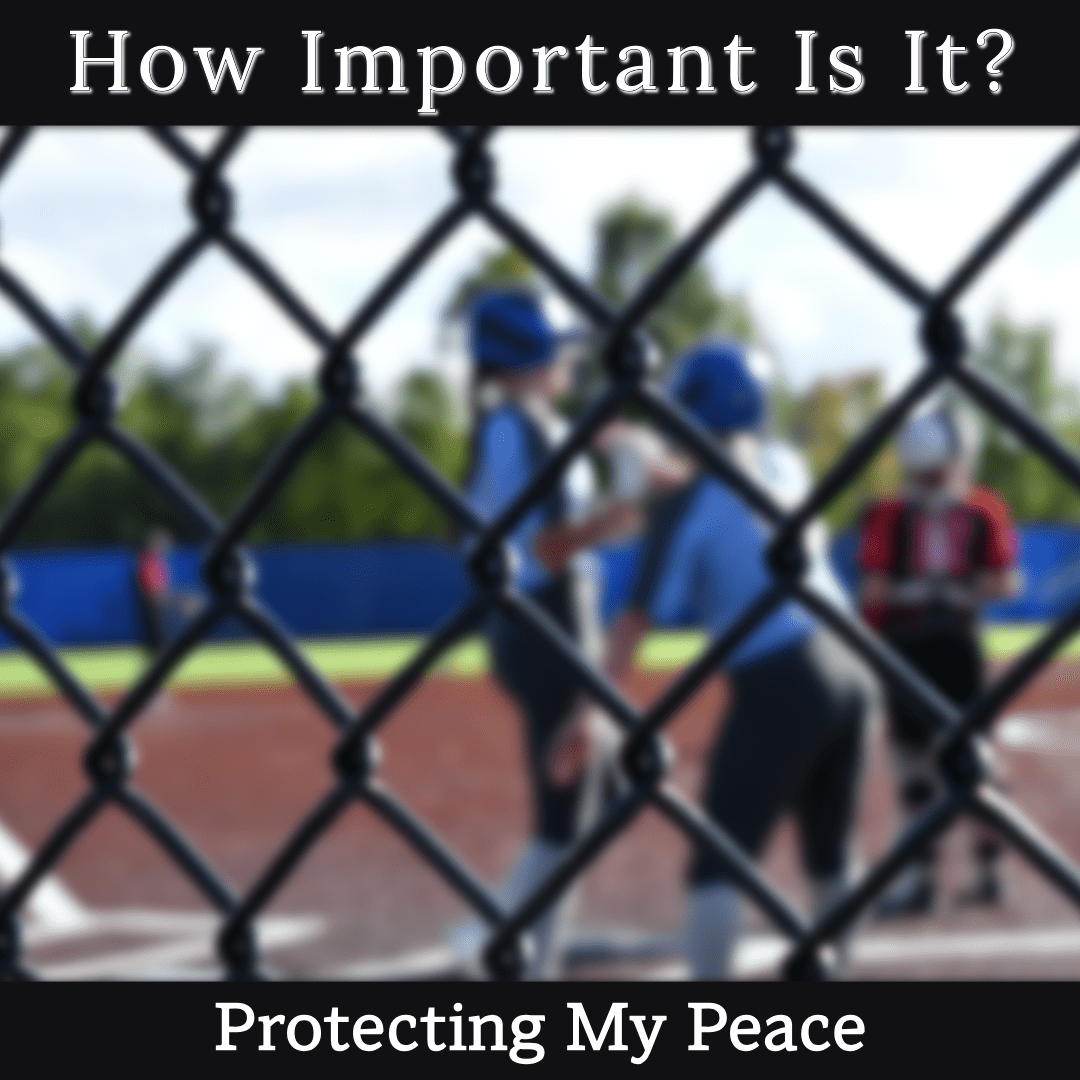
How Important Is It?

Protecting My Peace

One of the greatest gifts of recovery is learning what to let go of.

Set your minds on things above, not on earthly things. Colossians 3:2

Before recovery, I reacted to almost everything. If someone embarrassed me, challenged me, disrespected me, or hurt my feelings, I usually had one of two responses. I would either lash out and launch into a verbal barrage, using my intellect and vocabulary to hurt and insult people without them even realizing it until they went home and looked up the words I used. Or I would keep it all inside and carry it around for hours, days, or even longer. I replayed conversations and situations over and over in my mind. I built resentments. I lost sleep over things that really were not nearly as important as they felt in the moment.

The other day at my daughter’s softball game, one of the players got upset with me after I asked her to move in a little closer on the infield, something I regularly do with all the players. She started yelling at me, telling me she couldn’t do it. I let it go and figured I would deal with it later. Then her parent came over near the dugout and loudly yelled at me and the other coach, saying that I should not be talking to her daughter and that someone else should be. It was loud enough that everybody in the bleachers heard it. Honestly, it embarrassed me. I acted like I didn’t hear it, but inside I definitely felt it.

In that moment, one of the recovery slogans that has helped me many times over the years came into my mind: How important is it? When the girl and her parent each yelled at me, the first thing that came to mind was this slogan. That might not seem like a big deal to some people, but it is to me because before recovery my instinct would have been to react, defend myself, or lash back out. Instead, I realized this was just an upset child and an upset parent at a softball game. I did not have to let their chaos affect me and steal my peace. I didn’t have to defend myself, react, argue, or make a scene. Recovery has taught me that not every situation deserves my energy. Sometimes the healthiest thing I can do is let it go and keep my peace.

The realization didn’t really stand out to me until the next morning. My wife and daughter both commented on how calm and even tempered I had been in that situation. They noticed that I just let it go and didn’t react. The truth is, I would have never handled something like that this way before recovery. And what means the most to me is that I wasn’t trying to act different or make people think I had changed. I was just being me. That was my new instinct. As I reflected on it, I realized this was not just about one moment at a softball game. Recovery and working the steps have genuinely changed me from the inside out. It also doesn’t eat at me afterward the way it used to. When my mind tries to replay the situation, I just ask myself again, How important is it? And when I do that, I realize it usually is not important at all. I don’t lash out. I don’t lose my peace. I don’t build resentment or lose sleep over it either. That is the gift of recovery for me.

Prayer

Father, thank You for changing me from the inside out. Thank You that I do not have to react the way I used to. Help me to continue to walk in peace and wisdom. Help me to let go of what is not important and keep my mind focused on You. Amen

Freedom Through Honesty

Seeing What Was Already There

What I thought would destroy me was the very thing that led me to freedom.

You shall know the truth, and the truth shall make you free. John 8:32

Like most people in recovery, I first came because of a broken relationship. I was hoping to learn how to fix it. I remember when I had the aha moment. I was frustrated and telling my sponsor, “I’m getting mixed messages and I’m confused.” He smiled and said to me, “You’re not getting mixed messages. She said plainly she didn’t want to be with you anymore. How is that a mixed message?” I said, “Because we still live together.” He said, “That is not a mixed message. She told you her truth. You just don’t want to believe it.” When he said that, it finally sank in. Almost like it had been there the whole time, but was invisible to me. Looking back, I think he had probably been trying to help me see that for a while. I was so stuck in denial that I could not see it, even from him. I wasn’t confused. I wasn’t lacking information. I was choosing not to believe what was being said to me plainly. That day I realized something I wish I had learned much sooner. When people tell me their truth plainly, I need to believe them. They mean it. I could have saved myself so much frustration, anger, and pain if I had learned that one sooner.

What I slowly began to realize in recovery was that I was not confused nearly as much as I was in denial. Denial had such a grip on me that it was easier to believe what I wanted to be true than what I could clearly see right in front of me. It was almost like I had brainwashed myself into believing my version of reality instead of accepting what was actually happening. Facing reality meant facing pain, grief, and loss, and at the time I did not think I could handle that. I kept hoping things would change. I kept believing that if other people would just change their thinking, change their behavior, or come around to my point of view, then everything would be okay. So I poured enormous amounts of energy into trying to manage outcomes, force conversations, control situations, and hold things together that had already fallen apart. The more I fought reality, the more exhausted, frustrated, angry, and emotionally drained I became. I even pushed away one of the closest friends I ever had because he tried to tell me the truth.

Recovery has taught me to open my eyes and look honestly at what is happening in my own life. What surprised me was that accepting painful truth actually brought me more peace and serenity than denial ever did. What was uncomfortable and painful was actually the very thing that led me to freedom.

As I continued working my recovery, I started realizing this way of thinking went all the way back to my childhood. Growing up in an alcoholic home, pretending things were okay often felt safer than admitting they were not. Denial became normal to me. But recovery taught me that honesty is safer than illusion. Today, I still do not enjoy painful truths or difficult situations, but I try not to explain them away anymore either. I try to face what is real, bring it honestly to God, and trust Him enough to walk me through it instead of hiding from it. I have learned that acceptance brings far more peace than denial ever did. And that is the gift of recovery for me.

Prayer

Father, thank You for bringing me through my denial and revealing the truth to me. Give me the courage to face difficult truths honestly. Help me to trust You in the midst of them. Thank You for the comfort You give me to help me through it. Amen.

One Step at a Time… Again

Back to Basics

Drift doesn’t announce itself. It just shows up quietly. Before I even notice.

So, if you think you are standing firm, be careful that you don’t fall! 1 Corinthians 10:12

This week after meeting with my sponsor, I realized something that caught me off guard. For the first time, I hadn’t completed all my work and assignments. I had been so busy that I completely forgot to finish it. It wasn’t a relapse. It wasn’t a slip. It wasn’t even a major issue. But it got my attention. I didn’t like it, not at all. It borderline scared me that I could drift and be completely unaware of it. It made me stop and think. Why did I forget to finish my work? I didn’t even think about it. That’s when I have to stop and be honest with myself. Something has changed, and if I don’t catch it here, it will only grow and get worse.

I’ve learned to pay attention when something feels a little off. I look to see if I’m too busy, a little more distracted, a little less focused, or starting to think maybe the old way could work. That’s when I need to ask myself some questions. Am I still attending the same number of meetings? Am I still doing my step work? Am I still praying and seeking God? When I really look, I usually find something in these basic areas has shifted. It’s a symbiotic relationship. It’s simple cause and effect. When my recovery disciplines start to slip, my thinking soon follows. And vice versa. That awareness has become a check and balance system for me.

This is where this mindset helps me keep going. If I’ve done this before, I can do it again. I don’t have to feel discouraged or beat down. I don’t have to entertain lies. I don’t have to feel like I’ve lost everything. This stuff really works if I apply it to my life. So I go back to the basics, to what got me here. One moment. One hour. One day at a time. That’s how I started, and that’s how I continue. The journey of a thousand miles begins with one step… the next right step again.

I don’t say this because I’ve relapsed or slipped. I say this because I don’t want to. I’ve seen this work in my own life. I know that I know that I know that I know that if I do my recovery disciplines, they will work. I feel better about myself. I know I am changing. That brings me peace, happiness, and serenity. That gives me confidence. It allows me to throw my shoulders back, lift my head high, have a smile on my face, and keep going on. My life isn’t over. I’m still moving forward. I’m still growing. And that is the gift of recovery for me.

Prayer
Father, thank You for helping me see when things start to drift. Help me stay aware and honest with myself. Show me where I’ve slipped and give me the willingness to go back to the basics. Keep me grounded in the disciplines that brought me here. I don’t want to go backward. I want to keep moving forward with You, one step at a time. Amen.

I’m Not Who I Was

Not Defined By My Past

My identity isn’t who I was then. It’s who I am now.

If anyone is in Christ, he is a new creation; the old has gone, the new has come.
2 Corinthians 5:17

I’ve lived long enough to know what it feels like to be hurt. I’ve experienced difficulties, pain and trauma, even some health issues and concerns. People have hurt and mistreated me. I have been tricked, lied to and taken advantage of. I have survived experiences that left a lasting mark. They’ve caused wounds, and those wounds have left scars behind. But none of those things define me. They are unfortunately just the toll of life.

What I love about recovery is that it gives me practical tools and new skills to use. They help me heal and recover from the wounds and scars. It’s not salve that magically heals everything, nor is it a catch-all for every problem or situation. But it provides me with a different way of thinking. It teaches me to approach life differently. I am not a victim. I am not damaged or broken. I am not ruined or irreparable because of the things that have happened to me. Instead, I approach life as a whole person who has had bad things happen to me. And when I see myself that way, I’m able to confront, deal with and recover from the damage that was left behind.

I call that emotional collateral damage. It is what has happened to me as a result of the trauma and abuse that I experienced as a child. Those wounds, although sometimes still very painful, can be healed completely. It’s not like a surgery where they go in and remove the problem organ, and it’s all gone in one moment. This kind of healing is a process. It takes time. The damage and scars didn’t develop suddenly overnight and they’re not going to go away suddenly overnight either. This is what the Bible describes as the renewing of the mind and the saving of the soul. It’s a process that takes time as I grow into the full nature of a child of God.

And that’s where I live today. I’m not pretending those things didn’t happen, but I’m not letting them define me anymore either. I’m learning how to deal with what’s been left behind, one layer at a time. Sometimes that looks like choosing a different response when I feel hurt. Sometimes it’s simply talking about what I’m feeling instead of holding it in. Some days are harder than others. Some wounds are still tender and hurt when something hits them. But I’m not stuck there like I used to be. I’m healing. Not all at once, but steadily. I’m not who I was, and I’m not stuck where I’ve been. I’m moving forward into what God has for me.

Prayer
Father God, thank You for being my healer. Help me to face the hurts from my past instead of avoiding them. Give me strength to walk through them. Guide me and help me as I continue moving forward in You. Amen.