Writings

Warning Signs

Paying Attention To God’s Alerts

No one really knows all the mistakes he makes. So forgive my hidden faults. Psalm 19:12

The topic in my meeting last night was what do you do when you mess up. And I was thinking about that. I have a hard time because I don’t know when I mess up my denial keeps me from seeing it. That’s the whole reason I ended up coming to recovery in the first place, I didn’t think I had any problems. I didn’t think I ever messed up. So the thought of what to do when I do is hard. I have tools I practice now that help me. They are my warning signs that steer me on my recovery road. They alert me before I enter into dangerous or unsafe territories. When I see patterns, by that I mean maybe more than one person tells me the same thing. I realize I’m the common denominator, so that tells me I need to look at myself. When I feel uneasy in my spirit or in my heart, that is a sign that I need to look deeper at what’s going on. If my conscience won’t let me rest and I keep thinking about something over and over, that’s a good sign that I need to look inwardly at what’s going on.

For me, it’s never been an issue to apologize or make things right when I knew things were wrong or I messed up. I have always been quick to repent. My problem has always been recognizing that I’ve done something wrong. When I offend someone, when I hurt them, or when I am insensitive to their feelings or point of view, I usually don’t see it. So recovery helps me to recognize the signs. When I see these signs I pray asking God for help, I write about it, asking why this is bothering me. Writing usually leads me to figuring out how I really feel about things. I honestly examine my actions and ask myself, What is my part? I ask God to show me how to make a proper amends and ask Him to open the door and show me the timing to do so.

This gives me peace and confidence. When I can do this, then I can trust that I’m hearing God and following His will when I take the next right action.

Prayer: Father, thank You for being patient with me as I learn to see what I used to miss. Help me pay attention when something feels unsettled inside me. Teach me to recognize my part and trust You to guide my steps. Show me how to make amends with honesty and humility. Thank You for giving me peace as I follow Your will. Amen.

People Are More Than Their Cover

Seeing Value Beneath The Blemishes

You are our epistle written in our hearts, known and read by all men. 2 Corinthians 3:2

The other day I ordered a few books online. After managing bookstores for over twenty years, I’ve learned to take good care of my books. I never bent the covers back, folded the corners of pages, or wrote in the margins. I always treated them with respect and took good care of them. So when my order arrived, I was excited to open it. The listing said the books were in “excellent” or “very good” condition, and in my mind that meant clean pages, no writing, no dog-ears, just a well-cared-for book that might have been read once or twice. But when I opened the package, one of the books I was most excited to read had writing in the margins, lots of underlining, many dog-eared pages, and a handwritten dedication on the inside cover. My first reaction was disappointment. In my estimation, this was not in either excellent nor very good condition. I even thought about contacting the seller to let them know.

Then a thought crossed my mind: Am I happy to have the book? The answer surprised me, yes, I was. Some of the titles I ordered were out of print and hard to find, and I was grateful to have found them at all. I realized that even with its imperfections, I still had what I wanted, the words, the message, the content inside. And who knows, maybe some additional insight or wisdom could be gained from the previous owner’s experience and notes. My disappointment wasn’t really about the book. It was about my expectations. I had decided ahead of time what “excellent” meant, and when it didn’t match my definition, I felt let down. Once I realized that, something shifted inside me. Gratitude replaced frustration, and peace followed right behind it.

As I thought about holding that “imperfect” book in my hands, I realized how much its flaws and defects told a story other than the one contained in its pages. The folded corners, the writing in the margins, even the dedication inside, they were signs that someone else had found value in its pages and loved it before I did. In a way, those shortcomings gave the book more character and value to me, not less. That thought made me smile and led me to a deeper realization. If I could see the beauty in something imperfect like that book, why was it so hard to do the same with people? I started to see how often I expect others to meet my standards, to see things my way, to share my values and priorities, maybe without even realizing that I have them. And when they don’t, I feel disappointed, frustrated, or even angry. But people are not books, and you really can’t judge them by their cover. Some of the ones who look worn or imperfect hold the greatest wisdom and grace. Every day I’m learning to appreciate others for who they are, not for how closely they align with my expectations. When I can do that, relationships become more about acceptance and gratitude than judgment, and love becomes something I can give and receive freely.

Prayer: God, thank You for reminding me that people are not meant to meet my expectations. Teach me to love, accept, and appreciate others just as they are. Help me to let go of judgment and choose gratitude instead. Amen.

Stop Pretending

Sometimes the biggest step in recovery is letting people see the real me.

The Lord does not look at the things people see. People look at the outside of a person, but the Lord looks at the heart. 1 Samuel 16:7

One of the things I love about recovery is that line in the reading that says there are no professionals here. There are no experts. To me that means no one is judging how well I do recovery. It is just a group of people trying to break free from the obsessions and dependencies that weigh us down. I do not have to impress anyone. I do not have to be good enough. I just need to show up, be present, and try the recommended solution to find freedom from the things that have held me prisoner. It comforts me to know that I am not alone on this road. Others have walked it before me, and their honesty encourages me to keep going. If I practice the solution, I can find the serenity they have found.

What I am learning is that recovery puts us all on level ground. Nobody gets to stand above anybody else. The person shaking from withdrawal and the person shaking from fear are not so different. Pain is pain, and it seems to be a great motivator for change. My obsessions will make me sick and destroy me if I ignore them. I imitate a confident have-it-together person on the outside but on the inside my thoughts and feelings are quite the opposite. And healing begins when I can merge the two into one. When I stop pretending to be someone on the outside that I am not on the inside, true transformation unfolds. When I focus on what is going on inside of me instead of trying to fix someone else, I feel the weight begin to lift, and I can breathe a lot easier.

The beauty of recovery is that God meets me right in the middle of all this honesty. He does not ask me to be stronger or have it all figured out. He just asks me to be willing. I do not have to arrive. I do not have to impress anyone. I just need to keep showing up as the person I really am, not the version I used to perform. And when I do that, I heal in ways I never expected. I start to become a better version of me. God uses the honesty of other broken people to help me grow, and He uses my honesty to help them. That still amazes me. When I stay open, willing, and connected, I experience the freedom and serenity that is promised.

Prayer:

Father, thank You for loving me, even though You see my heart, the real me. Help me to stop pretending and let go of the need to perform. Give me the courage to be honest, not just with You, but with others and especially myself. Teach me how to be the person You created me to be. Thank You for setting me free and filling me with Your peace. Amen.

Recovery On the Go

God speaks in quiet moments, even behind the steering wheel.

Your ears will hear a command behind you saying, “This is the way. Walk in it.” Isaiah 30:21

Yesterday I had an early morning doctor appointment, and it threw off my whole rhythm. I had to leave the house much earlier than normal, which meant no time for my regular routine. Every morning I grab a cup of coffee, sit in my chair, read, pray, meditate, and get centered. It is my anchor. When I realized I would not have time for any of that, I was frustrated. I had not even thought about how this appointment would affect my morning ritual. I rushed to get ready and headed out the door with my mind still irritated.

As I drove, I felt God prompting me with a question, why was I so bothered and upset by this? I said to myself it was because I missed my devotion time, but inwardly I knew there was something deeper, there always is. As I got quiet, I saw it. It was control and insecurity. My routine helps me feel safe and grounded. Then another new thought came to me. Why not have my “me” time right now while driving? I could not read, but I could still pray. I could still meditate. I could still think about how to live the principles today. That simple shift opened up something new in me. I realized I do not have to be tied to a specific ritual for it to count. I can connect with God and focus on my recovery anywhere, anytime. These tools travel with me. My spiritual life is not limited to one chair and one timeframe.

By the time I reached the appointment, I felt great. I was more centered than when I left the house. I gave myself grace and remembered something important; I have a program. The program does not have me. Routines may help me, but they do not own me. Missing one reading does not mean I failed. It simply means I get to practice flexibility and trust that God meets me wherever I am. If I want, I can always read later. When I am flexible and embrace new ideas, I am learning and growing. I am improving my conscious contact with God. It is when I connect with Him and not a routine that I truly feel safe.

Prayer:

Father, thank You that my recovery tools travel with me. Help me stay flexible and open so I can connect with You anywhere and in any moment. Teach me to trust You more than my routines, and remind me that You always meet me right where I am.

I Didn’t Need Permisssion

Consider yourself challenged.

Confess your faults one to another, and pray one for another, that you may be healed. The effectual fervent prayer of a righteous person avails much. James 5:16

In recovery, I’m learning how to face my hurts, habits, and hang-ups without letting them define me. I’m learning to humble myself and share my struggles with people so that I can be healed from their effects. This is my story from last November, and how powerful the tools of recovery really are in my daily life.

It’s common these days on November 1 for people to start the “30 Days of Giving Thanks Challenge” on Facebook. I really wanted to do it. I thought, “What a great idea! And why didn’t I think of that?” Then came the next thought, “How come no one challenged me? I want to do that.” As the days went by and no one invited me, I felt hurt and angry. In my mind, no challenge meant no invitation. That old feeling of not being good enough kicked in again.

Then I had an epiphany. Why not use the tools I’ve learned in recovery? For me, those tools aren’t just about stopping destructive habits like drinking, drugging, smoking, sexing, or gambling. And yes, those same tools have helped me stop all of that. But I can also use them to help me stop crazy thinking and feeling hurt.

So I can make a choice to join the challenge simply because I want to and because I’m thankful and grateful for so many things in my life. Once I made that decision, it was easier to do. I suddenly had clarity of mind. I saw that it was pride that had kept me from doing it in the first place. Because it wasn’t my idea, I was offended that no one asked me to do it. I thought that if I joined in now, I’d just be doing what everyone else was doing. Like there’s something wrong with that, right? My thinking was jacked up. I mean, I get hurt and mad when I’m not invited to a party I didn’t want to go to in the first place. What?! Don’t laugh! Okay, but just a little.

As soon as I started, I felt the healing come. The hurt started to fade, and peace flooded my mind and soul. The book of James says that when I humble myself and confess my struggles and shortcomings to another person, God gives me His grace, and I am healed. That’s when my prayers become effective.

For anyone else like me who needs an invitation, here it is. Consider yourself challenged.

Temporary Sponsor

He comforts us in all our troubles so that we can comfort others. When they are troubled, we will be able to give them the same comfort God has given us. 2 Corinthians 1:4

Like most of us, when I first came into recovery, I didn’t know what I was doing. I had spent years trying to manage life on my own, and it wasn’t working. I kept hearing in the meetings, “You need a sponsor.” I didn’t know what that really meant or entailed, but the pain was a great motivator and I was ready to stop hurting.

Back then I had met two men that I connected with. One from my traditional recovery group and one from a Christ-centered recovery group I recently started attending. I asked the man from my traditional group to sponsor me, but he said no. That rejection stung, but God was already working behind the scenes. The next week, I asked the other man. He said he’d be my temporary sponsor. At first that too hurt my feelings and felt like more rejection, but I was hurting, and at that point, I didn’t care. I just knew I needed help. What I didn’t realize was that “temporary” would turn into one of the most life-changing commitments I’d ever make.

We began meeting twice a week, once at night to do step work and another morning for coffee and conversation. I didn’t realize it then, but those moments were doing more than teaching me about recovery; they were teaching me how to be honest, accountable, and real. My sponsor didn’t preach at me. He didn’t try to fix me or tell me what to do. He just listened, guided, and modeled the kind of peace I had been missing. He shared pieces of his own story that made me realize I wasn’t alone. For the first time, I felt safe enough to be honest about my past and the pain I had carried for years. Through those early meetings, God began to show me that healing happens in relationship, not isolation. I started to see that He uses people to help people, and that letting someone in didn’t make me weak. It made me human.

Through that process, I began to trust. Not just my sponsor, but God working through him. Each time I opened up, something in me began to change. I started to realize that I didn’t have to have everything figured out. I just needed to be willing. I wasn’t used to that kind of safety or love. It wasn’t about control; it was about surrender. When he challenged me to face myself in the steps, I listened. And slowly, the walls I had built around my heart started to crumble. What began as a temporary arrangement became a lasting foundation. God used one man’s willingness to listen to bring about permanent change in me.

Now I understand that the commitments I make in faith, even small ones, give God room to work in big ways. When I said yes to a “temporary” sponsor, I was really saying yes to healing. God met me in that step of obedience and turned it into transformation.

Prayer

God, thank You for using people to help me when I couldn’t help myself. Thank You for those who guide me with wisdom, grace, and honesty. Help me stay willing to listen, to trust, and to take the next right step You put in front of me. Amen.

Honesty Brings Healing

Confess your trespasses to one another, and pray for one another, that you may be healed. James 5:16

I remember sitting across from my sponsor one night as we were going over the Fourth Step. His office was quiet except for the soft click of the heater turning on and off, breaking the silence between us. Near the end of our time, my heart started to race and my hands felt heavy in my lap as I tried to find the courage to speak. I had shared a lot that night, things I had never said aloud before, but one truth still sat heavy inside me. I kept waiting for the right moment, hoping maybe he would move on, but he didn’t. Finally, I just blurted it out, something I had hidden and carried in silence for years. For a moment, I couldn’t look at him. I waited for disappointment, maybe even pity, but instead, I saw compassion. My sponsor didn’t flinch or look away. He looked steadily at me, and I saw a small smile on his face. I didn’t feel judged, but accepted. He simply told me that moments like this are what recovery is all about. It is when grace meets honesty and shame finally loses its grip.

Step Five scared me. Admitting to God, to myself, and to another human being the exact nature of my wrongs felt like stepping into a spotlight I wasn’t ready for. I didn’t understand how it worked or why it mattered. Wasn’t this just another way to be reminded of my failures? But something shifted the moment I began to speak the truth out loud. Writing things down was one thing, but saying them made them real. My voice trembled at first, but the more I spoke, the lighter I felt. It was as if every secret I released created room for grace to breathe. Each time I pulled something out of darkness, the weight I had been carrying started to lift. I was learning to let go of the lies I believed about who I was and to hand my shame over to God. That is the humbling process James wrote about when he said to confess our faults and pray for one another so that we may be healed. What struck me most was that the verse does not say forgiven; that is already done. It says healed. Healing began the moment I stopped hiding.

Today, I still practice what I learned back then. When I am honest about my struggles, I stay connected to God and others. Healing did not stop that night; it keeps unfolding every time I tell the truth, listen with compassion, or pray with someone who is hurting. When someone sits across from me and begins to share what they have been carrying for years, I can see the same mix of fear and hope that once filled my own heart. I ask God to help me show His love by being present and accepting, without judgment or hurry. Each time I listen, I am reminded of where my healing began, in the simple act of being honest and letting someone in. I do not fully understand how God does it, but He never fails to bring freedom when I do my part. The honesty that once terrified me now keeps me free. The same grace that healed me keeps me whole, one day at a time.

Prayer

God, thank You for meeting me in my honesty. Give me the courage to keep bringing things into the light, trusting that healing happens when I do. Help me to listen with the same grace that once set me free, and let my life be a safe place where Your love restores others. Amen.

Don’t Hold It In

What keeps me from asking honestly for what I need?

Let your Yes be Yes, and your No, No. Matthew 5:37

I remember a time I was doing step work with my sponsor, and I had to go to the bathroom. I kept holding it because, for some reason, I was afraid to ask if I could be excused. I don’t know why. We were both adults, both working a program based on honesty, yet I sat there fidgeting, tapping my foot, hoping he’d notice. I was giving all the clues, silently wishing he would say, “Hey, do you need to use the bathroom?” But he didn’t. Finally, I couldn’t hold it any longer. I apologized and said, “I’m sorry, I need to go pee. Can I be excused?” My sponsor burst out laughing, a big deep belly laugh, and said, “If you gotta go pee, go pee!”

When I came back, he told me he had known the whole time that I needed to go but was waiting for me to speak up for myself. He said he could see all the “tells” I was giving. Then he asked, “Why did you wait so long?” I thought about it and realized what I had been doing. I was trying to use manipulation to get my needs met. I was hoping someone else would read my mind and take care of me instead of taking responsibility for myself. It was a simple situation that revealed a deep pattern in me. My sponsor taught me that day that part of recovery is learning to speak honestly about what I need and to take appropriate action instead of waiting for others to figure it out.

That lesson has stayed with me. These days, when I need to use the restroom, I just excuse myself. Even in a meeting, a phone call, or a conversation, I can speak up for myself without guilt or fear. No one has ever chastised me for it or looked at me differently. People always understand. But the freedom goes deeper than that. I am learning that God gives me permission to take care of myself. I no longer have to manipulate or hint to get my needs met. I can be direct, honest, and at peace.

Prayer

Lord, thank You for teaching me that honesty begins with myself. Help me to speak up for what I need with humility and courage. Keep me aware of the old habits that try to sneak back in, and teach me to trust that You and others can handle the truth. Amen.

Feeling Left Out

God is healing the parts of me that learned to expect disappointment.

The Lord is close to the brokenhearted and saves those who are crushed in spirit. Psalm 34:18

The other day was my daughter’s thirteenth birthday and plans for her party fell through. In my attempt to console her disappointment, it brought up memories I hadn’t thought about in years. My birthday is in December, and for anyone born that month, you probably already know what I’m going to say. For everyone else, let me explain. A December birthday often means you never have a birthday party because it’s “too close to Christmas.” If I heard that once, I heard it a thousand times. I understand now, as an adult, that it’s a busy time of year with family gatherings, work parties, holiday expenses, and a dozen other things. It can be a lot. But as a ten-year-old kid, all I heard was that I wasn’t important enough to celebrate.

Many years I received the “combo gift,” with the line: “This one’s for Christmas and your birthday.” Which usually meant it was a Christmas gift with a different tag. One year I decided to return the favor. My brother’s birthday is in May, so when Christmas came, I handed him a gift with a card that read, “This is for Christmas and your birthday.” He looked confused and said, “But it’s not my birthday.” I said, “Exactly.” He didn’t get it, but I did. I felt left out. Both of my brothers, born in May, had birthday parties almost every single year. I remember my tenth birthday was supposed to be my first real party, where kids from school were invited. I was so excited. Then I came down with the mumps. The party was cancelled, and I never had a birthday party until I was an adult. I was crushed. After that, two things happened. First, I stopped getting my hopes up for anything. I told myself it was better not to expect much, just another broken promise waiting to happen. Second, I became impossible to buy a gift for. I don’t know how to accept a gift graciously, and even if I was given a gift I had always wanted, I still feel left out and hurt. I don’t like that about myself, but it’s the truth. This is one of the things about working recovery, is that I have to face the hard things even when I don’t want to or don’t like what I learn about myself.

I hadn’t realized how much of those childhood hurts are still with me even today until they begin to surface. Every time someone overlooks me or doesn’t notice my effort, it stirs up that feeling of rejection. The good news is that I never have to stay in that state of mind. I can change, and God provides the power to do so. He is healing those broken places and replacing them with His peace and presence. I can’t hope for a happier past, but I can learn and grow from it and expect a happier future.

Prayer:
God, thank You for revealing to me the pain I’ve hidden for so long. Help me face old memories without fear, knowing You are already there. Teach me to receive love without suspicion and kindness without doubt. Thank You for healing my hurts and giving me Your peace in their place. Amen.

Learning to Trust

Taking one small step toward trust, even when I’m afraid.

When I am afraid, I will trust in You. Psalm 56:3

Growing up, I had no idea what trust was. I learned early on that people could say one thing and do another, that “I love you” didn’t always mean safety, and that promises were often broken. I learned to survive by relying on the only person I thought wouldn’t lie to me – me. But since I had never really known love or trust, I was relying on a skewed version of what my limited understanding could comprehend. I built walls to protect myself from being hurt again and called it strength. Even after I came to know God, I still kept control of the details, just in case He didn’t come through the way I hoped.

When I came into recovery, I brought that same lack of trust with me. I didn’t know how to open up or let anyone in. I told myself it was safer to keep my guard up and just listen. I didn’t trust people, and if I’m honest, I didn’t trust God either. I believed in Him, but I didn’t believe He would show up for me. Deep down, I was afraid that if I really depended on anyone, they would eventually let me down, just like before.

As I kept coming to meetings, I began to notice something different. People shared openly about their struggles and didn’t seem ashamed. They were honest about their pain, but they also had peace. That was new to me. Little by little, I started to believe that maybe it was safe to be real too. People seemed to listen without judgment and didn’t try to fix me. The more I shared, the more I began to feel accepted. Trust didn’t happen all at once, but each time I opened up, the walls I had built started to tumble down. I started to believe what was shared in the readings, that this was a safe place and what is shared here stays here.

As I learned to trust people, I began to realize that God was using them to teach me how to trust Him. Each time someone listened without judgment, encouraged me, or showed up when they said they would, I caught a glimpse of God’s character. I started to see that He had been faithful all along, even when I couldn’t recognize it. Through the consistency of others, I experienced the steady love of a God I once doubted. Trust was no longer an idea I tried to understand; it became something I was learning to live.

Today, I’m still learning to trust. It’s not something I’ve mastered; it’s something I practice every day. Each time I let someone in, each time I choose honesty over self-protection, my hope in people grows a little more. I’ve learned that trust doesn’t mean I won’t get hurt. It means that even if I do, I don’t have to stop trusting. I can’t stop, because it’s in trusting others that I feel loved, and love is always a risk. It’s a risk to love others, and it’s a risk to let them love you back. But it’s a risk worth taking.

Prayer

Father, thank You for being patient with me as I learn to trust again. Help me to lay down my fear and let others in. When I’m tempted to close off or pull back, remind me that You are safe, and that You often show Your love through people. Teach me to love courageously, to trust even when it feels risky, and to see Your faithfulness in every step I take.

I Can Be Compassionate

Be kind and compassionate to one another, forgiving each other, just as in Christ God forgave you. Ephesians 4:32

I love my qualifier, who struggles with alcoholism. For a long time, I confused control with love. I believed that if I could fix them, everything would finally be okay. I thought their happiness would bring me peace, but it only left me frustrated, anxious, and exhausted. I thought I was showing love, but what I was calling love was distorted. I was attempting to fix and control what only God could heal.

Today I am learning that the solution isn’t in fixing others but in trusting God and keeping the focus on changing myself. I do this by learning to forgive, making amends, serving, giving back, living one day at a time, consciously being present in each moment, and being grateful. Working the steps of recovery has introduced me to a loving, caring God. Because of that relationship, I can “let go and let God.” I can trust Him with my qualifier. My part is to focus on my own recovery and take only my own inventory.

I can have unconditional love for someone with a seemingly unlovable disease. I can separate the person I love from the disease I hate. Loving without conditions doesn’t mean loving without concern. I’ve learned that accepting doesn’t mean liking, and that by accepting them exactly as they are, I can stop expecting. I can have boundaries, and I don’t have to accept unacceptable behavior. Detaching with love allows me to care without control and to love without losing myself.

I can be compassionate, gentle, kind, and understanding. I can allow them to experience the consequences of their decisions, good or bad, without interfering. I can stop depending on them for my happiness and peace, and instead look within for both. I can treat them with the same respect and kindness I would offer anyone, with or without their disease. I can live in the present moment, without heartache for the past or fear of the future. Because of my ongoing recovery from the family disease of alcoholism, I have gifts I never would have known otherwise. I can be grateful for them today. I get to have a loving relationship with my qualifier, and they get to live their own life. I can express my spirituality by showing how merciful God is through my attitude and actions in all my relationships. I can actively and willingly practice these principles in all my affairs. Peace and serenity have come as a result of living a life of spiritual recovery and working the twelve steps of the program. Today I can be compassionate, gentle, and kind, not because my qualifier changed, but because I have.

Reflection
What does compassion look like for you today—especially toward someone you’ve tried to fix or control?

Muddy and Wet

It may not be my fault, but it is still my responsibility.

Each one should carry their own load. Galatians 6:5

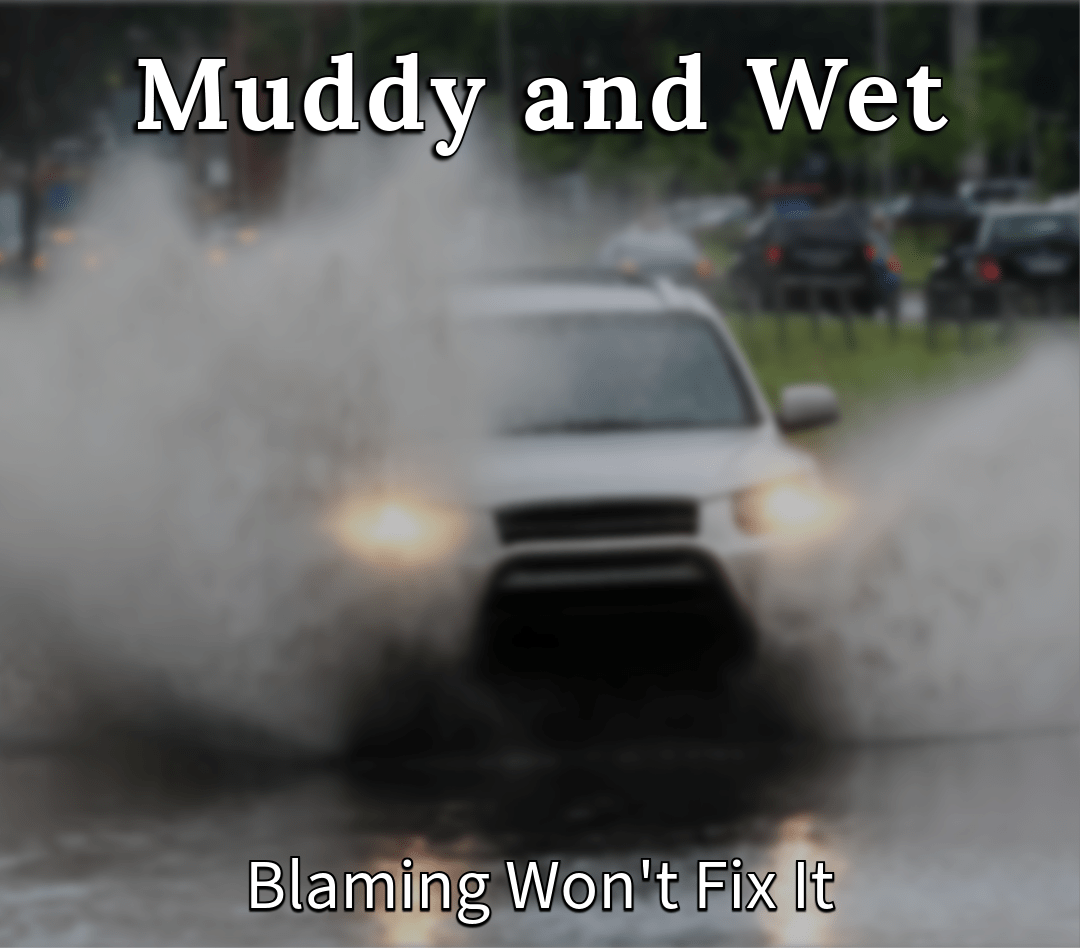
The other day I was out for a walk after a heavy rain. As I came to a corner, I noticed a huge puddle where the drain must have been clogged. Just then, a car sped past and splashed me from head to toe. I was soaking wet and furious. My first thought was, what was that driver thinking? Did they not see me standing there? Did they not see the puddle?

Then I began to blame myself. Why didn’t I anticipate the car coming? Why didn’t I move out of the way? I was trying to decide whose fault it was. Was it mine for not reacting, or the driver’s for not noticing? The truth is it didn’t matter whose fault it was. I was still muddy and wet. And I had three choices: stay angry and stuck, keep going through the day miserable, or go home, clean up, and move forward. I chose the third.

In the shower, I had an aha moment. It’s not about finding fault. It’s about taking responsibility. Blame couldn’t change my situation, but responsibility could. Whether or not the driver even knew what they had done, it was still my responsibility to get cleaned up. Life will splash us with things we didn’t cause and don’t deserve. But blaming others never changes the fact that we are muddy and wet. Responsibility allows us to clean up, move forward, and keep walking with God.

Prayer
Lord, help me not to waste time in blame. Teach me to take responsibility for my response. Give me the grace to clean up, move forward, and continue walking with You. Amen.

Home Runs

Consistency Wins The Game

Do you not know that those who run in a race all run, but one receives the prize? Run in such a way that you may obtain it (1 Corinthians 9:24)

I was umpiring a tournament this past weekend where there were many home runs in a single game. A home run is always exciting. It is a magnificent moment when a player sends the ball sailing over the fence and out of the park. The player who hit it is ecstatic, their team erupts with joy, while the other team is disappointed. The pitcher who gave it up may feel dejected, and sometimes the coach will even make a change. One swing of the bat can shift the emotions and even the momentum of a game.

I have seen teams that were far behind suddenly find new life after a single home run. That one big hit gave them hope, sparked a rally, and sometimes they came all the way back to win. Yet the truth about home runs is that as thrilling as they are, they usually do not decide the outcome of the game on their own.

I have seen teams hit several and still lose to another team that never hit one. How can that be? Because one spectacular event is rarely enough to carry the whole game. The teams that win are the ones that play together, stay consistent, and keep contributing inning by inning.

Life and recovery work the same way. We may have some amazing wins and big victories along the way, but one moment is not the whole story. Winning one battle or even losing one does not determine the outcome. We keep going. We keep competing. We stay in the game. We cannot give up, because the game is not over. The real victory comes by showing up faithfully, playing every play, and staying in it until the end.

Prayer

Lord, thank You for the victories You have given me. Help me not to rely on just one moment but to keep pressing forward with faithfulness. Give me the strength to stay in the game and finish well. Amen.

Weeds

The other day I was out in my yard pulling weeds. It seems that lately it takes up much more of my time. As I was pulling them up, I settled into my usual routine of contemplative meditation and prayer. I would think a bit, then pray about that thought, then ponder it and roll it over in my head, and then pray a little more. Then I would repeat the process. I think that is one of the reasons I enjoy yard work so much. The work itself is not especially enjoyable, but being able to tune everything else out and focus, to meditate and concentrate on what I am meditating about, is something I really enjoy. And it is usually acceptable to be a little antisocial in this way.

As I was going about pulling weeds, I had an awareness, and suddenly a rush of thought and understanding flooded my mind. I know this experience. It is familiar to me, and it is invigorating. This was revelation knowledge. Straight from heaven. Thank you, God.

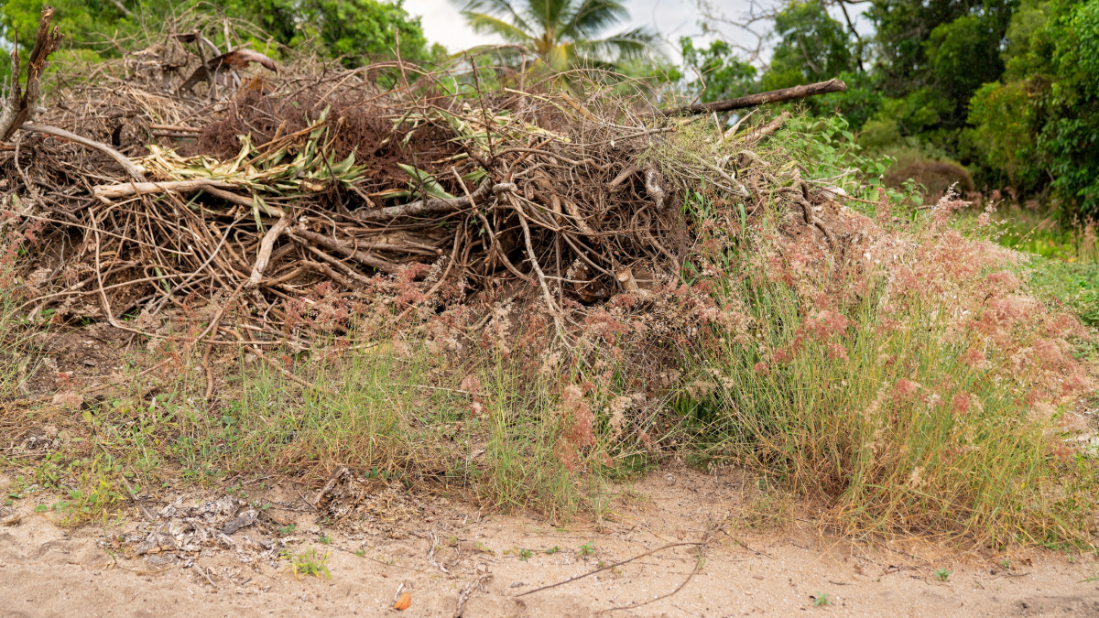
It started with an observation as I was pulling up some very large weeds. When I say very large, I know that is a relative term, so I will define it. In this case, very large meant sagebrush over three feet tall. After clearing a section of the yard of this unwanted brush, I dragged it into a pile. That pile ended up being about six feet high, twelve feet long, and five feet deep. Looking at it, I was excited to go back and see how much better my yard would look without those obvious eyesores.

I looked back at the area I had just cleared, took a deep breath, and expected to feel good about the clean, bare ground. Instead, I was discouraged. I immediately noticed something I had not noticed before. There were still weeds everywhere.

These were not the very large ones. These were what I would call medium-sized weeds, anywhere from about a foot to three feet tall. So I started in on those. As I cleared the same area again, I noticed something else. Beneath those were even smaller weeds. These are the most pesky ones. They frustrate me the most. They are hard to grab, and even harder to get up by the roots.

As I worked on these other weeds, I stayed in that same pattern of contemplation, meditation, thought, and prayer. I found myself wondering where all of these weeds had come from and why I never noticed them before.

The answer was obvious. They had been there the whole time. I had not noticed them because the very large sagebrush had covered them up. They were underneath. I would not even have been able to get to them until the sagebrush was removed. Once it was gone, the smaller weeds were exposed, and only then could I deal with them.

Something else stood out to me. The very large sagebrush had to be hooked up to my truck and pulled out. They had deep, established roots, but once they were hooked up, they came out easily. Roots and all. Ker-plop. Done. Gone.

Those small weeds were different. Sometimes it was hard to even find the root. I had to get down on my hands and knees, focus, grab at it three, four, five, sometimes ten times before finally getting it out.

After pulling the small ones, the yard looked good. I was glad I had taken out the sagebrush, because without doing that first, I would never have seen or reached the other weeds that also needed to be removed. The yard looked clean, and the evidence of the work was sitting right there in front in that large pile. Anyone could see it. “Wow, your yard looks nice. Did all of that really come from here?”

That moment clarified something for me. This is how it works in our lives when we want to change. We tend to notice the most obvious things first. After those are dealt with, we become aware of others that were there all along. They are all weeds. The frustration that comes when we see more work to do does not mean nothing has changed. Many times, the smaller things take more time and are harder to root out. Even noticing them means progress has been made.

If we thought we had to see and deal with everything at once, we might give up. But the smaller things only become visible because the larger ones have already been removed. They often are far more difficult to root out. If you are in the middle of that fine-tuning and find yourself discouraged, stop for a moment and go look at the pile. Look how far you have come and what you have conquered so far. You would not even be able to reach what you are working on now if you had not already done the work you did to get here. You are making progress.

Thank God for the progress. It is there, even when it does not feel like it.

Believe For More

Jesus never corrected anyone for having too much faith or being too bold. He never said “you are believing for too much.” But we do see Jesus rebuke and correct the disciples for having little faith when they believed for small things. He did said to believe for more. Nothing is too much for Him or for God.
Believe for Big things. God is not intimidated or limited. Its our thinking that is limited and small.
Let’s expand our thinking and dare to believe that God WILL do more than you can ask or even think.

Check it out for yourself…
Matthew 6:30, Matthew 8:26, Matthew 14:31, Ephesians 3:20