
Life Is Good

Learning to Enjoy It

The gift of recovery for me is simply recognizing that life can be really good.

God richly gives us everything to enjoy. 1 Timothy 6:17

For the past few months I have been leaving my house around eight in the morning and not getting home until about 10:30 at night. It has been exhausting. Today was the first day in a long time that I was coming home at a reasonable time, and I caught myself wondering, What am I going to do tonight? Then a recovery thought came right into my mind: Be in the moment and enjoy the moment. I actually got excited about that thought. It made me happy because recovery is working in my life. I am learning to let my head and my heart be where my feet are. Tonight I get to spend the evening with my wife and daughter. I don’t have to have an agenda. I don’t have to have a plan. I don’t have to accomplish anything. I can just relax and enjoy their company and their presence. That is relaxing. That is rest. And I couldn’t be happier. There was a time when I wasn’t able to even recognize what good was. And living life seemed like a chore. It wasn’t fun.

When I first came into recovery, my life was filled with chaos, turmoil, stress, and damage. All of my energy went into dealing with problems, putting out fires, trying to control situations, and worrying about what might happen next. Working through the steps of Recovery, I learned how to deal with those things. But I also learned something else: I can enjoy the good things in life too. I now recognize when life is peaceful. I notice what is beautiful. I enjoy being home with the people I love without needing something else to happen. There doesn’t have to be a problem to solve or something that needs my attention. Life is really good. I am learning how to recognize it, appreciate it, and enjoy it.

That didn’t just happen overnight. It has been the result of continually working the steps with my sponsor and applying recovery principles to my life on a daily basis. I have heard it said that I cannot think my way into better behavior, but I can act my way into better thinking and feeling. I practiced these principles long before they became part of my regular thought process. My thinking began to change little by little. I am experiencing some of the sanity promised to me in Step Two. The chaos that once filled my life doesn’t define my life today. I have peace and actually recognize it when it is here. I have a life that is good, peaceful, and enjoyable. Tonight, that looks like coming home earlier, being with my wife and daughter, and simply being grateful to be there. And that is the gift of recovery for me.

Prayer

God, thank You for my life. Thank You for the good things You have placed in my life. Show me how to keep my mind and heart where my feet are. Help me notice the good in my life and be grateful. You are good and You are good to me. Thank You. Amen
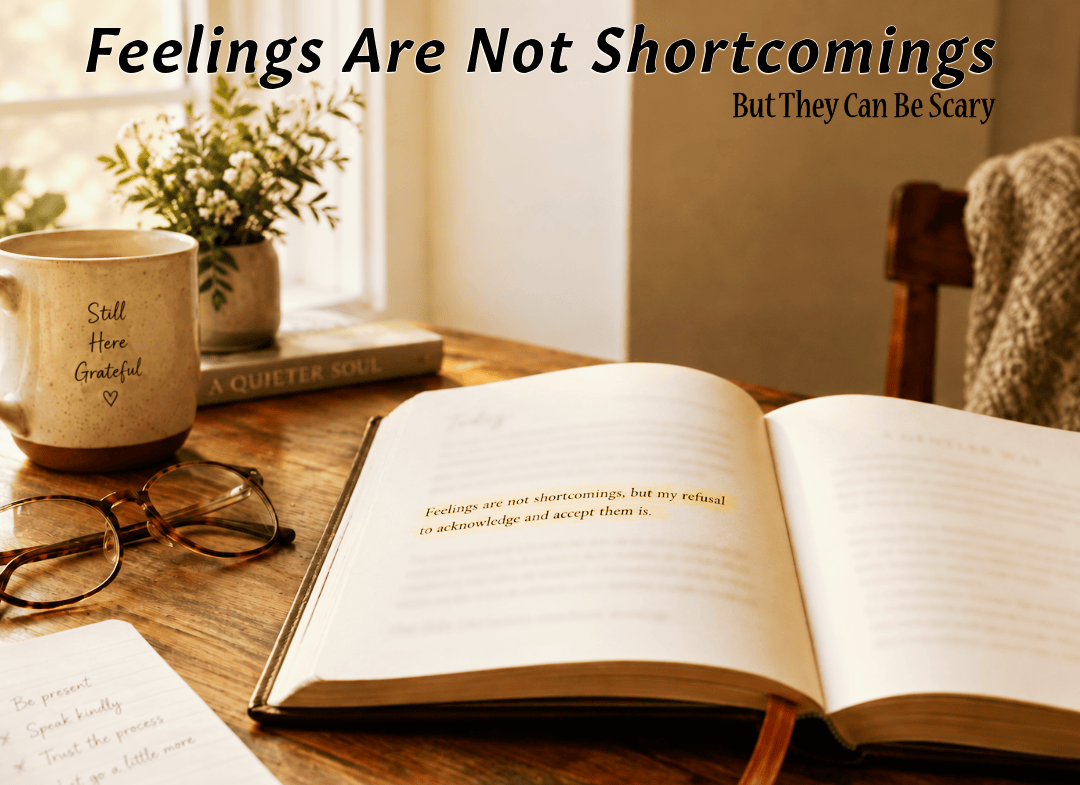
Feelings Are Not Shortcomings

But They Can Be Scary

For most of my life, I thought certain feelings meant there was something wrong with me. Recovery has been teaching me something very different: feelings are not shortcomings.

Elijah was a human being with a nature such as we have [with feelings, affections, and a mental and emotional state like ours]… James 5:17

I was reading from one of my devotionals the other day. One sentence stopped me in my tracks: “Feelings are not shortcomings, but my refusal to acknowledge and accept them is.” That sentence challenged something I had believed for most of my life. I grew up believing feelings were either good or bad. And if I had bad feelings, that meant there was something wrong with me. Feeling sad, left out, lonely, hurt, or not good enough were all things I thought were bad and that I should not feel. Good people didn’t feel those things or let them get to them. So I learned to stuff them. Growing up in an alcoholic family, what I thought and what I felt were not important. What mattered was what the alcoholic thought and felt. What kind of mood the alcoholic was in. I learned that my feelings were unimportant and even dangerous. It was safer for me not to have them, or at least not to let anyone know I had them.

When I first started recovery, I heard everyone talking about their feelings. So I thought I would try it, but feeling my feelings was scary. Sometimes it still is. When I allow myself to really feel hurt, sadness, loneliness, or rejection, I can feel flooded. I don’t always know what to expect. I don’t know where the emotion may go, how far it could go, or when it is going to stop. I don’t know how I am supposed to respond or if I am to respond at all. What if I start crying? What if I feel out of control? For years, stuffing my feelings felt safer than allowing myself to experience them at all. But I am learning there is a difference between having a feeling and being controlled by it. I don’t always get to choose the feeling that shows up, but I am responsible for what I do with it when it does. I can feel left out without deciding nobody wants me. I can feel not good enough without accepting that that is who I am. Feelings are not facts. But they are real. And pretending they are not there does not make them go away either.

God gave me emotions. Recovery is not teaching me to become emotionless. Asking God to remove my shortcomings does not mean I’m asking Him to remove my feelings. Sadness, loneliness, hurt, and even anger are not shortcomings or character defects. But what I do with those feelings may reveal my shortcomings. Having these feelings is not proof that something is wrong with me. It is proof that I am human and alive. For most of my life I thought the problem was that I had certain feelings, bad feelings. What I saw in this reading was that refusing to acknowledge and accept that I have those feelings was the problem. When I stuff, ignore, or deny my emotions because I don’t like them, I am letting them quietly control me.

I no longer have to be afraid of my feelings. I can acknowledge them, feel them, bring them honestly to God, and allow Him to show me what is true. Now I ask God to remove my shortcomings, and not my emotions. When I do, I find that He heals the pain and shows me how to respond differently to it. He doesn’t have to remove my emotions for me to change. And that is the gift of recovery for me.

Prayer

God, help me be honest about what I am feeling. Help me feel what I feel. Help me not to stuff it, avoid it, or be afraid of it. Show me how to respond. Amen.