
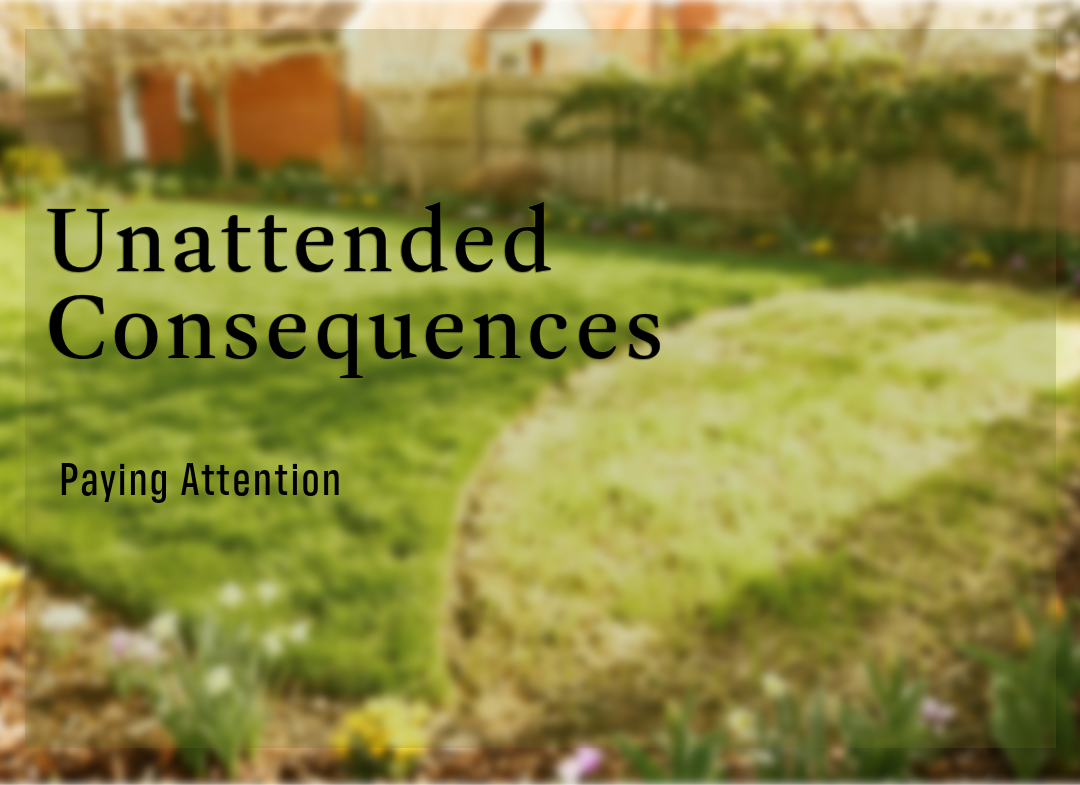
Little things rarely stay little if unattended.
Paying Attention
Catch all the little foxes before they ruin the vineyard of love, for the grapevines are blossoming! Song of Solomon 2:15
I spent part of the weekend catching up on some long overdue yardwork. This spring has been unusually wet. Between the alternating rain and sunshine, not to mention watering the trees, the weeds had gotten completely out of control. What once started out as small weeds weeks ago had become large, deeply rooted, and thriving. As I started pulling them, I noticed a couple things. The weeds had now become home to all kinds of bugs. Wasps, hornets, beetles, spiders, and all kinds of other insects had made the weeds their home. Now I was disturbing their environment. They immediately scattered, buzzed around me, and seemed determined to defend their territory. I can’t blame them for that. They were everywhere, but the bugs were not really the problem. My neglect had allowed an entire ecosystem to develop. The bugs were simply living in the environment I had allowed to develop and I was now disrupting it. By putting off regular maintenance, I had unintentionally created the conditions where their ecosystem could not only live but thrive.
I couldn’t help but see the parallel to my recovery. Character defects rarely develop overnight. They grow because I neglect the little things. I procrastinate on my step work. I neglect my prayer life. I stop journaling. I tell myself I’m too busy to attend a meeting or call my sponsor. None of those acts of neglect seem significant by themselves. But over time they can accumulate and create an environment where unhealthy attitudes, old thinking, and destructive behaviors can take root and begin to flourish. What once could have been pulled with very little effort when it was small, becomes deeply rooted simply because I kept telling myself I’d deal with it later.
As I continued working, I also noticed that the weeds were much harder to remove than they ever had been in the past. Normally I could have pulled the weeds easily by hand, but now I couldn’t. Because I had waited so long, what should have been a simple job now required much more time and effort. What once required only my hands now required gloves, a rake, a hoe, and a shovel. Recovery is no different. The longer I ignore an issue, the more work it often takes to address it. In my recovery, a daily Step 10 inventory helps me address small issues before they become deeply rooted and begin affecting other areas of my life. I can’t afford to ignore the small things and expect them to stay small.
When I was done, I sat down with a cup of iced tea admiring my work and how nice the yard looked again. As I sat there, I began reflecting on everything I had noticed while working. This wasn’t exposing a problem I have today as much as reminding me why I don’t want to go back to the way I used to live. Recovery has changed what I pay attention to. Before recovery, I ignored little things, and even the big things, pretending they weren’t really there. Denial made that easy. Today, I know that little things rarely stay little. That’s why I try to pay attention before they have the opportunity to become deeply rooted. Daily prayer, honest inventory, meetings, and talking with my sponsor aren’t just recovery disciplines. Those practices help me recognize small issues before they have the chance to take root and grow into old attitudes and behaviors. That is the gift of recovery for me.
Reflection
What have I been putting off? Is there a small issue I need to address today before it has the opportunity to take root and grow?
 Ed A. Schultz | Writing & Ministry