When I Lost My Cool

Seeing my part, owning it, and releasing the rest

Be quick to listen, slow to speak, and slow to get angry. Human anger does not produce the righteousness God desires. James 1:19–20

Today was not my finest hour. I had an epic fail in my recovery walk. I told one of my employees to shush and slammed my hand down on the desk. I am not proud of how I behaved. There was an upset client who was not able to pay his bill, and I was asked to come and help with the situation. From the moment I stepped in, everything was loud and unmanageable. I began to diffuse the situation. I wanted to calm the client down and get him the help he needed to pay his bill. The employee who asked me to help stood behind me, constantly talking over my shoulder to the client I was helping. Then the client got on the phone with his financial lender. He was an older gentleman. He put his phone on speakerphone so I “could hear.” His call, however, was answered by an AI. He thought he was speaking to a real person. He did not realize it was AI. When the AI was not responding to his request, he got more upset. On top of that, the AI kept repeating its questions for him to answer. At the end of his rope, the client started to get even louder because he thought the AI could not hear or understand him. I tried to explain that he was talking to an automated system and suggested asking for an operator or agent. He got furious and slammed his phone down on the counter and walked out, leaving his phone behind on the counter, still on speaker, and the AI still asking, Are you still there? Each time it did, my employee kept yelling YES! over the top of me so the AI could hear her. This happened again and again, many times.

After several minutes, the man came back in. I was still trying to calm him down and at the same time help him get his bill paid. He was not the only client there who needed help, so all of this drama had an eager and willing audience. Each time the client asked me a question, while I was answering, my employee would raise her voice to answer too, talking over me. The whole time, the AI was still on speaker and still asking, Are you still there? and my employee was still shouting YES! each time. All of this noise just made things worse and the client even more frustrated. Now, as I think about it, it was actually quite humorous. You could not make this stuff up. Finally, I turned around to my employee, slammed my hand down on the desk, and said, “Shush!!” I said, “You called me here to handle this. Let me handle it and stop talking over me.” Once she quieted, I was able to get the client calmed down. I was able to resolve the situation with his bill, and he left peacefully, but the way I handled myself did not sit right with me.

I knew I had work to do. The employee’s bad behavior did not justify or excuse mine. Recovery has taught me that I need to figure out what my part was and make amends for it, which I did. Once things quieted down, I went to my employee and apologized for saying shush. She said, “And slamming your hand on the desk too?” I said, “Yes, and for slamming my hand on the desk too. I apologize for both. That was not necessary and out of line.” I didn’t realize it at the time, but even in my amends I still left something out. But I did correct it in the moment. And I did resist the urge to defend my actions or explain anymore. I refused to jump into more chaos when this employee tried to defend her actions and pull me back into it. I simply said, “I just wanted to apologize for how I behaved,” and left it at that. I’m still a work in progress. I didn’t do it perfectly, but I did do it. I made things right where I could, and let the rest go, giving it over to God.

Reflection

Where am I tempted to defend myself instead of owning my actions?
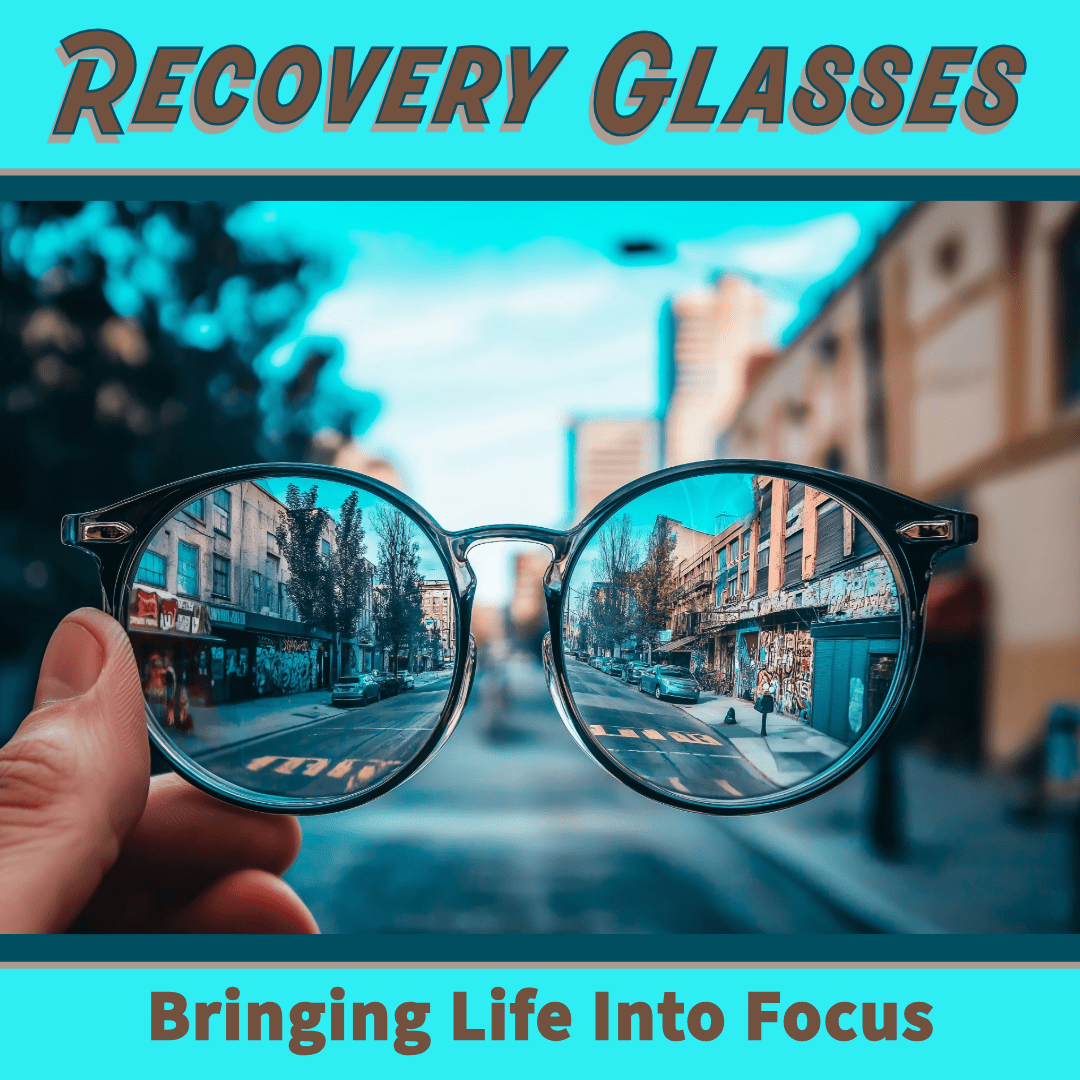
Recovery Glasses

Bringing Life Into Focus

But I know this: I once was blind, and now I can see! John 9:25

I remember riding with a friend one day when he asked me to help navigate. We were trying to find a certain street, and he told me to let him know when we were getting close. So I was watching for the sign, feeling pretty confident in my role, and we were having a good time. Then out of nowhere he sounded irritated. “There’s the street right there. Why didn’t you tell me?” I told him we weren’t close enough yet for me to read the sign. I honestly had no idea how he could read it. He looked at me like I had three heads and said, “You can’t read that sign?” When I said no, he said “You need glasses!” I said “No I do not!” and then he handed me his glasses and said, “Put these on.” The moment I put them on, it was like I had been in a pitch black room and someone just flipped on the light switch. I could suddenly see every single letter clear as day. Everything seemed more vivid, vibrant and defined.

Later that day at his house, he handed me the glasses again and said, “Look at the TV through these.” I laughed and said, “What difference could that make?” Famous last words. I put them on and I was flabbergasted. The colors were bright. The picture was sharp. It was amazing. I thought I could not believe I had never watched TV like this before in my entire life. Let me tell you, I’ve watched a lot of TV too. I know how to watch me some TV, and apparently I’ve never really seen any of it.

I was thinking about that memory this morning during meditation, and it hit me that recovery is very much like that. Before recovery, I was walking around without realizing how blurry my thinking was. I thought my reactions and my fears were normal because they were all I had ever known. I thought I was seeing things just as clearly, maybe better, as everyone else. But once I started doing the steps with a sponsor, going to meetings, and doing acts of service, things slowly came into focus. My feelings made more sense. Life felt more understandable. I didn’t have to get right up on every problem to figure out what was going on. It was like putting on actual glasses for the first time. Everything came into focus and I could see things as they really were, not as how I was interpreting based on limited sight.

When I think about recovery now, I think about those glasses. I didn’t know anything needed to change until someone handed me a clearer way to see things. God used people, meetings, and simple tools to show me what I couldn’t see on my own. And when I keep my recovery glasses on, I feel alive and the world is a much more beautiful place filled with vibrant colors and experiences. It is more real and defined. My circumstances didn’t change or automatically fix themselves, but the way I see them changed. And when I see more clearly, I can live more honestly and have more serenity, the kind that comes from finally seeing things as they really are and not just how I imagine or want them to be.

Prayer:
Father, thank You for helping me see things as they really are, not just how I imagine them or want them to be. Thank You for the gift of recovery and the people who guide me along the way. Keep my vision clear today. Help me stay honest, willing, and grounded in Your truth. Amen.

People Are More Than Their Cover

Seeing Value Beneath The Blemishes

You are our epistle written in our hearts, known and read by all men. 2 Corinthians 3:2

The other day I ordered a few books online. After managing bookstores for over twenty years, I’ve learned to take good care of my books. I never bent the covers back, folded the corners of pages, or wrote in the margins. I always treated them with respect and took good care of them. So when my order arrived, I was excited to open it. The listing said the books were in “excellent” or “very good” condition, and in my mind that meant clean pages, no writing, no dog-ears, just a well-cared-for book that might have been read once or twice. But when I opened the package, one of the books I was most excited to read had writing in the margins, lots of underlining, many dog-eared pages, and a handwritten dedication on the inside cover. My first reaction was disappointment. In my estimation, this was not in either excellent nor very good condition. I even thought about contacting the seller to let them know.

Then a thought crossed my mind: Am I happy to have the book? The answer surprised me, yes, I was. Some of the titles I ordered were out of print and hard to find, and I was grateful to have found them at all. I realized that even with its imperfections, I still had what I wanted, the words, the message, the content inside. And who knows, maybe some additional insight or wisdom could be gained from the previous owner’s experience and notes. My disappointment wasn’t really about the book. It was about my expectations. I had decided ahead of time what “excellent” meant, and when it didn’t match my definition, I felt let down. Once I realized that, something shifted inside me. Gratitude replaced frustration, and peace followed right behind it.

As I thought about holding that “imperfect” book in my hands, I realized how much its flaws and defects told a story other than the one contained in its pages. The folded corners, the writing in the margins, even the dedication inside, they were signs that someone else had found value in its pages and loved it before I did. In a way, those shortcomings gave the book more character and value to me, not less. That thought made me smile and led me to a deeper realization. If I could see the beauty in something imperfect like that book, why was it so hard to do the same with people? I started to see how often I expect others to meet my standards, to see things my way, to share my values and priorities, maybe without even realizing that I have them. And when they don’t, I feel disappointed, frustrated, or even angry. But people are not books, and you really can’t judge them by their cover. Some of the ones who look worn or imperfect hold the greatest wisdom and grace. Every day I’m learning to appreciate others for who they are, not for how closely they align with my expectations. When I can do that, relationships become more about acceptance and gratitude than judgment, and love becomes something I can give and receive freely.

Prayer: God, thank You for reminding me that people are not meant to meet my expectations. Teach me to love, accept, and appreciate others just as they are. Help me to let go of judgment and choose gratitude instead. Amen.