Not Alone

Realizing That I Am Loved

Sometimes the things that annoy me are the very things I would miss if they were gone.

And the Lord God said, “It isn’t good for man to be alone…” Genesis 2:18

Our upstairs bathroom is being worked on, so for the time being my wife, my teenage daughter, and I are all sharing one bathroom. Normally, they use the upstairs bathroom and I use the downstairs one. At first, I didn’t think sharing would be that big of a deal. Then they moved in with all their stuff.

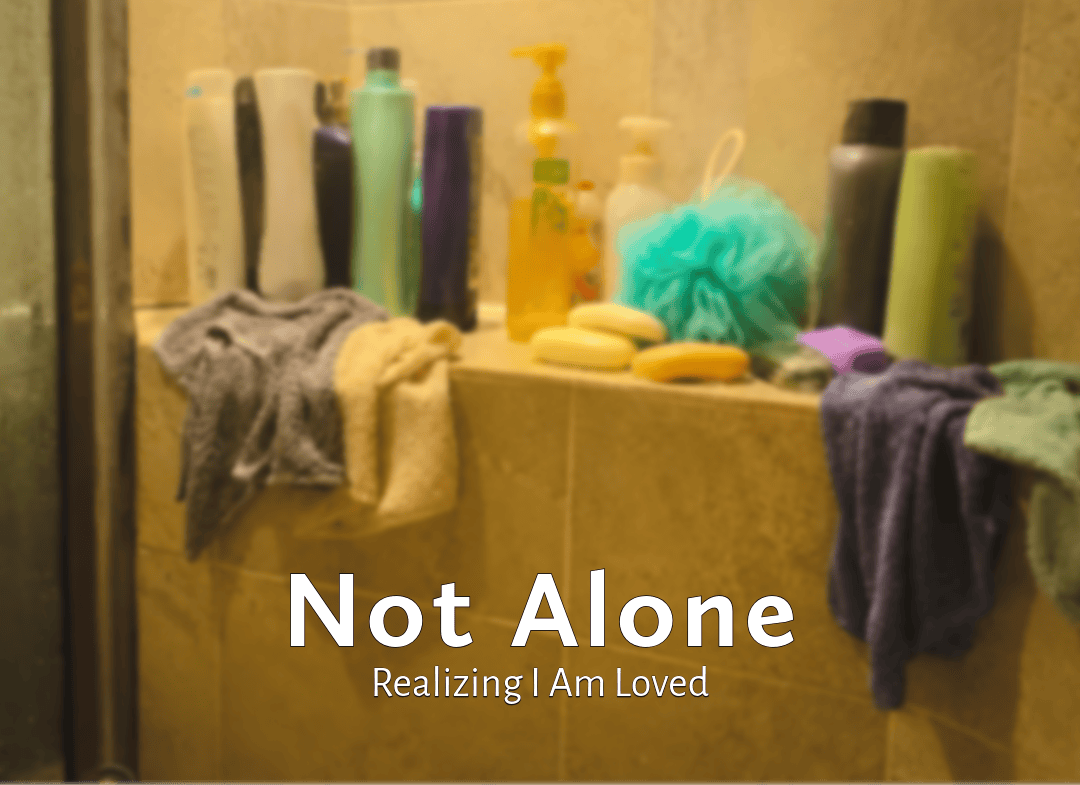
Everywhere I looked, there was some kind of product. In the shower there were three or four kinds of shampoo, two or three different conditioners, three different bars of soap, a couple kinds of liquid soap, pouf balls, loofahs, and multiple washcloths. Apparently, you need all of these things just to take a shower. In the drawers there were four different brushes, three different combs, and all kinds of other things that had never been there before. At first, I was annoyed. Their stuff was in my way, and I had to move my stuff around to make room for theirs. So I started thinking about what recovery principles I could use to help me deal with it. Let go and let God came to mind. I thought about How important is it? And knowing this wasn’t permanent, This too shall pass was another.

Then one day, while I was taking a shower and looking at all those products, another thought struck me out of the blue: I’m not alone. Big revelation, right? All of those things in my bathroom meant there were other people here. I love it when that happens. It usually means I am about to learn something and grow. Which I did. I realized that I like not being alone. Don’t get me wrong, I value my alone time very much, but I don’t want to be alone all the time. I’m not sure how I would feel if I were. I have people in my life that I love and who love me. We are a close-knit family. Yes, we get on each other’s nerves occasionally. We have our scuffles and disagreements, but we work them out. I don’t just love my family, I really, really like them and enjoy spending time with them.

When I got out of the shower, I took a look around at all that stuff. I saw something different. I saw that I’m not alone. I saw that I have a family. I saw that I am loved. I still wouldn’t mind having my bathroom back, and I definitely look forward to it, but until then, all those bottles, brushes, soaps, and loofahs remind me of something much more important than having everything where I want it. I have people in my life who love me, and I am very grateful for that. And that is the gift of recovery for me.

Reflection: What things in my life annoy me but I would deeply miss if they were gone?

The Test

Quietly Asking Without Asking

I was about to create a test for someone they didn’t even know they were taking.

But each one must carefully scrutinize and examine his own actions, attitudes, and behavior, and then he can have the personal satisfaction and inner joy of doing something commendable without comparing himself to another. Galatians 6:4

I miss my grown children. We live in different states now, and I would really like to stay more connected with them. Usually every Monday I send them a text and ask how things are going. How is the family? Did you do anything over the weekend? Anything new going on? They usually respond. Our exchanges are very nice, but most of the time I am the one who initiates them. I wish I heard from them more often without being the one to reach out first. Sometimes that hurts. Sometimes I wonder if things I did before recovery damaged our relationship. I know I made mistakes, and I know I cannot go back and change the past. I have made significant changes in my life and in the way I interact with people, especially my family. I am still not perfect, nowhere near it, but I have changed a lot. Even so, that doesn’t stop me from wondering if things would be different today if I had been different then.

This week I was getting ready to send my usual text when another thought came into my head. I’m not going to text them this time. I’m going to wait and see how long it takes for them to contact me. Almost as soon as the thought processed through my brain and into my conscious thinking, I recognized it. That was manipulation. That was the old me. I wasn’t simply deciding not to text them. I was setting up a test for them to take. One they didn’t even know they were taking. If they contacted me, I would feel wanted. If they didn’t, I would interpret their silence as proof that they didn’t care about our relationship as much as I did. What I was really going to do was try to get something from them without ever asking for it. I don’t want to live that way anymore. So I sent the text.

The truth is, I text my children because I love them. I text them because I miss them and because staying connected with them matters to me. I would love for them to initiate more often, and I am not going to pretend it doesn’t hurt when they don’t. Recovery doesn’t require me to deny how I feel. But it does help me identify and accept my true feelings. And it reminds me that I can choose how I act, but I have no control over how they do. I sent a text message just because I wanted to talk with them. I was not expecting anything in return. For me, that was doing the next right thing. When I do what I know is right and leave the outcome up to God, I have peace within myself and peace with God. And that is the gift of recovery for me.

Reflection: Have I ever expected something from someone without asking for it, then quietly tested them to see if they would give it to me anyway?

Jumping to Conclusions

When Assumption Become Facts

I did not know what happened. I just decided I did.

The first one to plead his cause seems right, until his neighbor comes and examines him. Proverbs 18:17

I have this little cloth that I put over my laptop keyboard before I close it. It keeps the oils and dirt from the keyboard from transferring onto the screen. I use my laptop every day to write, so I take especially good care of it, including that little cloth. The other night when I was shutting my laptop down to put it away, I could not find the cloth. I looked everywhere for it but could not find it. I thought for a brief minute that maybe I misplaced it, but immediately I thought, No. I always put my stuff away. So I assumed maybe the cat took it and thought it was a toy. The next morning I still could not find it. I asked my wife if she had seen it and told her I thought the cat took it. She said she hadn’t seen it, but I could have hers. I did not want hers. I wanted mine. And if I am honest, I wanted to complain about the cat taking my cloth. I had convinced myself that was what happened.

At lunchtime, when I was at work, I pulled out my laptop to do some writing. I was sitting at my desk, looked to the right, and there it was. My keyboard cloth was sitting right there in front of me. It had been there the whole time. The cat had not taken it. I had left it at work. I was glad I had found it, but then it started bothering me. Not because the cloth was a big deal. It only cost a couple dollars. What bothered me was how quickly I had made an assumption and blamed my cat. Why did I do that? Why wasn’t my first thought that I lost it or misplaced it? Actually, that thought did cross my mind, but I dismissed it immediately because I always take care of my stuff and I always put my important things away. And typically, I do. But this time I didn’t. Then I remembered that I was interrupted at lunch the day before. I had to handle a situation right away and I closed my laptop and put it away hastily.

I started thinking about how often I did that before recovery. I made assumptions. I jumped to conclusions. I decided why people did things or what they meant, and I was usually wrong. Apparently I still do it, even after years of recovery. This is where inventory helps. It forces me to look for my part instead of immediately trusting my assumptions. It doesn’t always come from a deep-seated hurt or wound from my past. Sometimes it is real simple. I had decided it could not be me, so I looked somewhere else. I did not know what happened to it. I assumed the cat took it, and then I started reacting to my assumption as if it were true. Recovery gives me another choice. I can stop, find my part, and admit when I simply do not know. That is a huge step for me. Accepting that I do not have all the answers.

And by the way, I came clean. I told my wife I found the cloth at work and I did make amends to my cat.

Reflection

What am I not seeing? What am assuming without really knowing?

Huge Little Thing

Sometimes it’s the little things show me just how much I have changed.

We will intuitively know how to handle situations which used to baffle us.
Alcoholics Anonymous, The Promises

The other night I showed up to umpire a game unprepared. I did not have the right uniform with me. I umpire for several different organizations, and each one has its own uniform requirements. I asked the league representative if I could work the game with the uniform I brought with me, hoping they would say yes. Instead, they asked if I had enough time to go home and change. Sadly, I did. So, I went home, changed my uniform, came back, and worked the game.

I have to admit I wasn’t especially pleased with the outcome of that conversation. It definitely was not what I wanted to do. However, I was cognizant of how differently I handled the situation than I would have in the past. I was upfront and honest. I did not try to lie or hide the fact that I was unprepared. I was vulnerable. I made my request known, and when I did not get the answer I wanted, I did not get upset. I didn’t try to manipulate or control to get my way. I accepted the answer they gave me and worked the game. Yes, I was embarrassed that I showed up unprepared. But because I did the right thing, the embarrassment slipped away. I showed up and did my job without an attitude. I maintained my emotional sobriety, and my disappointment didn’t leak onto anyone else either. And when the game was over, I had no resentments.

I felt proud of myself for the way I approached the situation. And deep down I sensed God was proud of me too. I was able to let it go. I did not dwell on it or play it over and over in my head. And that was a great gift. These little things that come up in my everyday life are huge for me because I know how I used to respond in the past. What stood out to me most was that it was not a challenge. It was not a battle. It was not something I vacillated on, and it was not a difficult decision. It wasn’t even a decision. I am so grateful for that.

Working through the steps of recovery has changed me from the inside. My responses are different. My thought process is different. My emotions are different. I am different. And that is the gift of recovery for me.

Reflection

What little things in my life show me that I am responding differently than I used to?

Fighting Ghosts

Uncovering Yesterday’s Wounds

One of the gifts of inventory is discovering that my reactions aren’t always about what’s happening right now. Sometimes I’m still in a battle with a ghost from long ago.

So I run with a purpose in every step. I am not just shadowboxing. 1 Corinthians 9:26

The other night I was umpiring an adult softball game. Around here they call it a “beer league” because most of the players drink while they play. For the most part it is just a bunch of adults having fun, playing ball, and enjoying themselves. Occasionally, though, someone drinks too much. One of the players was clearly drunk and being loud, boisterous, and passive aggressive throughout the game. After the game he walked up to me on the field and said, “You know I’m just joking with you. You don’t need to take it seriously. You know I’m…” Before he could finish, I interrupted him and said, “Drunk.” His demeanor changed immediately. He became confrontational. Then I followed it up with, “I’m sorry, was that supposed to be a secret?” It was pure sarcasm. As soon as the words came out of my mouth, I knew I had crossed the line. I wanted to apologize and I did, but I don’t think he’ll even remember, but I will.

On the drive home I did a step 10 inventory. I asked myself a few questions. Why did I say that? Why did I act that way? Why did I want to call him out and embarrass him? My sponsor has taught me that when I have a reaction, there is usually something more underneath it. So, I stayed with this and as I thought about it, I remembered another incident from years ago before recovery. I was traveling to a convention for work. A coworker showed up at the airport drunk and got even more drunk at the airport bar before a flight. He became loud, obnoxious, and completely unaware of how he was acting. He had shared he was terrified of flying. Instead of showing him grace, I took advantage of the situation. I encouraged him to be even louder and more obnoxious. I encouraged him to make a fool of himself and laughed at him as he did. It was the same feeling. The same reaction. As I sat with it, I asked what was I feeling? What was I getting out of this? I was taken back to when I was a child. Growing up, the alcoholic in my life was very different when he drank. When he was drunk, there was anger, humiliation, fear, and a feeling of powerlessness. Then I saw it. Part of me still wants to fight back. The problem is, I am fighting a ghost. I am unleashing my anger on people who were never responsible for my pain. When I encounter a drunk person today who is being loud and obnoxious, that little boy in me still wants to expose them, embarrass them, and take back the power he never had. He still wants to punish them and make them feel what he once felt.

What surfaced when I did my inventory was this: the softball player is responsible for his behavior and I am responsible for mine. I need to stop focusing on the other person’s actions and examine my own. Instead of justifying my meanness and sarcasm, I have learned to ask why it was there in the first place. What I uncovered that day is just another layer of anger, fear, and pain that I did not know was still there. I’m grateful that inventory helps me find my part. It helps me uncover hurts and pains from my past that are still influencing me today. Once they’re uncovered, I can surrender them to God and ask Him to continue healing them. As I continue doing my part, God faithfully does His. He renews my thinking, heals old wounds, and helps me respond differently than I did before. That is the gift of recovery for me.

Prayer

Father, thank You for showing me another layer of what is really going on inside me. Help me to stop fighting ghosts and taking my pain out on people who didn’t cause it. Give me the courage to keep taking my own inventory, to own my part, and the willingness to let You heal what I cannot. Amen.

Not Me Anymore

A Noticeable Change

One of the things I’m learning in recovery is that having an off day does not mean I am back to being the old person I used to be.

My dear brothers and sisters, always be willing to listen and slow to speak and slow to become angry. James 1:19

The other day at work, I was having an off day. I was short with people, snippy, and clearly frustrated. We were running behind, and I was trying to figure out why. I walked into the hallway and saw two employees standing there. I asked them what their roles were for the day. They started explaining why things were behind, but I interrupted them and said quickly, “I just want to know your role today.” They answered, and I walked away frustrated. A few moments later I asked another employee the same question. She looked at me and said, “I haven’t seen you in a while. You don’t talk to us that way anymore.” The moment she said it, I knew instantly that she was right. I stopped, took a breath, changed my tone, and said, “You’re right. I’m sorry.” Then I calmly asked her what was going on, and she explained the situation to me.

As I walked back down the hallway, one of the other employees stopped me and said, “I didn’t appreciate you snapping at us like that. We didn’t deserve it.” Before recovery, I would have gotten defensive. I would have justified my attitude or blamed stress or pressure. Instead, I paused and listened. I looked at her and said, “You’re right. I was wrong. You didn’t deserve that. Please forgive me.” She smiled and said, “No problem. I figured you were just having a bad day. That’s normally not like you.” Honestly, that one comment meant more to me than she probably realized. It showed me that growth is happening in my life. Not because I never have bad moments anymore, but because those moments are no longer who I am. There is a noticeable change that I wasn’t trying to force. It just is happening. Trusting the recovery process really works.

I walked away from that conversation genuinely grateful. Grateful that people felt safe enough to confront me honestly. Grateful that I was able to hear it without shutting down or lashing out. Grateful that I could admit I was wrong and immediately make it right. But more than anything, I was grateful that my behavior stood out as unusual instead of normal. Recovery is not making me perfect. I still have off days just like everyone else. But today those moments are the exception instead of the norm. I am finally becoming the kind of person I had always hoped to be. And that is the gift of recovery for me.

Prayer

Father, thank You for the changes You are making in me day by day. Thank You that I no longer have to react the way I used to. Help me to stay teachable, honest, and willing to listen when I am wrong. Remind me to slow down and show grace to others. Continue shaping me into the person You want me to be. Amen.

I Cannot Tell His Story

Peace Through Perspective

I can’t tell his story. But I can change mine.

Man looks at the outward appearance, but the Lord looks at the heart. 1 Samuel 16:7

What I knew about my dad was that he was a master sergeant in the Marines. He trained paratroopers. He was injured on a jump when one of the lines sliced him, leaving a scar across his abdomen. Although he never identified himself as an alcoholic, I know he drank a lot, and when he drank, he got drunk. And when he was drunk, he was often mean and violent. That’s what I experienced growing up. There were times when he wasn’t like that. But there were many times when he was. He was estranged from his biological children, and I believe he carried resentment from that into our home. For most of my life, that’s the story I told myself about him.

As I’ve gone through recovery, I’ve started to see how much of that experience shaped me. He demanded things be done right. Not just done, but done perfectly. I remember washing his diesel truck and missing a few spots on the grill. He inspected my work and instead of having me fix that one area, I had to wash the entire rig again. Hours of work, over something small. The same thing happened with mowing the lawn. It had to be cross cut, then diagonal cut. It had to be done a certain way, and if it wasn’t right, I had to start over. That mindset stayed with me. I learned to strive for perfection. I learned that getting it wrong meant starting over. And while that shows up today in doing things well, it also shows up as pressure and an impossible standard I can’t always meet. I have learned those were unrealistic expectations.

After I got into recovery and started working through the steps my sponsor pointed out something I didn’t want to see or admit. He said that I seemed to have a hatred for my dad. I denied it. I was a Christian and I didn’t have hate in my heart for anybody. But as I worked through the steps, I found that there was hatred in my heart for him. My sponsor suggested I do a fourth step just on my dad. So I did. It was a very long fourth step. It took me months.

In doing that, I realized something that changed everything for me. I cannot tell my dad’s story. Outside of what I experienced, I knew very little about him. That helped me begin to see him as a person instead of a monster. I’m not excusing what he did. But when I started to understand there was more to him than what I saw, I began to develop compassion for him. I just wish I had come to that place before he passed.

Recovery has given me a way to make amends to him even though he’s no longer here. I make a living amends by changing how I live. By letting go of the resentment. By choosing to see the good in him and not defining him by his struggle with alcohol. By accepting him as my dad, the man who raised me. Most of my life I called him my stepdad. I kept that distance. Today, I call him my dad. I love him for who he was, not what I wished him to be. And there is a peace in that I can’t fully explain. That is the gift of recovery for me.


Prayer

Father, help me to be honest about what’s in my heart. Give me the courage and strength to let go of the resentments and pain I’ve carried, and help me offer forgiveness instead. Thank You for the healing and peace that comes with that. Amen.

Trying Too Hard

Already Enough

I didn’t realize how much pressure I put on myself… until I saw it in my daughter.

A person’s words come from what fills their heart. Matthew 12:34

My daughter plays softball, and she’s a good hitter. The other day during a game, she overheard the opposing coach say, “Wow, she makes good solid contact every time.” Her next time at bat, she walked. She was frustrated she didn’t get a chance to hit. Then her next at bat, she struck out. You could see it… she was trying so hard to hit the ball. Trying to prove she really was a good hitter. I was trying to encourage her and told her that she didn’t have to try so hard. You are a good hitter. You don’t have to prove it. Just have fun and let it happen. Later we went and did some batting practice, and she was rocking it again… just like before. God used that to show me something about me. I do the same thing with my writing. The apple doesn’t fall far from the tree.

When someone makes a positive comment about what I write, I feel it. I sometimes find that I put pressure on myself. I want to perform and do good again. I want to prove that I am good enough to deserve the praise or compliment. The truth is when I focus on growing and continuing my journey for me, I don’t have to force it. If I just keep putting good stuff in, good stuff will naturally come out. I know this. I don’t have to force it.

He showed me something else too. It can become an addiction. When someone likes what I write, it releases dopamine in my brain. And that dopamine release is an unexpected boost. My brain likes it and wants more. That is where “crave” comes from. I start craving that feeling. And my brain says, “Hey when I write something people like I can get that instant boost. Let’s do that again.” But when I focus on doing my recovery for me, to improve myself and grow closer to God, the dopamine is released naturally and evenly. I do not have spikes with quick highs and lows.

I am grateful for my recovery today. It allows me to see things as they really are. I can slow down and honestly look at my motives and make different choices. I can then share what God shows me instead of trying to write something people will think is good enough. I don’t have to prove it anymore.

Prayer
Father, help me to stop trying to prove myself. Teach me to trust what You’ve already put in me. Show me how to slow down. Help me just be me and enjoy life. Thank You. Amen.

The Leading Role

Stepping Into My Own Life

Recovery helps me move from watching life happen to actually living it.

What helped you step forward instead of staying on the sidelines?

The thief comes only to steal and kill and destroy. I came to give life—life in all its fullness.
John 10:10

I was watching the movie The Holiday, and one scene really stood out to me. There’s a moment where a woman named Iris finally hears the truth she’s been starving for. She has spent years attached to someone who never chooses her, surviving on just enough attention to keep her hooked but never enough for a real relationship. She keeps diminishing herself and settling for less, convinced she somehow deserved her fate and was not worthy of real love. One day she opens up about it to an older man she has befriended, Arthur, a retired screenwriter. After listening to her story, he says something simple but profoundly powerful: “In the movies we have leading ladies and we have the best friend. You’re a leading lady, but for some reason you’re behaving like the best friend.” The words hit unexpectedly. As it sinks in, she says out loud, “I ought to be the leading lady of my own life.” Arthur was not criticizing her. He was helping her see something she had been blind to. She had been living like a side character in her own story, letting someone else’s choices define her worth and value. It is really a moment about identity. It is about waking up to the truth that you matter.

That line stayed with me. I realized I had faced something similar, something I never saw before recovery. Was I living like a background character in my own life? I asked myself, How often have I been the audience instead of the participant? How often have I stood by like a bystander and simply let life happen around me? Before recovery those kinds of questions would never have crossed my mind. I simply reacted to life, often stuck in old patterns of thinking that kept me passive, discouraged, or disconnected. I reacted. I survived. I managed chaos. I tried to earn love and avoid pain. Somewhere along the way I learned to stay small. I stopped expecting much. Most of the time I assumed the worst before anything even happened. I spent a lot of time taking care of everyone else while ignoring my own feelings and needs. Looking back now, I can see how easily I let other people’s choices define how I felt about myself. I did not even realize I was doing it. But God did not create me to live in the shadows of my own life.

Recovery has given me something I did not have before. It has given me awareness. It helps me slow down and look honestly at what is really happening instead of what I tell myself is happening. I am learning to respond differently now. Little by little, recovery is helping me step into my own life instead of standing on the sidelines watching it pass by. For a long time I lived as if life was happening around me instead of something I was meant to live. But my life was never meant to be lived by someone else. It is my life. And with God’s help I am learning to live it.

Prayer

Father, help me live my life fully. Show me where I draw back. Give me the courage to step forward into the life You have for me. Thank You. Amen.

That’s A Good Question

Why Don’t I Answer It?

When I stop using a question to justify my resentment and start using it to search for truth, healing becomes possible.

Search me, O God, and know my heart; try me, and know my thoughts. Psalm 139:23

I was recently sharing in a meeting about how I used to be resentful toward my mom. When my dad passed away, I went to bury him and settle his estate. While I was there, I found out the real reason he and my mom had divorced. She had cheated on him. My dad caught her in front of our house while the three of us kids were inside. My sister was eight, my brother was six, and I was two. Learning that years later really hurt me. I was angry. Deeply resentful. For a few years after that, I barely spoke to my mom. I wondered, what kind of person does that?

Several years later I was sharing this story with a therapist. All those emotions were still there. Hurt. Anger. Confusion. I felt pressure building inside me as I talked about it. Not knowing what to do with it, I blurted out, “What kind of person does that?” I assumed it was rhetorical. I thought it would release some of that pressure and we would move on. Maybe he would even agree with me. Instead he looked at me and said, “That’s a great question. I think you should answer it.” That infuriated me. I didn’t want an answer. I wanted comfort and agreement. I could not believe I was paying someone good money to tell me to answer a question that was clearly rhetorical.

Later that evening, I told my sponsor about it. I said, can you believe that? What kind of therapist tells you to answer that question? I expected him to agree with me. Instead he looked at me warmly with what I would call stern compassion and said, “That is a good question. I think you should write about it and answer it.” I got mad at him too. Was he even listening to me? I thought he did not understand. But I wanted to get better. So I went home and wrote about it.

It was hard to write because all those emotions came flooding back all at once. Anger. Hurt. Sadness. That I’m not good enough feeling. Rejection. Abandonment. As I wrote, I kept coming back to the same question. Why would my mom do this to me? What kind of person does that? I prayed and asked God to help me see. And slowly the answer started forming. She was an alcoholic. She was an addict. She was doing what addicts do. She was thinking about her addiction, not about me. I was collateral damage. She was not doing it to me. She was just doing it, and I got hurt. That realization did not excuse what happened. But it did change something in me. I began to feel compassion where there had only been resentment. I was able to gradually process what had felt so overwhelming. That day I learned that answering the hard questions is not easy, but it is definitely worth it. Facing the ones I didn’t want to, instead of avoiding them, became the doorway to freedom. If I am willing to sit with them, God will meet me there.

Prayer
Father, help me face the hard questions I would rather avoid. Give me the courage to answer them honestly. Help me recognize resentment and surrender it to You. Thank You for the healing and freedom You provide when I give the hurts of my past to You. Amen.

Owing an Amends

Making Things Right

Recovery didn’t take away my first instinct. It gave me a choice about what to do after it shows up.

Whoever hides their sins will not be successful, but whoever confesses their sins and stops doing wrong will receive mercy. Proverbs 28:13

I owed an amends to my wife. That’s never fun. All joking intended. In one of my recent writings, I attributed a line to a well known speaker that my wife has been saying to me for years. I honestly believed I had heard it from that speaker. My wife had told me more than once that it was her thought, but I assumed she had picked it up from the same source and just personalized it. When I used the quote publicly and credited someone else, I undervalued her. She asked me why I didn’t give her the credit.

That question stirred something in me. My addiction to being right kicked in. My need for control showed up fast. My first instinct was still to prove myself right. I decided to look it up and find out where the quote came from. What I found surprised me. There was no original source. No author. No famous speaker who came up with it. It wasn’t a quote at all. It was original. My wife had come up with it. I hadn’t just misattributed a line. I hadn’t believed her. That hurt her. But I didn’t stay there. When I found out the truth, I didn’t ignore it or hide from it. I didn’t pretend I hadn’t seen it. I had to face it and own it.

That meant I needed to make amends. I started by admitting I was wrong. I told my wife the truth about what I did and why I didn’t credit her. I came clean and owned my part fully. That wasn’t easy. The other part of the amends was correcting it publicly. So here goes. In a recent devotion I wrote called “A Decision, Followed by a Process,” that line came from my beautiful wife, Danielle. I did in fact hear a speaker talk about it and use that line. That speaker was my wife. I also went back and corrected the original post to give my wife credit for the quote. Before recovery, I would have defended myself. I would have continued to prove I was right. I would have avoided the apology and completely skipped the correction. Today, I get to be honest with myself, with my wife, and with you. I still have much work to do. I’m not finished. God isn’t finished with me either. This is the gift of recovery for me.

Prayer
God, help me be honest when my instinct is to defend myself. Show me my part and give me the courage to own it. Help me make things right when I get it wrong. I’m still learning. Thank You for staying with me as I do. Amen.

No Defense Needed

Peace doesn’t come from proving my point.

A soft answer turns away wrath, but a harsh word stirs up anger. Proverbs 15:1

The other day I had a growth opportunity at work. A man came in agitated and aggressive with our front staff. They told me he had been rude to them and asked me to step in. When I approached him and listened, he seemed to realize he had overreacted and apologized to me. I thanked him, but I told him it would mean more if he apologized to the people he had been rude to. He did. Later that same day, he came back while I was helping another client and interrupted me asking for help. I calmly said to him, sir please have a seat. I’ll be with you in a moment.

When he finished his transaction and was about to leave, he asked to speak with me. When I walked over, he told me he felt I had been rude to him when I told him to sit down and relax. His version of the interaction included a tone and words that were much different than what I remembered using. I listened to him. I resisted the familiar urge to explain myself, to clarify, to defend my intent. Instead, I looked him in the eyes and said, “I’m sorry. I apologize for being rude.” He thanked me and left.

Here is the gift of recovery for me. I did not defend myself. I did not explain or justify. Even though his version was much different than mine, the possibility existed that I could have come across as rude. So I owned it and made amends. It felt good. I noticed the peace that followed. Not long ago, I would have focused on the facts and proven my point. This time, the facts mattered less than being accountable for my part. By practicing the principles of recovery, I am learning how to live with peace and respond like a grown up.

Prayer
God, help me to stop defending myself. Show me my part, even when I want to explain or be right. Help me own my part and make it right when I mess up. I want peace more than proof. Amen.

I Love My Mom

Recovery Changed the Way I See My Mom

Break free from bitterness, bad temper, anger, shouting, slander, and malicious feelings of any kind. Ephesians 4:31

I love my mom, but she struggled with alcoholism. For a long time, I could not say that I loved her without hesitation. I am not trying to tell her story or diagnose her. I am sharing how my perspective of her changed as I worked the steps of recovery. For most of my life, I blamed her and labeled her an alcoholic. I blamed her for much of the hurt and abuse I suffered. What I came to realize later is that I never suffered at her hand. I suffered at the hands of the man she married. He suffered from alcoholism and was violent and abusive. At the time, she was a single woman raising four young children. Before she passed, she told me she believed she was doing what was best for us by finding a man with a stable income to help care for her family. She found and married one. Recovery helped me see that she was not doing things to me. She was doing what she believed she needed to do to survive, and I suffered from the collateral damage.

For a long time, I could not understand how so many people loved my mom and spoke so highly of her. I could not see her clearly because all I could see was my own hurt and pain. I couldn’t understand why she allowed this to happen. Didn’t she see how much damage her husband was causing to her children?

What I could not understand then, even though I saw it with my own eyes, is how often she tried to defend us and how much she suffered herself. She endured many beatings for it. Some things cannot be unseen, no matter how much time passes. There were moments when I even felt guilty, knowing she was being beaten while trying to protect me. I do not ever remember her being mean to me, hitting me, or ridiculing me. I remember moments when I deserved punishment and instead she showed me grace, mercy, and understanding. It took me far too long to realize she was a good woman and a very good mom.

Now I can say with confidence that I love my mom, and that she loved me. I no longer blame her for what my stepdad did to me. The resentment I carried toward her has been lifted, and compassion has taken its place. I have made amends with her the best I can, and I have also made amends with myself. That misplaced blame and resentment spilled into nearly all of my relationships and shaped how I gave and received love. Working through the 12 Steps, several times, eventually showed me that truth and offered a solution. Today I am more compassionate with others and more honest with myself. I am able to love without reservation and without condition. That is one of the many gifts recovery has given me, and I am deeply grateful.

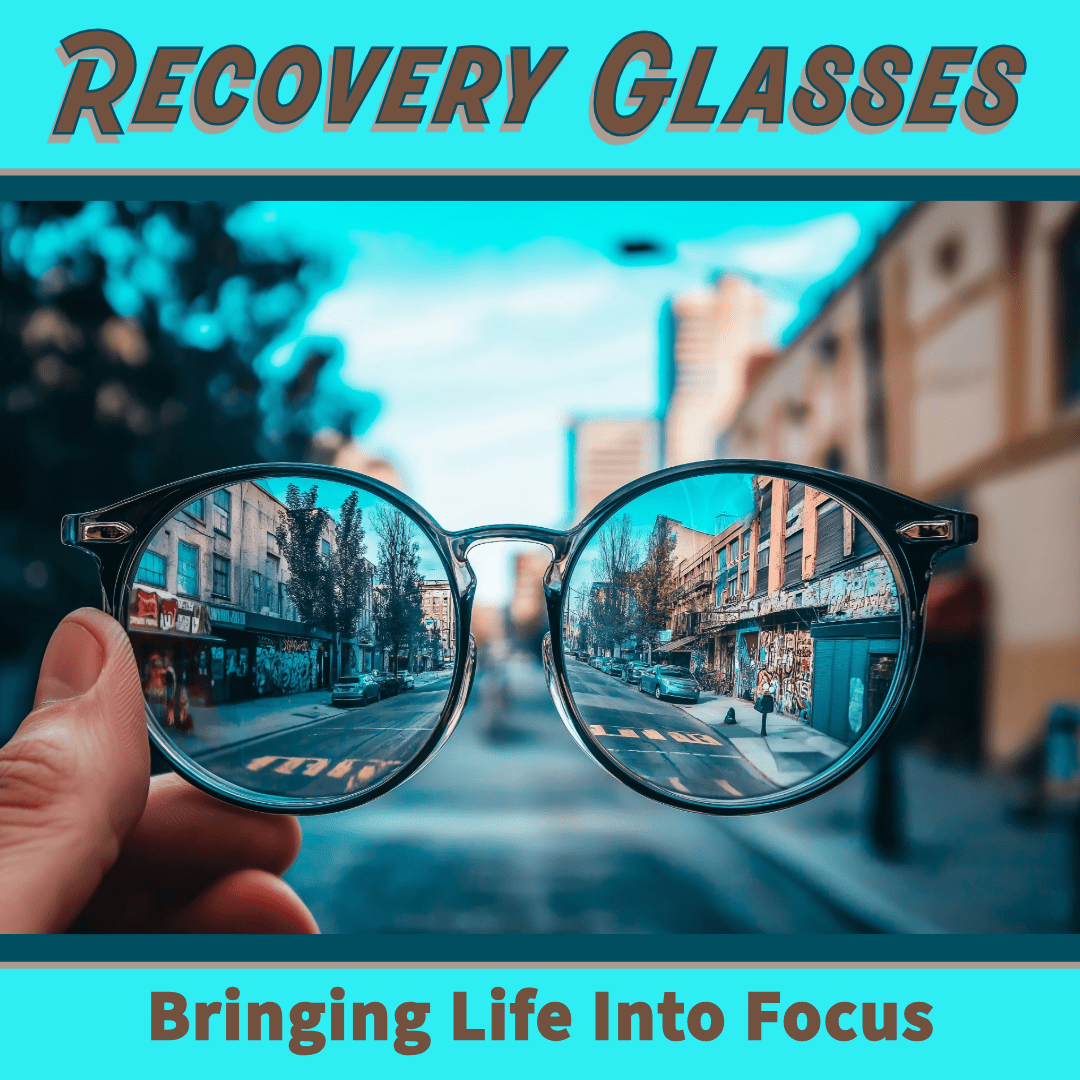
Recovery Glasses

Bringing Life Into Focus

But I know this: I once was blind, and now I can see! John 9:25

I remember riding with a friend one day when he asked me to help navigate. We were trying to find a certain street, and he told me to let him know when we were getting close. So I was watching for the sign, feeling pretty confident in my role, and we were having a good time. Then out of nowhere he sounded irritated. “There’s the street right there. Why didn’t you tell me?” I told him we weren’t close enough yet for me to read the sign. I honestly had no idea how he could read it. He looked at me like I had three heads and said, “You can’t read that sign?” When I said no, he said “You need glasses!” I said “No I do not!” and then he handed me his glasses and said, “Put these on.” The moment I put them on, it was like I had been in a pitch black room and someone just flipped on the light switch. I could suddenly see every single letter clear as day. Everything seemed more vivid, vibrant and defined.

Later that day at his house, he handed me the glasses again and said, “Look at the TV through these.” I laughed and said, “What difference could that make?” Famous last words. I put them on and I was flabbergasted. The colors were bright. The picture was sharp. It was amazing. I thought I could not believe I had never watched TV like this before in my entire life. Let me tell you, I’ve watched a lot of TV too. I know how to watch me some TV, and apparently I’ve never really seen any of it.

I was thinking about that memory this morning during meditation, and it hit me that recovery is very much like that. Before recovery, I was walking around without realizing how blurry my thinking was. I thought my reactions and my fears were normal because they were all I had ever known. I thought I was seeing things just as clearly, maybe better, as everyone else. But once I started doing the steps with a sponsor, going to meetings, and doing acts of service, things slowly came into focus. My feelings made more sense. Life felt more understandable. I didn’t have to get right up on every problem to figure out what was going on. It was like putting on actual glasses for the first time. Everything came into focus and I could see things as they really were, not as how I was interpreting based on limited sight.

When I think about recovery now, I think about those glasses. I didn’t know anything needed to change until someone handed me a clearer way to see things. God used people, meetings, and simple tools to show me what I couldn’t see on my own. And when I keep my recovery glasses on, I feel alive and the world is a much more beautiful place filled with vibrant colors and experiences. It is more real and defined. My circumstances didn’t change or automatically fix themselves, but the way I see them changed. And when I see more clearly, I can live more honestly and have more serenity, the kind that comes from finally seeing things as they really are and not just how I imagine or want them to be.

Prayer:
Father, thank You for helping me see things as they really are, not just how I imagine them or want them to be. Thank You for the gift of recovery and the people who guide me along the way. Keep my vision clear today. Help me stay honest, willing, and grounded in Your truth. Amen.

The Impossible Ammends

Not every amends can be made in person.

Be kind to one another, tenderhearted, forgiving one another, even as God in Christ forgave you. Ephesians 4:32

The other day I was thinking about my mom and how much I miss her. She passed a few years ago, but her memory still finds me at unexpected times. As I thought about her, a moment from years back came to mind, a time when I was brand new to recovery and just learning to set boundaries. I realized that in my efforts to change and work the program, I had been harsh and unkind to her. That memory brought a deep sense of regret. But since she was gone, I reasoned it was a conversation I would never get to have with her.

Then I decided to try something I had heard about in recovery and had practiced before, the “empty chair” exercise. I pictured my mom sitting across from me in an empty chair. I began to speak to her out loud and told her I was sorry for how I had treated her, for being selfish, distant, withdrawn, and dismissive. As I talked, I started to see something I had not seen before. I had been punishing her for things she never did. I realized I had been blaming her for the abuse I suffered from my stepdad, as if she could have somehow made it stop. But the truth was, she never hurt me. She tried to protect me, and when she did, she got hurt herself.

As I spoke those words aloud, I felt something lift. I had not realized it until then, but I had been carrying anger and guilt for a very long time, and it was time to let it go. I prayed and asked God to help me forgive completely and let go of what I had been holding on to for so long. What followed was peace, the kind only God can bring.

That time of prayer and honesty brought peace and healing to my heart. I know there is still more work to do, but it was a real step forward. I have come to accept that my mom, like me, was also doing the best she could. I no longer hold her responsible for what she could not control. That realization has helped me show more compassion toward others who are struggling in their own pain. God continues to teach me that forgiveness is not about changing the past. It is about allowing His grace to change me today.

Prayer:
God, thank You for helping me face the things I have held inside for so long. Continue to teach me to forgive completely and to show grace to others the way You have shown grace to me. Keep changing me through Your love, one day at a time. Amen.