
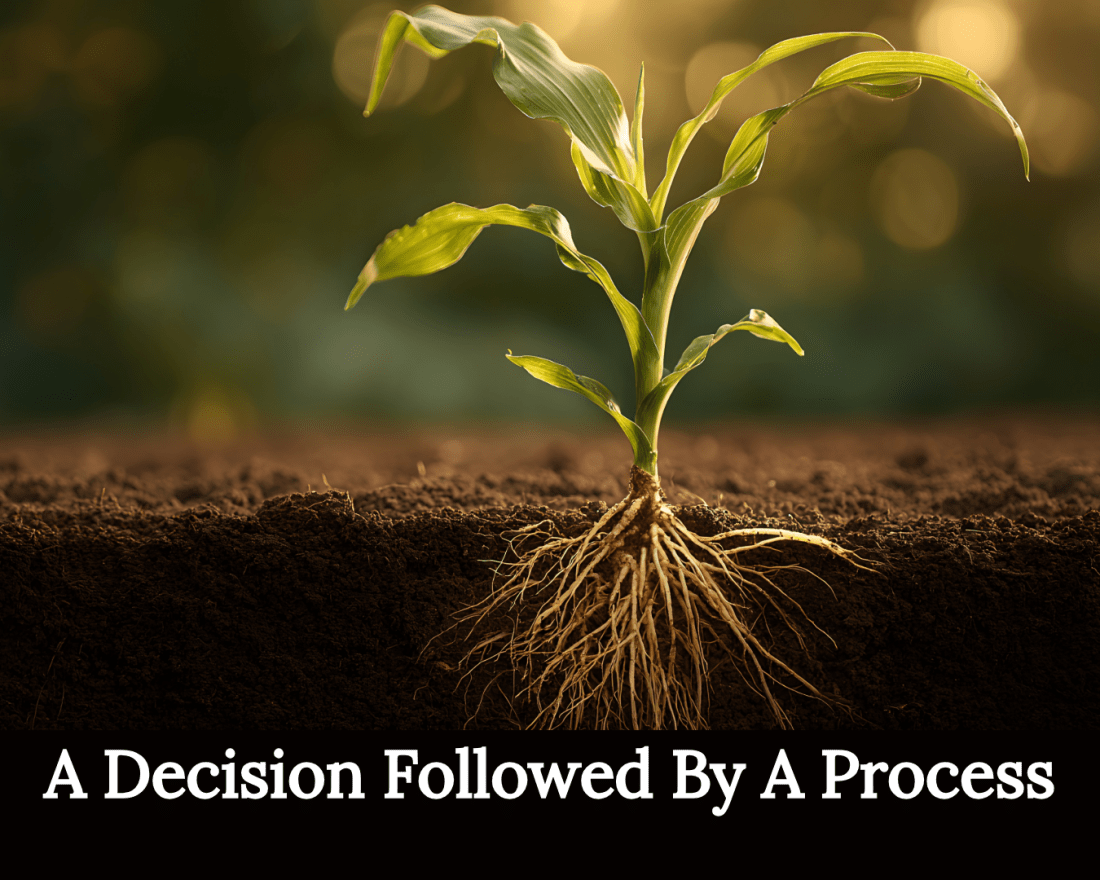
Forming New Habits
What God started in me needed action to take root.
Be made new in your hearts and in your thinking. Be that new person who was made to be like God, truly good and pleasing to him. Ephesians 4:23-24
I was reflecting on something I heard my wife say when she was sharing at a meeting. Recovery starts with a decision, but it is followed by a process. As I thought about that, I began to see how clearly it applied to my life. God set me free and delivered me from my addiction, but my behaviors did not automatically change overnight. Those behaviors had become habits, and habits do not disappear just because I had a spiritual awakening. The freedom was real, but I wanted it to be lasting. The process is what makes it stick. The decision is the planting, but doing the work is what allows it to take root. I am learning that lasting change requires a process I stay engaged with, not just a single moment I look back on.
I am realizing that renewing my mind is not a one time event. It is ongoing. It is daily. As I change how I think about situations, people, and myself, my reactions begin to change too. When I look back at times I struggled in my recovery, I can see a clear pattern. I had stepped away from the process. I was free from the substance and the behavior, but my thinking stayed the same. Without renewed thinking, old behaviors find their way back.
Working through the Twelve Steps is the process that proves the decision I made is real and has taken effect. It is the process God uses to renew my mind. The Steps gave me a way to live out that renewal in real life. Step by step, with my sponsor, I began to see myself more honestly. I took inventory of both my strengths and my defects. I faced where I had harmed others and where I was still holding onto resentment. I learned to offer forgiveness and to make amends. As I took those actions, my thinking began to change and continued to stay changed. New thoughts led to new responses, and new responses led to new habits. That is the gift of recovery for me.
Prayer
God, thank You for setting me free. Help me to always stay willing to renew my thinking each day, so that my actions continue to change and I can be the person You want me to be. I do not want to live in the past. I want to live out what You are doing in me today. Amen.












 Ed Schultz | Writing & Ministry