Learning to Trust

Taking one small step toward trust, even when I’m afraid.

When I am afraid, I will trust in You. Psalm 56:3

Growing up, I had no idea what trust was. I learned early on that people could say one thing and do another, that “I love you” didn’t always mean safety, and that promises were often broken. I learned to survive by relying on the only person I thought wouldn’t lie to me – me. But since I had never really known love or trust, I was relying on a skewed version of what my limited understanding could comprehend. I built walls to protect myself from being hurt again and called it strength. Even after I came to know God, I still kept control of the details, just in case He didn’t come through the way I hoped.

When I came into recovery, I brought that same lack of trust with me. I didn’t know how to open up or let anyone in. I told myself it was safer to keep my guard up and just listen. I didn’t trust people, and if I’m honest, I didn’t trust God either. I believed in Him, but I didn’t believe He would show up for me. Deep down, I was afraid that if I really depended on anyone, they would eventually let me down, just like before.

As I kept coming to meetings, I began to notice something different. People shared openly about their struggles and didn’t seem ashamed. They were honest about their pain, but they also had peace. That was new to me. Little by little, I started to believe that maybe it was safe to be real too. People seemed to listen without judgment and didn’t try to fix me. The more I shared, the more I began to feel accepted. Trust didn’t happen all at once, but each time I opened up, the walls I had built started to tumble down. I started to believe what was shared in the readings, that this was a safe place and what is shared here stays here.

As I learned to trust people, I began to realize that God was using them to teach me how to trust Him. Each time someone listened without judgment, encouraged me, or showed up when they said they would, I caught a glimpse of God’s character. I started to see that He had been faithful all along, even when I couldn’t recognize it. Through the consistency of others, I experienced the steady love of a God I once doubted. Trust was no longer an idea I tried to understand; it became something I was learning to live.

Today, I’m still learning to trust. It’s not something I’ve mastered; it’s something I practice every day. Each time I let someone in, each time I choose honesty over self-protection, my hope in people grows a little more. I’ve learned that trust doesn’t mean I won’t get hurt. It means that even if I do, I don’t have to stop trusting. I can’t stop, because it’s in trusting others that I feel loved, and love is always a risk. It’s a risk to love others, and it’s a risk to let them love you back. But it’s a risk worth taking.

Prayer

Father, thank You for being patient with me as I learn to trust again. Help me to lay down my fear and let others in. When I’m tempted to close off or pull back, remind me that You are safe, and that You often show Your love through people. Teach me to love courageously, to trust even when it feels risky, and to see Your faithfulness in every step I take.

I Can Be Compassionate

Be kind and compassionate to one another, forgiving each other, just as in Christ God forgave you. Ephesians 4:32

I love my qualifier, who struggles with alcoholism. For a long time, I confused control with love. I believed that if I could fix them, everything would finally be okay. I thought their happiness would bring me peace, but it only left me frustrated, anxious, and exhausted. I thought I was showing love, but what I was calling love was distorted. I was attempting to fix and control what only God could heal.

Today I am learning that the solution isn’t in fixing others but in trusting God and keeping the focus on changing myself. I do this by learning to forgive, making amends, serving, giving back, living one day at a time, consciously being present in each moment, and being grateful. Working the steps of recovery has introduced me to a loving, caring God. Because of that relationship, I can “let go and let God.” I can trust Him with my qualifier. My part is to focus on my own recovery and take only my own inventory.

I can have unconditional love for someone with a seemingly unlovable disease. I can separate the person I love from the disease I hate. Loving without conditions doesn’t mean loving without concern. I’ve learned that accepting doesn’t mean liking, and that by accepting them exactly as they are, I can stop expecting. I can have boundaries, and I don’t have to accept unacceptable behavior. Detaching with love allows me to care without control and to love without losing myself.

I can be compassionate, gentle, kind, and understanding. I can allow them to experience the consequences of their decisions, good or bad, without interfering. I can stop depending on them for my happiness and peace, and instead look within for both. I can treat them with the same respect and kindness I would offer anyone, with or without their disease. I can live in the present moment, without heartache for the past or fear of the future. Because of my ongoing recovery from the family disease of alcoholism, I have gifts I never would have known otherwise. I can be grateful for them today. I get to have a loving relationship with my qualifier, and they get to live their own life. I can express my spirituality by showing how merciful God is through my attitude and actions in all my relationships. I can actively and willingly practice these principles in all my affairs. Peace and serenity have come as a result of living a life of spiritual recovery and working the twelve steps of the program. Today I can be compassionate, gentle, and kind, not because my qualifier changed, but because I have.

Reflection
What does compassion look like for you today—especially toward someone you’ve tried to fix or control?

Muddy and Wet

It may not be my fault, but it is still my responsibility.

Each one should carry their own load. Galatians 6:5

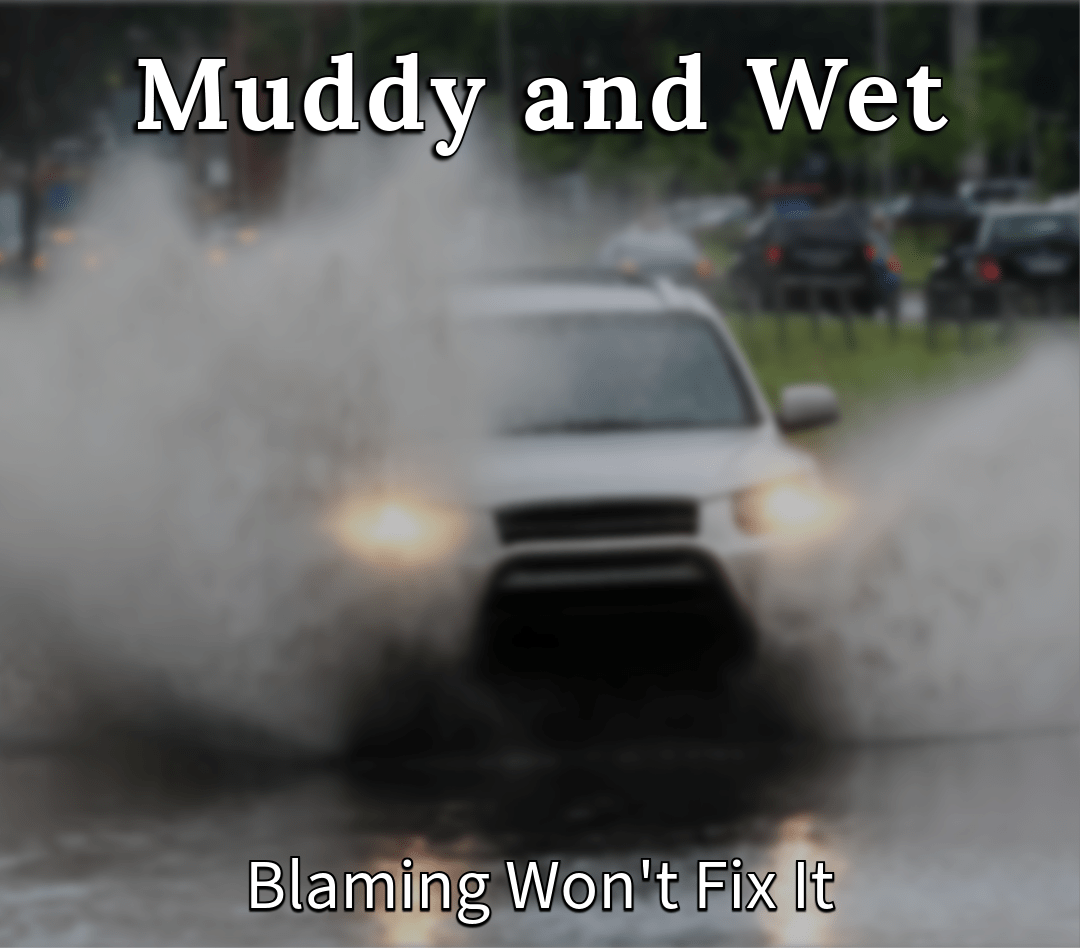
The other day I was out for a walk after a heavy rain. As I came to a corner, I noticed a huge puddle where the drain must have been clogged. Just then, a car sped past and splashed me from head to toe. I was soaking wet and furious. My first thought was, what was that driver thinking? Did they not see me standing there? Did they not see the puddle?

Then I began to blame myself. Why didn’t I anticipate the car coming? Why didn’t I move out of the way? I was trying to decide whose fault it was. Was it mine for not reacting, or the driver’s for not noticing? The truth is it didn’t matter whose fault it was. I was still muddy and wet. And I had three choices: stay angry and stuck, keep going through the day miserable, or go home, clean up, and move forward. I chose the third.

In the shower, I had an aha moment. It’s not about finding fault. It’s about taking responsibility. Blame couldn’t change my situation, but responsibility could. Whether or not the driver even knew what they had done, it was still my responsibility to get cleaned up. Life will splash us with things we didn’t cause and don’t deserve. But blaming others never changes the fact that we are muddy and wet. Responsibility allows us to clean up, move forward, and keep walking with God.

Prayer
Lord, help me not to waste time in blame. Teach me to take responsibility for my response. Give me the grace to clean up, move forward, and continue walking with You. Amen.

Home Runs

Consistency Wins The Game

Do you not know that those who run in a race all run, but one receives the prize? Run in such a way that you may obtain it (1 Corinthians 9:24)

I was umpiring a tournament this past weekend where there were many home runs in a single game. A home run is always exciting. It is a magnificent moment when a player sends the ball sailing over the fence and out of the park. The player who hit it is ecstatic, their team erupts with joy, while the other team is disappointed. The pitcher who gave it up may feel dejected, and sometimes the coach will even make a change. One swing of the bat can shift the emotions and even the momentum of a game.

I have seen teams that were far behind suddenly find new life after a single home run. That one big hit gave them hope, sparked a rally, and sometimes they came all the way back to win. Yet the truth about home runs is that as thrilling as they are, they usually do not decide the outcome of the game on their own.

I have seen teams hit several and still lose to another team that never hit one. How can that be? Because one spectacular event is rarely enough to carry the whole game. The teams that win are the ones that play together, stay consistent, and keep contributing inning by inning.

Life and recovery work the same way. We may have some amazing wins and big victories along the way, but one moment is not the whole story. Winning one battle or even losing one does not determine the outcome. We keep going. We keep competing. We stay in the game. We cannot give up, because the game is not over. The real victory comes by showing up faithfully, playing every play, and staying in it until the end.

Prayer

Lord, thank You for the victories You have given me. Help me not to rely on just one moment but to keep pressing forward with faithfulness. Give me the strength to stay in the game and finish well. Amen.