I Am My Own Qualifier

I stopped explaining myself and started owning my part.

We always think we are right, until the Lord shows us our motives. Proverbs 16:2

I went to my first recovery meeting not because of alcoholism in my own life, or in the life of someone close to me, but because I read an article that said 12 Step recovery programs offer a solution for people who are controlling and manipulative. I was looking for a solution because I had just read a comment about myself on an internet message board that said I was abusive, manipulative, and controlling. That stopped me cold. I immediately pushed back. I was not abusive. And yet, those words quietly began to churn inside me. I could not shake the feeling that they might be true. My first instinct was to fix it. I am a fixer. That is what I do. I thought I could just fix this too. I grew up in an abusive home, and I was determined never to repeat that. I had never raised my hand or my voice. I had never threatened anyone. I never even thought of hurting anyone, EVER. I did not see myself as abusive at all.

It was not until I started working my Fourth Step inventory that the truth began to surface, and it was something I could no longer avoid. The only reason I ever found that message board in the first place was because I had been snooping through the browsing history on our family computer. I told myself I was just trying to understand what was going on, trying to make sense of why my family was falling apart. But as I continued working through my inventory, the truth was impossible to ignore, and I had to admit what it really was. That was manipulation. That was control. Once I saw myself actually doing the things that the message board described, I was embarrassed. I wanted to believe no one else could see it, but the truth was everyone knew long before I did.

When I finally walked into that first meeting, something unexpected happened. I realized I belonged. I qualified, not just because of my family of origin and their lifelong struggle with alcoholism and addiction, but because of my own behaviors. The fixing. The controlling. The managing. The way I tried to change everyone else while ignoring myself. Suddenly, all the times friends and coworkers had gently suggested I consider recovery meetings made sense. They were not criticizing me. They were recognizing patterns they had already faced in their own lives and were trying to carry the message to me. I am grateful I finally embraced it. Through working the steps, I began to take responsibility for my actions and for how they showed up in my relationships. I respect other people’s personal space now. I no longer snoop or invade privacy. I accept that others hold opinions different from mine without needing to challenge, correct, or control them. I no longer feel responsible to fix everyone. I still catch myself slipping into old patterns at times, but today I recognize it sooner, take responsibility for it, and turn it over to God. I do not have to be obsessed with the outcome anymore.

Prayer
Lord, thank You for revealing to me the truth I could not see on my own. I want to be responsible for my actions. Help me remain teachable and open to change. When I feel the urge to control or fix others, remind me to pause, release it to You, and trust You with the outcome. Amen.

My Conscious Contact With God

Conscious Contact: Choosing connection over perfection

Sought through prayer and meditation to improve our conscious contact with God, praying only for knowledge of His will for us and power to carry that out. Step Eleven

I was sitting in a meeting, and like we always do, we read through the Twelve Steps at the beginning. I have heard them hundreds, maybe thousands of times. But this time, Step Eleven landed differently. The wording stood out to me in a way it never had before. This statement seems so simple, but it is profound and powerful. I was also very thankful that this is Step Eleven and not Step One. I would not have been able to do this at the beginning. I did not have the honesty, the humility, or the willingness yet. But now, at this stage, I can see it more clearly. If I could have lived Step Eleven from the start, I would have. I tried but I could not. I did not know how and I was not ready yet.

What stood out most to me was the simplicity of what this step is really asking. I am not praying for outcomes, control, or relief from discomfort. I am seeking God, asking only for the knowledge of His will for me and asking for the power to carry it out. That means I am learning how to be a better person, how to have peace, and how to respond instead of react. It means asking God to do for me what I cannot do for myself. Asking Him to reveal to me what I do not see and what I do not yet know. To give me strength where I am weak. Sometimes that comes as insight, inspiration, correction, or simply a nudge to change something I have been avoiding. This is not about perfection. It is about direction. It is about connection. It is a lifelong pursuit of peace, experienced both in the temporal and the eternal. It doesn’t get any simpler. And it doesn’t get any better than that.

Step Eleven is placed exactly where it belongs. After I have worked through the other steps, honesty, humility, surrender, responsibility, and service begin to manifest in me. As I let go of resentment, hurt, and pain, I realize that I am worthy of accepting and giving love. Then I am clear and free to seek God and try to carry this message to others. I cannot give away something I am not living. I cannot carry a message if I am not seeking God myself. As I seek Him, I experience peace, healing, and freedom, just as promised in the recovery solution. And then I am equipped to share a real lived message with others. Not theory. Not advice. Experience.

Show me Your ways, O Lord; Teach me Your paths. Lead me in Your truth and teach me, For You are the God of my salvation; On You I wait all the day. Psalm 25:4–5

When I Lost My Cool

Seeing my part, owning it, and releasing the rest

Be quick to listen, slow to speak, and slow to get angry. Human anger does not produce the righteousness God desires. James 1:19–20

Today was not my finest hour. I had an epic fail in my recovery walk. I told one of my employees to shush and slammed my hand down on the desk. I am not proud of how I behaved. There was an upset client who was not able to pay his bill, and I was asked to come and help with the situation. From the moment I stepped in, everything was loud and unmanageable. I began to diffuse the situation. I wanted to calm the client down and get him the help he needed to pay his bill. The employee who asked me to help stood behind me, constantly talking over my shoulder to the client I was helping. Then the client got on the phone with his financial lender. He was an older gentleman. He put his phone on speakerphone so I “could hear.” His call, however, was answered by an AI. He thought he was speaking to a real person. He did not realize it was AI. When the AI was not responding to his request, he got more upset. On top of that, the AI kept repeating its questions for him to answer. At the end of his rope, the client started to get even louder because he thought the AI could not hear or understand him. I tried to explain that he was talking to an automated system and suggested asking for an operator or agent. He got furious and slammed his phone down on the counter and walked out, leaving his phone behind on the counter, still on speaker, and the AI still asking, Are you still there? Each time it did, my employee kept yelling YES! over the top of me so the AI could hear her. This happened again and again, many times.

After several minutes, the man came back in. I was still trying to calm him down and at the same time help him get his bill paid. He was not the only client there who needed help, so all of this drama had an eager and willing audience. Each time the client asked me a question, while I was answering, my employee would raise her voice to answer too, talking over me. The whole time, the AI was still on speaker and still asking, Are you still there? and my employee was still shouting YES! each time. All of this noise just made things worse and the client even more frustrated. Now, as I think about it, it was actually quite humorous. You could not make this stuff up. Finally, I turned around to my employee, slammed my hand down on the desk, and said, “Shush!!” I said, “You called me here to handle this. Let me handle it and stop talking over me.” Once she quieted, I was able to get the client calmed down. I was able to resolve the situation with his bill, and he left peacefully, but the way I handled myself did not sit right with me.

I knew I had work to do. The employee’s bad behavior did not justify or excuse mine. Recovery has taught me that I need to figure out what my part was and make amends for it, which I did. Once things quieted down, I went to my employee and apologized for saying shush. She said, “And slamming your hand on the desk too?” I said, “Yes, and for slamming my hand on the desk too. I apologize for both. That was not necessary and out of line.” I didn’t realize it at the time, but even in my amends I still left something out. But I did correct it in the moment. And I did resist the urge to defend my actions or explain anymore. I refused to jump into more chaos when this employee tried to defend her actions and pull me back into it. I simply said, “I just wanted to apologize for how I behaved,” and left it at that. I’m still a work in progress. I didn’t do it perfectly, but I did do it. I made things right where I could, and let the rest go, giving it over to God.

Reflection

Where am I tempted to defend myself instead of owning my actions?

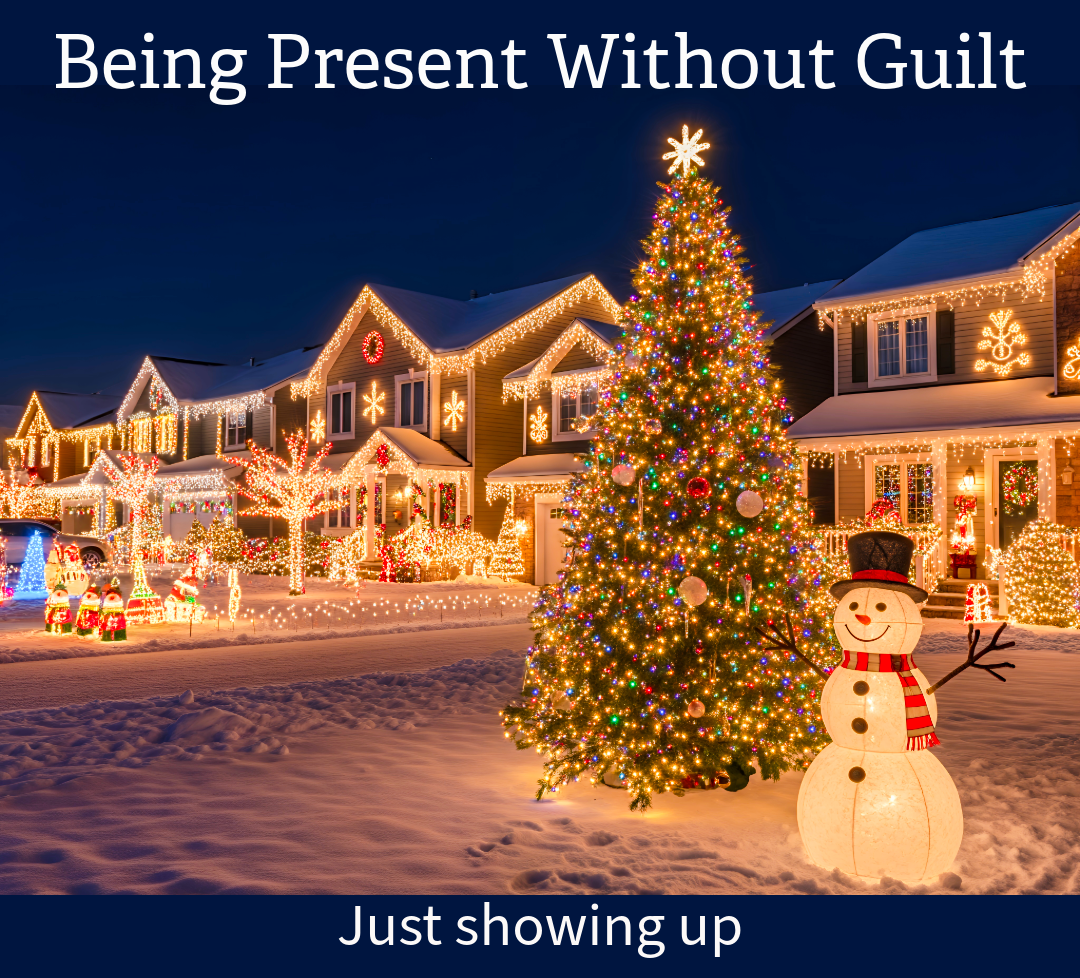
Being Present Without Guilt

Learning to enjoy where my feet are.

Recovery has taught me that I don’t have to justify every moment or fix myself before I can enjoy what’s right in front of me. Sometimes the simplest thing is just being present.

I know that there is nothing better for people than to be happy and to do good while they live.
Ecclesiastes 3:12

We have a few simple traditions during the Christmas season. One of them is driving around town and looking at the Christmas lights and decorations on the houses. There are a few neighborhoods that really go all out. They have lots and lots of lights. Some are synchronized to music, with cutouts and blow ups of all the characters. Some nights Santa is out there handing out candy canes. It’s a lot of fun. We make hot cocoa and pour it into our cups, and sometimes, if we have a few extra dollars, we stop by a local place and pick one up. We play Christmas music on the radio and sing along. We have a really good time as a family. No electronic devices. No distractions. No competing voices. Just us hanging out together doing one simple thing, and it is beautiful. It is absolutely one of my favorite parts of the holiday season. True confession, we do it several times and always one last time on Christmas Eve.

For a long time, I was not able to enjoy simple moments like that. In recovery, it is easy for me to stay focused on my faults, my shortcomings, and my character defects. I have a tendency to live in fourth step mode, always taking inventory, always looking for what needs to be fixed. One of the blessings of completing my inventory and continuing through the rest of the steps was learning to see the good things in life and the good things about me. That was not easy. It took my sponsor prompting me to even try. But somewhere along the way, as I stopped defining myself only by what was broken, I was able to see some good things about myself. This in turn also made it possible to see the good in others and in simple moments without guilt getting in the way. I also stopped feeling like these simple things were unimportant. They didn’t have to have a purpose, and they didn’t have to be earned. I could just be there.

Before recovery, guilt and the feeling of never being enough followed me everywhere, even into special moments with my family. Those feelings leaked out of me and I quietly spoiled what should have been joyful times. Today, I am able to enjoy the little things without overthinking them. I can think about our simple traditions and feel grateful instead of distracted by what I think is wrong with me or what I should be doing instead. I am not trying to fix myself or prove anything in those moments. I am just there with my family, present for what is happening, and that is something I never want to take for granted. It really is that simple. Being present without an agenda or a purpose feels liberating to me. It makes me feel whole, like I have finally grown up.

Prayer
Father, thank You for teaching me how to be present in the moment. Thank You for showing me that I can enjoy simple things without an agenda, just because. Help me continue to live in the moment and appreciate the ordinary. Teach me to show up fully, with an open heart, and to enjoy the good You place in front of me today. Amen.

Wherever I Go

There are meetings everywhere.

One God and Father of all, who is over all and through all and in all. Ephesians 4:6

Whenever I travel anywhere, I make it a point to find a local meeting. I’ve been to meetings in many different places, New York, Oregon, Ohio, and California. Sometimes the meeting was in a church basement, a school classroom, or even a hospital annex. I’ve been to AA, NA, Al-Anon, Nar-Anon, ACOA, Celebrate Recovery, and group therapist-led recovery meetings. But in all these different settings, what always amazed me was how familiar each one felt. The moment I walked in, I saw different surroundings, different faces, different voices, and different towns, but the same hurts and the same desire to be free. The same readings, the same steps, the same language of hope and honesty.

What I’ve learned from all those experiences is that recovery works anywhere because truth works everywhere. The settings and the people may change, but the principles of recovery remain the same. They’re not limited by geography or personality. They work because they’re based on God’s Word, and He’s the One behind the healing and restoration process. The people and the rooms might look different on the outside, but on the inside we’re all just people looking for help, trying to be free from pain. We’re all experiencing similar feelings.

Today I’m grateful that I can find a meeting even when I’m not at home. There’s safety in knowing that wherever I go, and whichever meeting I find, the same principles are being practiced by people who are trying to find the same solutions I am. I’m not alone in this journey. The rooms may look different, but the message is always the same. God’s grace is there, working through people, helping us all heal one day at a time.

Prayer

Father, thank You for being the same wherever I go. Thank You for showing me that recovery works because You are working in it. Help me keep doing the work, staying honest, and trusting You to bring healing and restoration in every place and every life. Amen.

My Path Toward Freedom

Peace isn’t found in fixing others.

It is for freedom that Christ has set us free. Stand firm, then, and do not let yourselves be burdened again by a yoke of slavery. Galatians 5:1

Living in freedom didn’t happen all at once for me. It came in small, bite-sized pieces, a series of subtle shifts that I didn’t even notice until I stopped and looked back. One of the biggest lessons I’ve learned in recovery has been learning to stop giving unsolicited advice. It sounds simple, but after a lifetime of trying to fix everyone and everything around me, it wasn’t easy. At first, I didn’t even notice when I was doing it. I’d walk away from a conversation and realize, maybe hours or days later, that I’d offered my opinion when nobody asked. Then I started noticing it sooner, right after I said something, and almost always regretting it, wishing I had kept my mouth shut. It was humbling, and usually embarrassing.

Over time, my awareness started showing up sooner. I’d catch myself in the middle of talking; it was surreal, like watching the words come out of my mouth and wishing I could grab them and pull them back in. That was a strange, uncomfortable season; my mouth was on autopilot, advertising the brokenness in my heart. But I noticed it was progress, because I was becoming aware while it was happening instead of hours later. Eventually, I started recognizing the thoughts in my head, and I’d say to myself, “No one asked for your opinion!” That simple reminder started to change everything. I began stopping the words before they could escape from my lips. Just as the Just for Today bookmark reminded me, “I will not try to improve or regulate anybody but myself,” I didn’t have to fix, rescue, or manage anyone else. My job was to focus on me and let God handle the rest.

Learning to keep my nose on my own face brought me a kind of peace I didn’t even know I was missing. I no longer felt the need to get everyone else to do things my way, you know, the right way. But the real gift came when I was able to accept people as they were and allow them to have their own process and have it still be okay. I didn’t have to have the last word or offer the right solution. I could listen, be supportive, and let God work without my interference. The more I practiced that, the more accepted and at ease I felt around others. I was no longer judging other people’s choices, emotions, or outcomes. I finally was able to breathe deeply and let life unfold without my input. The slogan Let Go and Let God finally came alive in me. That’s when I began to understand that peace isn’t found in fixing others, it’s found in letting God change me.

Prayer:

God, thank You for setting me free, and for allowing me to learn and grow at my own pace. I’m grateful that You accept me just as I am. Teach me to keep holding my tongue and to stop passing judgment on others. Help me show them the same grace You have given me. Amen.

I Love Him So

When I stopped running, I realized He’d been chasing me all along.

Surely goodness and mercy shall follow me all the days of my life. Psalm 23:6

I gave my life to Christ when I was a teenager. When I heard the message of salvation, I accepted it with open arms. Not long after that, I unknowingly escaped into religion. Church became my safe place, a way to hide from the chaos and dysfunction of my home life.

For years I pursued God and a spiritual life the only way I knew how. I built my newfound life of hope and freedom on the broken foundation of survival skills developed by a child. I studied, prayed, and served. I went to Bible college and eventually became a minister. I was searching and longing for unconditional love and acceptance. But all to no avail. Hidden deep inside I still felt lacking and unfulfilled and became discouraged and depressed.

In working the steps of recovery, I began to realize something huge. The spiritual principles and concepts that I had so diligently sought after were surprisingly now tangible. In my thinking, I was to eternally seek but never actually attain. If I were to ever really be righteous or holy, then in my mind that meant I was prideful. But in recovery they became realistically attainable. My soul was broken and mangled from the abuse I experienced as a child. It needed to be mended. This caused a disconnect I was not able to fix. Recovery helped me see things as they really are. And the unconditional love that I had known about for years began to drip into my conscience, and I finally felt accepted and my heart began to heal.

Through recovery, I am learning that I can experience my life and not just hope for it.

As my healing emerged, I started to see how everything I had believed finally fit together in recovery. The same truths now had substance, and I began to live them.

Here’s what religious service looks like to me now:

• Willingness to change is repentance.

• Sponsorship is discipleship.

• Working the steps is putting aside old ways.

• Service is serving God.

• Carrying the message to others is sharing the good news.

It’s the same thing, just demystified and practical, every day where the rubber meets the road.

It was in recovery that my thinking changed from believing I had been seeking after Him my whole life to realizing He had been the Hound of Heaven, patiently pursuing me with fierce gentleness and reckless compassion, until I stopped and let Him catch me. That’s when He truly revealed Himself to me. I am so very grateful to God because He never stopped pursuing me. I love Him so.

Reflection

Have I stopped long enough to let God catch me, or am I still running even while serving Him?

Asking for Help

Sometimes strength looks like asking for help.

𝘎𝘰𝘥 𝘳𝘦𝘴𝘪𝘴𝘵𝘴 𝘵𝘩𝘦 𝘱𝘳𝘰𝘶𝘥 𝘣𝘶𝘵 𝘨𝘪𝘷𝘦𝘴 𝘨𝘳𝘢𝘤𝘦 𝘢𝘯𝘥 𝘩𝘦𝘭𝘱 𝘵𝘰 𝘵𝘩𝘦 𝘩𝘶𝘮𝘣𝘭𝘦. 𝘑𝘢𝘮𝘦𝘴 𝟺:𝟼

When I received a promotion at work, it meant transferring to a bigger store as director. I was excited about the opportunity and felt proud that my hard work had paid off. But the new role also came with more responsibility and more people to lead. I wanted to reach out to other directors, pick their brains, and get advice on handling the added pressure, but I didn’t know how. I kept thinking, I should know this, I am the director now. Truth was, I was embarrassed to ask, even though they had more experience than me. I waited and hoped someone would offer first. If I asked, it felt like I was advertising that I didn’t know how to do my job. Pride held me back and slowed my learning. Looking back, that came from low self-esteem. If I valued myself more, I probably would have asked for help sooner. I thank God I at least told my sponsor, and he had enough wisdom to tell me to ask for help.

The principles of recovery, including the ones you learn by watching others, helped me see that pride was the real issue. This principle goes back to the beginning for me: my first quiet cry for help. Walking into that first meeting was how it started. I would not have described it that way at the time, but deep down I knew I needed something different or I would not have gone at all. Everything in recovery starts with being willing to admit I need help. The people in my groups were patient. They saw me struggling and kept being around, waiting for me to reach out, hoping I would. Recovery is not for those who need it, it is for those who want it. You have to want it enough to take the first humble step toward another person and say, “Can you help me?”

Trusting my sponsor’s counsel, I finally called another director and asked for assistance. She did not look down on me or think less of me. She welcomed the call and shared insights that saved me hours of frustration and moved me much farther along. It even started a friendship that lasted for years. Today I try to remember that relying on myself alone is what got me stuck. When I reach out for help, I usually get it. God often uses other people to teach, guide, and remind me that I am not alone. The same way people in recovery waited patiently for me to reach out, He waits too, always ready and present when I ask.

Prayer

God, thank You for the people You send to help me. Give me the humility to ask, the courage to learn, and the grace to keep growing. Amen

My Hidden Heart

God can’t heal what I keep hidden.

When I finally let Him search my heart, He set me free.

God, I invite your searching gaze into my heart. Examine me through and through; find out everything that may be hidden within me. Psalm 139:23

“Sounds like you hate your dad?” my sponsor said to me one day when we were doing step work.

I quickly responded, “No I don’t. I don’t hate anybody!”

He grinned and said, “Okay, that’s just what it sounds like to me.”

I pushed back, “No! I don’t!”

“Well, that’s good,” he said, smiling. “Then it shouldn’t be too hard to write about. Let’s do that.”

“Okay, I will,” I said, respectfully defiant, (if there is such a thing).

So we stopped what we were working on, and I began a Fourth Step on my dad. It went on for several weeks, but it felt like forever. (That should have been a clue for me; denial, how great is thy sting.) Then one night as I was sharing about something that happened when I was a kid, I heard myself say, “Man, I hated him for that.”

My sponsor’s eyebrows raised ever so slightly. He gave me a gentle but intent look that said, “Did you hear what you just said?” I froze mid-sentence, the silence was deafening, he leaned in gently and asked, “You heard what you said, huh?”

“Yeah, I did,” I said quietly. I continued, bewildered, “But, I don’t hate… anybody? I love God and I have love for everyone.”

He saw the confusion on my face, nodded, and gently asked if I wanted to talk about it. A weight lifted off me that night, like a five-ton stone sliding off my heart.

I’m so grateful I had a sponsor who listened to my pain and not just my words. He heard what I was unaware of and unwilling to admit. I really did hate my dad, but I had covered over it with “Christian love.” I had been taught in church and read from the Bible that we are to love everyone and not hate anyone. Because of that, I denied the hatred in my heart since I wasn’t supposed to feel it. That night I saw how important it is to look at what is, not how I want things to be. I didn’t want to hate, but I did.

Working the steps, even the ones not written in the books; you know, the ones your sponsor tells you to do, has brought me freedom, peace, and love. Facing the truth freed me from hidden hatred and fear. After that night, I no longer hated my dad. I let it go. It lost its power over me, and my Fourth Step on him ended that same evening. God used my sponsor to show me what needed to be healed, and I’m thankful for His grace.

𝗣𝗿𝗮𝘆𝗲𝗿:

God, thank You for loving me enough to reveal what I’ve hidden, even from myself. Search my heart today and bring to light anything that stands between me and Your peace. Help me face truth with honesty and humility, and thank You for replacing my fear with freedom. Amen.

Buried Feelings

The journey back to my feelings.

The Lord is close to all whose hearts are crushed with pain, and he is always ready to restore the repentant one. Psalm 34:18

When I began doing step work, I imagined I would have to confront the insidious nature of alcoholism and addiction. But I never expected to uncover the deep seated patterns and behaviors in my own life. I did not expect to come face to face with my real feelings, the ones I had spent a lifetime burying.

As a child, what I saw and heard didn’t match what I was told. The fights, the broken glass, the shattered television, the damaged cars, the bruises, the police showing up at the house, the screaming, and the silence afterward. All of it was untouchable. Off limits. Growing up in that environment, I learned that emotions could not be trusted. The message, spoken or unspoken, was always the same. Everything is fine. This is normal. So I learned to treat chaos like routine and danger as part of daily life.

That conditioning didn’t stay in my childhood. It followed me into adulthood and has caused real damage. It became the lens I saw my whole life through. When someone in front of me was hurting, I froze. I didn’t know how to comfort them. Not because I didn’t care, but because I was trained to react as if their pain was just another routine moment to gloss over and pretend nothing was happening. I learned to shut down and disappear emotionally. I learned to cover everything up, including myself. If I had to toughen up and move on, then so should they. So I came into recovery with no idea how to deal with real feelings, mine or anyone else’s.

In recovery, I am learning that awakening old emotions, while uncomfortable, is also necessary. Tears I stuffed down for years often come, and they are the beginning of honesty and healing. They represent years of buried truth finally rising to the surface. It is ironic that it was pain that finally brought me through the doors of recovery. The pain finally got greater than my fear of change. But even that pain, the failed relationship and collapse of what I thought was normal adulthood, wasn’t the source. It was merely an echo. The real wound was buried deep below the surface. There lived a much older ache, one formed long before adulthood, long before my own choices and consequences. One I never had permission to feel. That buried pain is what created the pain that dragged me into the program.

Recovery has helped me face both layers: the adult pain that brought me in and the childhood pain that kept me stuck. Step work has helped me face the truth that the hurt I carried into adulthood was born long before I ever had adult responsibilities. Working with a sponsor, going to meetings, learning to tell the truth in inventory, making amends, all of it has helped me peel back the layers and finally see myself as I really am. For the first time, I am beginning to understand what compassion looks like, both toward others and toward myself. I am learning how to listen, to be patient, to forgive without conditions. And because I don’t inherently know how, I now ask, “How can I help?”

𝗥𝗲𝗰𝗼𝘃𝗲𝗿𝘆 𝗶𝘀 𝗮 𝗽𝗿𝗼𝗰𝗲𝘀𝘀.

It is a daily process to unlearn all those years of pretending. A daily process to tell myself the truth. A daily process to feel what I feel without shame. A daily process that is slow, painful, and confusing at times. A daily process of allowing God to help me and heal those hidden layers.

But this process is freeing. I am receiving something I never had growing up, the emotional room to feel, to express, to be honest, and to become whole. For the first time in my life, I am building a new relationship with my own heart. And that is recovery too.

𝗣𝗿𝗮𝘆𝗲𝗿

God, thank You for staying close to me even when I buried my feelings so deeply that I could not reach them myself. Help me continue to face the pain I used to run from. Teach me to trust the emotions I learned to fear. Heal the hidden places where old wounds still speak and give me the courage to feel honestly, love openly, and live fully awake. Amen.

Slogans I Live By

New thoughts leading to new experiences.

The people here were more open-minded since they welcomed the message with eagerness and examined the Scriptures daily to see if these things were so. Acts 17:11

I was in a meeting this week and the topic was slogans. Everyone started sharing their favorite ones and how they’ve helped them. I was ready with mine. One day at a time. How important is it. Those have carried me through a lot. Then one guy shared something that stopped me cold. He said the best slogans are the ones he makes up himself. That hit me harder than I expected. My mind kind of exploded. I thought about how open that was. How flexible. How not rigid. And it clicked for me that this is exactly what recovery has been teaching me all along.

Of course, the slogans we all know were made up by someone. They didn’t come from a book at first. They came from lived experience. From people working the steps, falling down, getting back up, and finding words that helped keep them safe. That shifted something in me. I realized I was already living this way. I just don’t always call them slogans. I have my own ideas I’ve adapted into my life, things that help me, things that keep me grounded. Things I practice and also share with sponsees. Things like: if you don’t want to fall into the pit, don’t get so close to the edge. Always ask what’s my part. If you won’t write about it, then don’t talk about it. Some of these sound extreme, but it’s the extreme that keeps me safe.

I used to be rigid in my thinking. I would have never agreed that I was closed minded, but I was definitely locked into what I already knew. I told myself it was wisdom. That I was protecting myself from ideas that might only cause confusion. Looking back, it was simply arrogance disguised as… well… arrogance. How could I ever learn anything new if everything had to pass through my own way of thinking first. My best thinking is what got me here. It really was stinking thinking. Practicing the principles of recovery is teaching me new ways to think. To stay open, curious, and honest to ideas and concepts I’ve never heard before. And even to consider the possibility that some things I rejected in the past might be beneficial after all. That willingness has reaped a bountiful harvest. I embrace my personal slogans now. They work for me. And I keep finding that when I stay open minded and willing, this stuff really works in all of my affairs.

Reflection Question:
What slogans have guided you so far, and what new ones might you create as you continue in recovery?

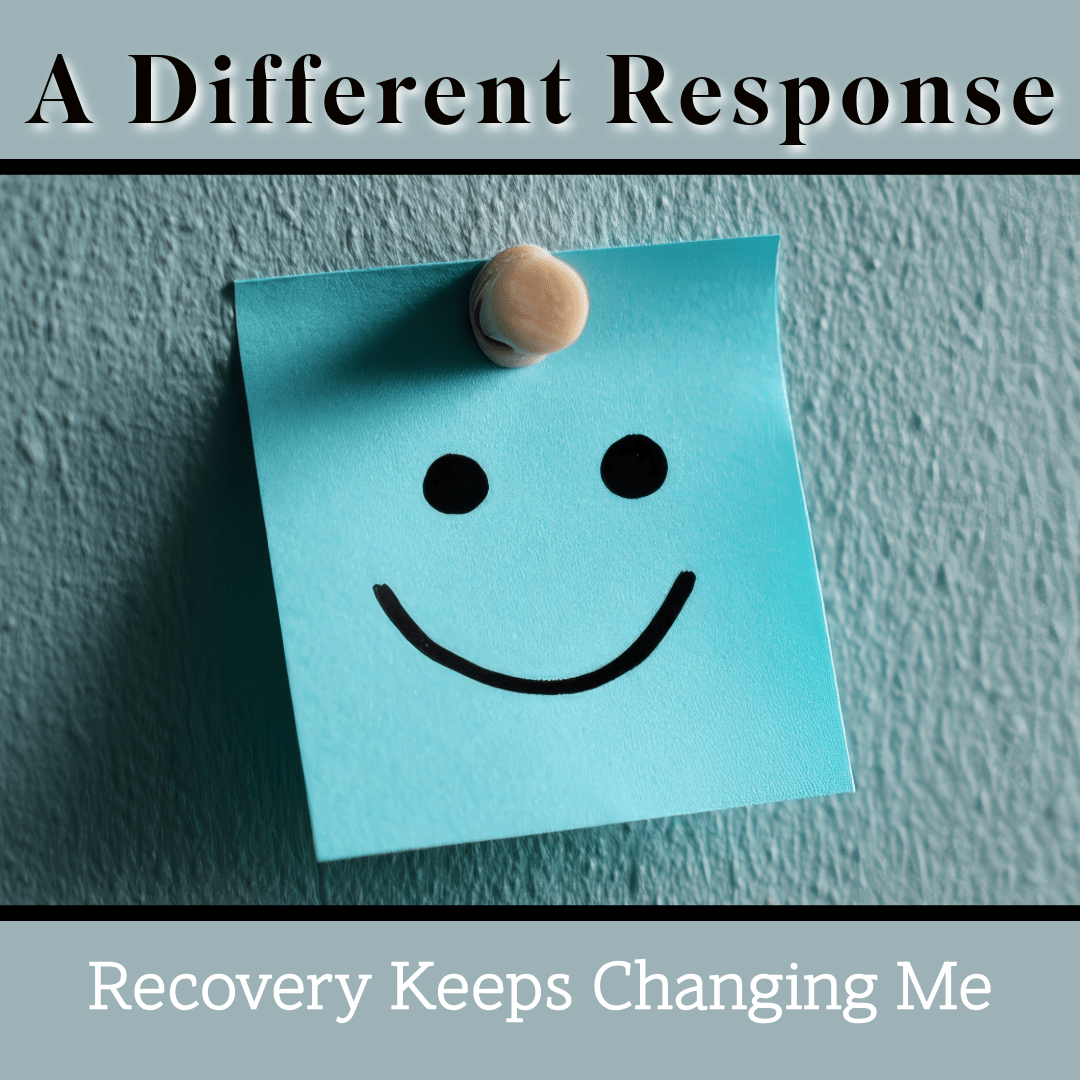
A Different Response

Recovery keeps changing me.

Be transformed by the renewing of your mind. Romans 12:2

I had one of those subtle spiritual awakening moments last week, the kind that shows up in everyday life and catches me off guard. It was real and unintentional. I promised my wife I would take some important, time-sensitive documents into work and have them scanned so we could get digital copies. I forgot the first day. The next day I remembered, put them into a manila folder, and made sure they were in my backpack. As I was heading out to work, I noticed a small note my wife had taped up on the door. It simply said “Documents” with a smiley face and a heart. When I saw it, I smiled and chuckled to myself. I genuinely thought it was a thoughtful and kind gesture. That was unexpected for me. I stopped for a moment and thanked God for opening my eyes to the heart behind the note.

There was a time, not too long ago either, when that same note would have irritated me. I would have felt corrected or nagged. I would have thought I already remembered, why are you telling me again? I would get defensive and irritable without even noticing it, and I didn’t know how much my reactions were shaped by fear, pride, and old patterns I never questioned. But this time something different happened. I saw the note and instead of feeling annoyed, I felt grateful. Grateful for her heart. Grateful for the reminder. Grateful that my first thought was kindness instead of irritation. And most importantly, I felt loved. It dawned on me and I saw it. I wasn’t being pestered, I was being reminded that she cared about me.

That is the gift and miracle of recovery. I could see the shift in my thinking, and I started feeling differently. Although my wife had left many similar notes in the past, this was the first time I could see her heart instead of my hurt. This is a new way of seeing things. Not through hurt or experiences of the past, but through acceptance and love. I am learning healthier ways to respond than I used to and I feel good about that. I am proud of myself for it. Not pride as in ego, but a real self-esteem where I can see myself as a person of value and worth. One worthy of love. That humbles me and collapses my defenses. I now notice and feel the difference in how I respond. I live and relate to others in healthier ways, and I don’t take that lightly. This transformation in how I see things heals old wounds and invites hope to fill my soul. This kind of change doesn’t happen by accident either. It comes from doing step work and being willing to change.

Prayer: Father, thank You for the changes you are making in me. I am grateful that You are allowing me to see the heart of others as You do. Help me to keep confronting old thought patterns and being open to new ways of thinking. Give me the courage to make the changes I need to make. Amen

3 More Hours

Choosing between frustration and peace

If you wait for perfect conditions, you will never get anything done. Ecclesiastes 11:4

During the holidays, we like to do simple crafts and activities together as a family. One of our little traditions is making chocolate-covered pretzels. We placed our order for the things we needed at 9:00 a.m., with a promised delivery time of noon. Instead, the order was delayed and then disappeared altogether. Never filled, let alone delivered. Frustration started filling the room. My wife was on the phone trying to fix it, growing more irritated by the minute. I was sitting on the couch watching it unfold, not in the middle of the conflict but close enough to feel the tension and see the smoke coming out of her ears. She was upset, uncharacteristically short-tempered, and understandably frustrated. Before long, that frustration turned toward me for not jumping in to fix it. If I had been the one on the phone, I probably would have felt the same way. I’ve been in that spot before, and I’ve reacted worse than she did.

It became clear that no matter what we said, how much we complained, or how frustrated we became, the delivery wasn’t within our control. We couldn’t make anyone respond differently. We couldn’t speed things up. We couldn’t fix the delay or undo the mistake. We had no control over what was happening with the order, and it didn’t seem like anyone on the other end of the phone did either. No amount of frustration was going to change that. What we did have control over was simple, almost embarrassingly simple. Our response. We could stop arguing with people about something we couldn’t change and decide what to do next. Instead, we resisted that option. We stayed on the phone. We kept pressing. We kept trying to force a solution that wasn’t coming. Looking back, I wasn’t just watching a delay. I was watching how hard it is for me to let go of control when I feel I’ve been wronged.

We stayed there for three more hours. Three more hours of phone calls, explanations, and frustration. Three more hours of trying to convince someone else they were wrong. Three more hours of sitting in powerlessness, hoping control would eventually show up and fix things. Looking back, it’s almost humorous. I didn’t just wait three more hours for a delivery. I chose three more hours of anxiety, irritation, and resistance. Eventually, I did the only thing that was actually within my power. I got up off my butt, went to the store, picked up what we needed, and came home. By then, my wife had worked through her frustration, and the tension had passed. We were still able to do what we planned to do. It was just delayed. The real loss wasn’t the delay. It was the time I spent sitting still, insisting on fighting something I couldn’t change. I’m reminded how often I do this in life. I sit in discomfort waiting for someone else to change, waiting for circumstances to bend, waiting for tomorrow, instead of taking action right now. I didn’t lose hours because of the problem. I lost them because I refused to let go of control. And every time I do, I pay the same price. Not in time, but in peace.

Prayer

Father, help me recognize when I am holding on to control instead of choosing peace. Show me where I am waiting when I need to take action. Give me the courage to act on what is within my power. Teach me to respond instead of react. Thank You for the peace I receive when I choose to be happy instead of being right. Amen.

The Hurt That Opened My Eyes

Pain broke through my denial and I finally accepted the truth

He brought me up from a horrible pit, out of the mud and clay, and set my feet on a rock. Psalm 40:2

I will never forget the day everything fell apart. After twenty years of marriage, my wife told me she was leaving. Not thinking or talking about leaving. Leaving. She already had a place lined up, had spoken with our teenage kids, and asked me not to be there when she moved out. She had been planning this for a long time, and I had been pretending not to see it. When she said I love you, but I’m not in love with you, something inside me shattered. The shock and confusion filled my whole being. It felt like the rug had been pulled out from under my life, and I remember standing there not knowing who I was anymore or where I would end up.

A few months earlier I had already told a coworker I thought we were headed toward divorce. We had a separation agreement that said we were separated but living in the same house. I wasn’t as blindsided as I told myself. I just didn’t want to face the truth because the truth hurt. I saw things that didn’t make sense, or maybe they did, but I didn’t want to look any closer. I told myself stories. I tried to keep the illusion of a family even though it was slipping through my fingers. Ignoring reality felt easier than honesty until it wasn’t, and denial only made the crash harder when it finally came.

Looking back, that day was the beginning of my recovery, even though it didn’t seem like it. It’s what I later learned was called hitting bottom. Pain finally stripped away the stories, the lies that I told myself. The shock forced me to stop pretending. Losing what I thought I couldn’t live without opened the door for God to meet me in a place I had never let Him into before. It pushed me toward honesty, a truth I had been running from. When my world fell apart, something new began. I didn’t feel strength. I didn’t feel hope. But I did feel the truth, and that was eventually enough to cause me to humble myself and look for help. I had to face my life as it actually was, not as I falsely wished it were. And as painful as that was, it created a small opening for me to surrender to God and allow Him into the anguish and heartache I had been concealing in the shadows of my heart.

The solution didn’t come overnight and it didn’t come the way I thought it would. But it did come. It came by me working the steps and opening the hidden places of my heart to God and to my sponsor. I started doing the simple things they told me to do every day. I showed up, shared honestly, and took one small action at a time. Little by little, the ground under me began to feel solid again. Pain and hurt were replaced with peace and ease. Resentments were replaced with gratitude. I don’t know exactly how it happened, or even when. I only know that it did as I followed the prescription they gave me: going to meetings and working the steps with a sponsor. Keep coming back, it works.

Prayer:
Father, thank You for being close to me when my world fell apart. Thank You for not giving up on me and leading me to recovery. Help me to always stay honest about what is real and let You into the places I try to hide. Give me the courage to keep walking this path one day at a time. Thank You for the peace You give in place of where there used to be pain. Amen.

Trust Takes Time

Surrender Is a Process

When I am afraid, I put my trust in You. Psalm 56:3

I’ve noticed I write a lot about surrender and trust. It really bothered me. I wondered if it meant I wasn’t growing in my recovery or that I should be past this by now. I thought maybe it pointed to unresolved issues I still hadn’t dealt with. But then I realized something different. These are the places where my deepest wounds sit. Growing up with fears of rejection and abandonment shaped the way I learned to survive. It left me with severe trust issues, and to feel safe, I tried to control everything. Even today, these are my biggest struggles, so it makes sense that trust and surrender keep showing up in my writing and my recovery. This is where I’m learning to rest and let go of control. But those childhood fears are still there and make surrender hard.

Today I had one of those aha moments. I realized that this is something I will probably have to work on for the rest of my life. That doesn’t mean that I’m stuck and never able to change. It simply means it’s a process. I had 42 years of unhealthy dysfunctional living, including my formative childhood years. That doesn’t just go away overnight. It’s going to take time, one of those four letter words I so dread. I have to learn how to live healthy and free. But the difference is that now I’m aware. I’m awake to what’s happening inside me. These old fears still get stirred up from time to time, but not in the same way they used to. They don’t happen as often. And they don’t knock me down for days or even hours anymore. They no longer define me. I can sense the changes happening daily.

These changes are working a transformation in me, starting with how I perceive myself. And that works its way down into my daily thinking. By committing myself to writing, step work with my sponsor, and going to meetings, I am healing inside. As a result, I feel a sense of peace and security I never received before. Now when something makes me afraid, I don’t have to spiral out of control. I pray and ask God to help, write about whatever is upsetting me, and talk it through with my sponsor. I figure out what my part is, name the emotions, and put them where they belong instead of letting them ruin my whole day. Recovery has taught me how to respond in healthy ways instead of react. That’s where the real and felt healing is. Not in never struggling again, but in knowing what to do when the feelings begin to surface again. Knowing that this is a lifelong process is actually a comfort. I accept that I am not permanently damaged. I have a way to think, feel, and get better. It is in using these tools and allowing myself the same grace I have been offered by others in recovery.

Prayer
Father, I thank You for always being there for me, even when no one else was. Help me to trust You when fear shows up and I am tempted to take control. Keep me aware and honest about what’s happening inside me. Thank You for the changes You are working in me, even when they feel slow. Help me surrender to You and trust that You will always take care of me. Amen.