A Trust Problem

Feeling Safe

My need to control uncovered a truth I was blind to. I didn’t trust God or the people who love me.

Whenever I am afraid, I will trust in You. Psalm 56:3

I was listening to a speaker and started meditating on what she said. She shared that one of the reasons she argued in relationships was because she felt out of control. As soon as I heard that, I knew that was me. It was almost like I could finish what she was saying without ever hearing it. I felt like there was a huge spotlight shining on me and God was saying “This is you pal.” I realized that my first reaction in conflict was to defend and argue my position and beliefs. And I know it was because I felt out of control. As I meditated on it more and thought back on my relationships, I realized that my initial reaction when I feel out of control was always to fight. I felt attacked and would immediately defend myself and argue my position because being in control made me feel safe.

Quite honestly this became a huge problem in my marriage. A few years back, my relationship with my wife wasn’t the greatest. Our communication was suffering. We loved each other very much, but we argued a lot. We both love God. We’re both in recovery. We were both trying to do our best. We would pray about our problems and sincerely want things to be different, but somehow we would find ourselves having the same arguments over and over again. Many of the arguments were over stupid things too, that really didn’t matter. Then those little things would turn into “a thing” themselves. It was insane. I would get frustrated and honestly couldn’t understand why we kept getting stuck repeating the same pattern. Last year, I decided to start applying some recovery principles to my marriage more intentionally. One of those principles was simply considering the possibility exists that my wife could be right. Another was accepting things as they are instead of insisting they be the way I wanted them to be. Many times that meant keeping my mouth shut and listening instead of immediately responding, defending myself, or acting like a victim. The results were remarkable. Our relationship improved dramatically. We argued less, enjoyed each other more, and experienced a level of peace that had been missing for a while. Secretly, I thought it was because I was being “recovery man” and I patted myself on the back, because in my mind I was working my recovery. Is that pride? Yes! I am embarrassed to admit I thought this way, but I am just being honest. I was told early on that true healing comes from being completely honest.

Initially, I made those changes because I wanted peace in my relationship and didn’t want to argue. I was practicing recovery principles, keeping my mouth shut more often, and trying not to react. In my mind, that was why things were getting better. And there is some truth to that. But as I reflected on what the speaker said, I began to see something I had missed. One of the recovery principles I was trying to practice was considering the possibility exists that my wife could be right. But it was only an intellectual acknowledgement, because I never really considered that she might actually be right about me. For years she told me that I wasn’t taking responsibility for my part in our conflicts. I heard her words, but I mostly dismissed them as her trying to work my program. I would apologize and not give it another thought, and secretly continue believing that the real problem was not me.

As I got honest with myself, I began to see that my need to defend myself and argue wasn’t really about being right at all. It was about trust. When I felt out of control, I felt unsafe, and when I felt unsafe, I tried to regain control by defending my position and convincing others to see things my way. What I am learning now is that I don’t have to do that. I can trust God. I can trust that the people who love me are not my enemies. I don’t have to prove my point or win every disagreement to feel safe. I can listen. I can consider that someone else might really be right, even about me. The more I learn to trust, the less I feel the need to control. And the less I try to control, the more peace I experience in my life, my marriage, and my relationships. What I once thought was a communication problem seems to really be a trust problem, and learning to trust is bringing a freedom I never found through arguing, defending, or trying to be right. And that is the gift of recovery for me.

Prayer

Father, thank You for showing me that I don’t always have to defend myself. Help me let go of the need to be in control. Teach me how to trust You when I am afraid, and to trust those who love me. Amen.

Accepting Life As It Is

Surrendering Control

I’m learning that peace is not found in controlling everything around me. It is found in learning to trust God in the uncertainty.

Father, if you are willing, take this cup away from me. However, not my will but your will be done. Matthew 26:39

I have two grown children whom I love very much. Unfortunately, they both live in another state, so I don’t get to see them as often as I would like. We talk a couple times a week, usually through text messages, and most of the time I am the one who initiates the conversation. Before recovery, that would have really bothered me. My thinking was very all or nothing. “If they won’t call me, then I won’t call them.” Or, “Why do I always have to be the one reaching out?” But through recovery I am learning to accept relationships as they are instead of demanding they happen on my terms. I am learning to stop rejecting people simply because things are not happening the way I want them to happen. That is what my sponsor says is learning to live in the gray. It is somewhere in between the all or nothing thinking that used to consume me.

Before recovery, I saw almost everything as black and white. Things were either right or wrong. Good or bad. Safe or unsafe. I liked certainty because certainty felt safe to me. If something fit neatly into a category, then I knew how to respond to it. I knew how to control it. Or at least I could plan and be ready in case things didn’t go as planned. It made me feel safe. But life rarely works that way. People are complicated. Relationships are complicated. Emotions are complicated. Things don’t always go as planned. Doing a fearless moral inventory has forced me to start facing the uncomfortable truth that much of life happens somewhere in the gray.

The gray makes me uncomfortable because I don’t know what will happen. I don’t know how to protect myself. I don’t know how to be prepared for or avoid potentially being hurt. Accepting the gray requires trust. It requires patience. It requires me to accept uncertainty instead of rushing to fix it or force it into a category that makes me feel better. Which I now do, although usually reluctantly. One of the things I have discovered through step work with my sponsor is that many times my attempts to “help” or “fix” people were not as selfless as I made them out to be. A lot of it was driven by my own need to feel in control. If I could manipulate and control the situation, calm the conflict, or get the outcome I wanted, it gave me relief. What I have learned since is that my need for control was really giving a dopamine release in my brain. That release temporarily soothed my anxiety and discomfort. It made me feel better, so I sought to feel better again. It was my addiction. I was trying to feel better by managing everyone and everything around me. That realization was hard for me to admit, but by staying honest with myself in my recovery I am learning to face my motives realistically instead of staying in denial about them.

Working through the steps has helped me realize that emotional sobriety or behavioral change is not found in controlling everything around me. It is found in learning how to live honestly, peacefully, and faithfully even when things feel uncertain. I still do not like the gray. I do not like not knowing what is going to happen. I do not like feeling unprepared or out of control. But I am learning how to accept being uncomfortable instead of trying to escape it. I am learning that as I relinquish control God is present in the gray ready to help. And strangely enough, by accepting the gray areas of life, I can now see and appreciate the vibrant areas of life that are full of color, depth and complexity. And that is the gift of recovery for me.

Prayer

Father, help me to stop fighting reality and demanding that life happen on my terms. Teach me to surrender the gray areas of my life to You. Help me to stop trying to control everything around me. Help me to trust You when I feel uncertain, uncomfortable, or afraid. Amen.

When I Changed, Everything Changed

From Control to Peace

The change I was chasing didn’t start with them. It started with me.

First clean the inside of the cup and dish, and then the outside will also be clean. Matthew 23:26

I was listening to a newcomer share their story, and it brought me back to when I first came into recovery. I can still remember all the times I tried to fix the addiction of my qualifier. I destroyed their drug of choice. I left books, articles, and magazines out on the coffee table, opened to the exact page I wanted them to read. I underlined lines so they would see it. I left Bibles open with verses highlighted, hoping something would finally click. I knew that I could not change them. Any change would have to come from their own self-awareness. I was hoping my “hints” would nudge them and help them discover it on their own, that they needed to change. These were my hints about the damage addiction was causing, not just to them, but to our relationship and our family.

At the time, I was at my wits end. I was depressed, alone, sad, and angry. My life and family were falling apart. In recovery, we call that out of control and unmanageable. I really thought I was helping. I thought if they would just change, everything would be better. I would be happy. Our life would be better. Our family would be whole. I believed the solution was to fix them. I see now that what I called helping was really control and manipulation.

Since working through the steps of recovery, I have discovered how I used these same tactics in my dealings with other people, not just the addict. Friends, coworkers, subordinates, supervisors, customers, basically everyone I met. I was trying to get them to do what I wanted, what I thought was best. I did this through manipulation and control. I may have gotten an initial response, but seldom did it ever stick, and many times resentment was left behind. I was always left frustrated. I have learned that this was a form of pride showing up because of my low self-esteem. I didn’t think I was good enough, so I overcompensated by making myself, in my own eyes, the one with the answers. I felt uncomfortable not knowing how to deal with situations where I wasn’t in control. Trying to be in control of everything and everyone is what made me feel safe.

Recovery has taught me to focus on me so that I can have peace and happiness even in the middle of chaos. That kind of thinking wasn’t immediate. I didn’t come into recovery wanting to change myself. I wanted to change the situation. By that, I mean I wanted to change them. I thought I was right and they were wrong, and that became my problem. Over time, attending meetings, working the steps, and meeting with my sponsor, something started to shift. I began to see things differently. Think differently. And because of that, I began to experience the peace I had been chasing. Even though the other person didn’t change at all, I changed. I just noticed one day things looked different. They were suddenly better. I felt different. I was happy. I started liking who I was. That was a first. When I changed, everything else changed. That is the gift of recovery for me.

Prayer
Father, thank You for leading me to recovery. Thank You for showing me things I couldn’t see before. Help me to keep focusing on my part. Help me stop trying to control everything and everyone else. Teach me how to trust You fully. I surrender to You and Your will. Keep changing me from the inside out. Amen.

Connection Over Control

I didn’t realize how much I was trying to control connection… until I saw it in my dog.

Be still before the Lord and wait patiently for him… Psalm 37:7

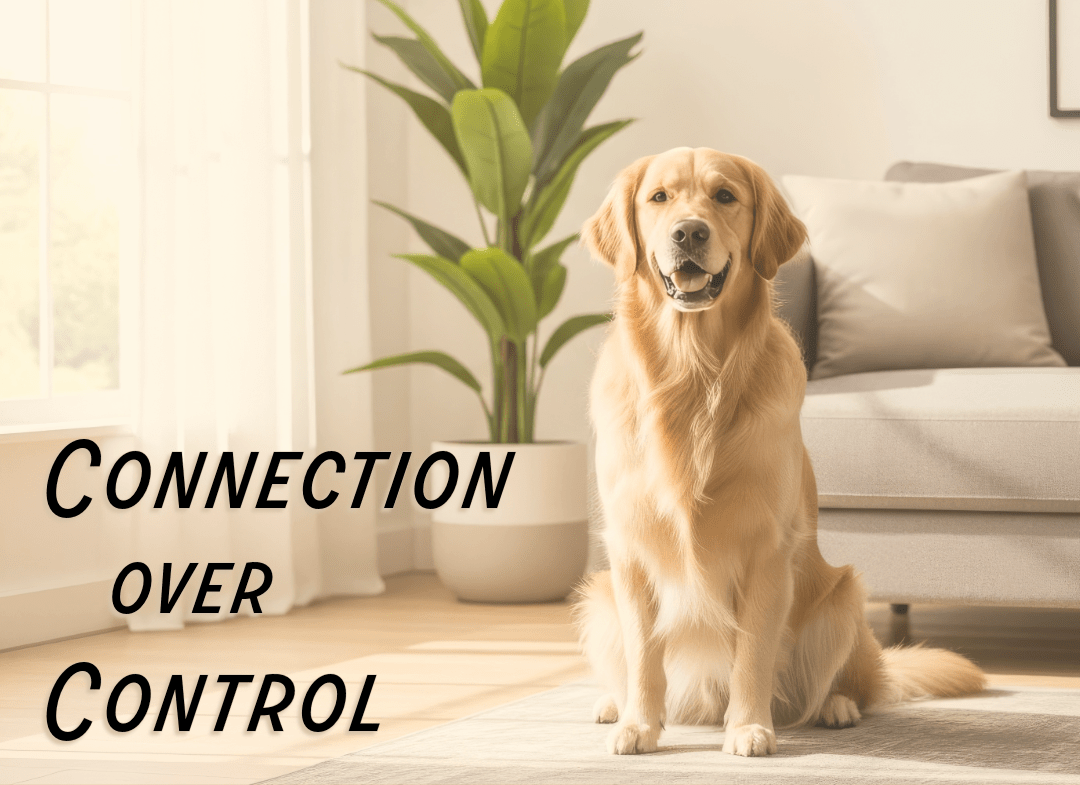
This morning, I had another lesson from my dog. She’s a golden retriever and has the sweetest temperament. Every morning, I sit in my La-Z-Boy chair with my coffee and finish up my writing from the night before. In that quiet stillness, I lean back, put the footrest up, grab my laptop, and start typing. Like clockwork, within about thirty minutes, she walks in and sits right in front of me. She doesn’t move. She doesn’t make a sound. She just sits there and waits. When I’m done writing, I put the laptop down, drop the footrest, and call her over. I already know what she wants.

I reach down and pet her, love on her, hug her, pray over her, speak blessings over her, and tell her I love her. And when I’m done, she just walks away into the other room. What she wanted was connection. She wanted to be touched. She knew exactly what she wanted. And she let that need be known without demanding it. She showed up, sat there, and waited patiently for me to respond. God spoke to me through that. The lesson I got from that was simple and equally profound. She didn’t force anything. She didn’t act out. She simply made her need known, and then she trusted enough to wait for it. She trusted me to meet her need.

It made me stop and look at myself. Do I trust God that way with my needs? Do I just show up and patiently wait for His goodness? How many times do I not even let my needs be known? Or when I do, I come across demanding or frustrated instead of honest and vulnerable. How often am I unwilling to wait for what I want or need? Do I revert to old behaviors and shut down or try to force outcomes?

But today I saw something different. It was a simple object lesson for me. There’s a way to be honest about what I need without pressure, without control, and without fear. What I realized is… I want connection too. But a lot of times I’m either afraid to ask for it, or I try to force it on my terms and my timeline. And when it doesn’t come the way I expect, I miss it completely. I am seeing that it’s not about controlling how it comes. It’s about really being honest, showing up, and trusting God enough to receive it however and whenever it comes. That’s what I’m learning in recovery. Just being real about what I need, letting go of control, and trusting God with the timing.

Prayer
Father, help me to be honest about what I need. Teach me not to hide it or try to force it. Show me how to trust You and be patient with Your timing. Help me receive what You give, the way You give it. Thank You. Amen.

Addicted to Being Right

A fool thinks he is right, but a wise person listens to others. Proverbs 12:15

I had an aha moment after an argument with my wife. Her version of what happened was not accurate. The facts, the details, and even the way she described my motives and inner responses did not line up with what actually occurred. I was being told what I felt, and it was not true. Because of that, I dismissed everything she was saying. I told myself that if the facts were wrong, then her reaction must be her responsibility. I focused on correcting details instead of acknowledging that she was hurt. Once accuracy was in question, I stopped listening to anything else.

As I prayed, journaled, and tried to find my part, I kept coming up empty. That was unusual for me because I am normally able to see it. I even made a list of probable options, which is something I do when I am stuck. The possibilities ranged from extreme to reasonable. Maybe she was completely wrong. Maybe I was missing something obvious. Maybe past trauma was being triggered. Maybe something I said landed harder than I intended. I did recognize one comment I made that was harsh, and I apologized for it immediately. But days later, there was still distance between us, and none of my reasoning fully explained why.

I was doing some step work, and that is when I saw it. I was addicted to being right. That was my part. I was so focused on accuracy or details that I could not be present with her hurt. Being right mattered more to me than trying to understand. I kept looking for my part in the event itself, when my part was actually in how I responded to what she said. Even though I did not do what I was being accused of, my defensiveness and dismissiveness created more distance. The problem was not the facts. The problem was me and how I reacted.

My awareness came by humbling myself to God and following the prescription that recovery offers. That meant I had to stop defending myself and ask God to show me what I could not see. He did. God is faithful that way. It did not come through prayer alone. I had to do something too. I had to put legs to my prayers. I had to write and be honest with myself, and then let that truth sit for a moment. As I did, I began to see how my need to be right had become a form of self-protection and control. My character defects were being triggered, and my insistence on accuracy was just another form of denial. That realization did not excuse my behavior, but it did open the door to change. I cannot always control whether facts are understood, but I am responsible for how I respond. Letting go of my need to be right made room for honesty, connection, and healing.

Prayer

Father God, help me to humble myself and listen to others. Help me hear what they mean, not just the words they are saying. Continue to show me my part in each situation. Give me the courage to change and the power to carry it out. Amen.

Unsolicited Advice

Listening without fixing

My dear brothers and sisters, always be more willing to listen than to speak. Keep control of your anger. James 1:19

I am socially awkward. If you know me, you know this is true. I feel uncomfortable in social settings because I do not always know how to respond or interact in a healthy way. Before recovery, I never thought anything was wrong. I thought I was normal and healthy. The truth is, I did not know any better. I was operating on the best information I had at the time. When someone shared a struggle, a problem, or something they were dealing with, my first instinct was to fix it. I jumped straight to advice. I believed they were telling me for a reason. Growing up, when a problem showed up, I was expected to solve it. I had to come up with an answer. That way of relating was shaped by growing up in a family affected by alcoholism, and I carried it into adulthood without questioning it.

For a long time, I did not believe my advice was unsolicited. In my mind, they came to me knowing who I was and how I operated. They told me their problem, so surely they wanted my input. Why else would they share it? Recovery helped me see how distorted that thinking was. I never shared my own hurts, feelings, or emotions growing up because they were not safe. They were dismissed, mocked, or punished. I learned to protect myself by staying guarded and intellectual. Giving advice felt safer than being emotionally present. What I called helping was often my discomfort with emotions, both theirs and mine. That is another layer of the damage that alcoholism leaves behind.

Now I am learning to hold my peace and simply listen. That is not easy for me. I have to slow down and remind myself to stay present instead of jumping in with solutions. I am learning tools that help me sit with discomfort rather than escape it. The emotional part of me that I shut down to survive as a child is being brought back to life through working the steps of recovery. When I listen instead of fixing, something changes. I have more peace. My relationships are healthier. People do not pull away from me the way they used to. I am not trying to manage their feelings or my own anxiety through advice. I am learning how to be present. And that is the gift of recovery for me.

Reflection
Where do I try to fix instead of slowing down to listen?

Masters in Manipulation

It takes one to know one.

For God has not given us a spirit of fear, but of power, and of love, and of a sound mind. 2 Timothy 1:7

I remember when I was stalled doing my fourth step. Each week when I met with my sponsor, he would ask how I was doing on my inventory. Each week I would say good. Then the day came when he said, “Ok, next week we start your fifth step.” I swallowed hard… gulp… voice quivering and quaking… “Already?” I mustered. He chuckled and said, “Yeah, it’s been long enough.” And he was right too. I was putting off doing the fifth step because I was afraid. I didn’t know what to expect and knew I would not be in control. I had never done this before. What if he laughed? What if he rejected me? What if he fired me? Would he still like me? What if he thought less of me? All of these thoughts were swirling around in my head.

I find that I often put off doing things that I don’t want to do. It’s not surprising, the things I want to do, I do or make time to do on purpose. But the things I don’t want to do seem to always get relegated off to the future. I wonder why? Sometimes it’s because I just don’t want to do it. Maybe I’m busy, or maybe I just don’t want to stop what I’m doing to do something else. Other times I don’t know why, I just don’t want to do it. But I was thinking about this today, and then I had another thought. Maybe procrastination is just another form of control. You see, if I put something off, I choose when I’m gonna do it. It doesn’t matter what it is either. It could be taking out the trash. It could be folding my clothes. It could be a project at work. It could be calling a relative or meeting up with a long-lost friend. Whatever it is, I’m realizing that when I put it off for the future, sometimes it’s because of control.

I think maybe some elements of fear also show themselves and could be another reason I put things off. I don’t care whether it’s fear or control… I don’t want either of these in my life. Maybe it’s because I have a Master’s degree in manipulation and control, that I can see it from afar off. It takes one to know one, you know what I mean. I realize that some may not see it this way or share my perspective. And this may just be the pendulum swinging back to overcompensate from my extreme dysfunction in this area. Once, I prided myself on being able to convince anyone and talk them into anything, or get them to acquiesce to my reasoning, all manipulation and control. It was in working the steps that I saw these two demons for what they really are, and I do not want anything at all to do with manipulation or control anymore, or ever again. So I run and flee from even the appearance. And boy, can I see it rear its ugly head from a mile away.

Reflection: What’s one thing I’ve been putting off that could bring me peace if I simply did it today?