Why I Didn’t Ask

I Matter

I used to think asking for help meant I was weak and would be rejected. Now I’m learning it leads to getting my needs met and building healthy relationships.

You do not have because you do not ask God. James 4:2

I never used to ask for help. Even when I desperately needed it, I tried to do everything on my own. That was my modus operandi. That was how I survived. Like the good little codependent I was, I believed I had to figure things out by myself. The problem was, I didn’t even really know what I wanted or needed. I didn’t know myself or who I was. More accurately, I was not honest with myself, and I stayed confused. Sometimes I knew I needed something but couldn’t quite identify what. Other times I had an idea but I was afraid to admit I had needs and wants. That would be weakness, and I had learned that weakness gets exploited. Weakness meant pain. So I avoided it. I stayed stuck in a kind of indecision, afraid of making the wrong choice, always thinking what if there could be a better one, the right one later.

I also believed there was a limit to how many times I could ask for help. Like I only had a certain number of requests. Like Aladdin and the genie with only three wishes. I thought I had to make sure I asked for the right thing, not something small or unimportant. I didn’t want to waste it. And if I asked for the wrong thing, what if later I really needed something and was told, “Too bad, you already used your chance.” I even carried this thinking into my relationship with God. I would hold back, even when the need was real. Underneath all of it was the same fear. If I ask, I might be told no. And in my thinking, being told no was the same as being rejected. And that went straight to what I already believed about myself, that I was not good enough.

Honestly, that type of thinking still shows up sometimes even today. The difference is that now my recovery has given me practical tools to bring my thinking back in line and demonstrate healthier behaviors. When this thinking creeps in now, I stop and ask myself what am I feeling, and why? Almost every time it traces back to me feeling like I am not good enough. And when I can identify that little dude, I am able to see it for what it is, my issue. It starts to lose its power. I remind myself of something simple. If someone asked me for help, I would help if I could. I would not refuse them just because. I would not think they used up their chances. This helps me realize that when I ask for help, I am not being unreasonable, and they are not going to reject me or arbitrarily deny my request. When I look at it that way, I can see how distorted and unrealistic my thinking can be.

Today I practice something different. I ask for help when I need it. It’s not always easy. One slogan helps me a lot, “How important is it?”. It helps me not just when I make things bigger than they need to be, but also when I make my needs smaller than they really are. When something is truly important and I need help, I have to ask. Sometimes that means literally telling myself, “Ask for help!” And I do. Almost every time, help comes. The extra benefit is that it strengthens my relationships. They grow closer. What used to feel like weakness is actually where connection happens. And that is the gift of recovery for me.

Prayer

Father, help me ask for what I need. Show me when fear is holding me back. Remind me I am not being rejected. Teach me to trust You and the people You’ve placed in my life. Thank You. Amen.

Detachment With Love

Care Without Control

I thought detachment meant pushing people away. I had to learn it meant loving without managing.

    Each one should carry their own load. Galatians 6:5

Detachment is separating myself emotionally from another person’s behavior. There are healthy attachments and unhealthy attachments, and detachment is breaking free from the unhealthy ones. When I first heard about detachment, I was eager to practice it. I heard it talked about in the rooms and how it was the solution for breaking free from the hold. I learned already I had developed unhealthy attachments and I wanted the freedom spoken about. What I mysteriously missed though was the “with love” part. I heard detachment and I was ready. I did not hear with love.

The first time I tried to practice detachment, I did it by setting a boundary. I was new and thought detachment and boundaries were the same thing. I had never done either before, and when I finally did, it was clumsy and ugly. I remember telling my mom I was getting divorced. She started crying. I had been here before. At first I was angry. I thought she was using her tears to control my emotions and maneuver me into comforting her. I saw it as another attempt to shift the focus away from what I was going through. I was already hurting. I did not want the divorce. My family was being ripped apart. My future felt uncertain. So many emotions were surfacing that I did not even know what I was feeling, except sad and alone. I didn’t have anything left to comfort her. I had heard about detachment and boundaries and wanted to practice what I was learning. Instead of pausing and sorting through my own emotions, I reacted. I said, rather gruffly, why are you crying? This isn’t about you. This is about me. I even said I was setting a boundary and would not be manipulated anymore. She stopped crying and went silent.

Like I said, I was new in recovery and still learning. I had successfully set a boundary, but it wasn’t detachment and it wasn’t with love. Internally I was a kid again. I was still trying to feel safe by controlling the environment. I was trying to protect myself from being engulfed by her feelings because I could barely manage my own. That was not detachment with love. That was fear wrapped up with new language. I was more addicted to approval than I realized. Addicted to her reaction. Addicted to feeling secure based on how she responded to me. As I began to work through the Steps and grow, I stopped looking to other people to determine my value. I have intrinsic value because of my Creator. My sponsor says forgiveness is the best form of detachment, and I think he is right. When I forgive, I let go of trying to control what is not mine.

After working through the Steps with my sponsor, I can honestly say that today things are different. If someone I love starts crying, I pause. I check my urge to control their emotions. I let them have their feelings, and I let myself have mine. I don’t have to fix them or silence them. I don’t have to correct them either. When I need to set a boundary, I do not have to announce it. I just live it. It is for me, not for them. I say what I mean and mean what I say without being mean when I say it. I practice acceptance. The Serenity Prayer helps a lot with that. I offer forgiveness. This is how I know I am practicing detachment with love: I can care without control. That shows love and respect for them and for me.

Prayer
Father, teach me to practice detachment with love. Heal the wounds inside me that cause me to control instead of trust. When I feel uncomfortable, help me pause instead of react. Give me courage to forgive those who have hurt me. Amen.

Yes and No

Finding Balance

In recovery I learned that fear-based no and guilt-based yes are both extremes. Healthy boundaries mean saying what I truly mean.

Let your Yes be Yes, and your No, No. Matthew 5:37

Before recovery I said no to everything. No was my first response. I was a no person. I did not open myself up to invitations. I did not try new things. I stayed guarded. In recovery I began to say yes, but before that, no was how I survived. Why did I say no all the time? I took an honest inventory, and I saw it again. That old character flaw. Not being good enough. I was afraid that if I said yes or opened myself up to an invitation, I would be rejected. And why would I purposely subject myself to that? Growing up in an alcoholic home, I developed survival traits. Those traits kept me safe. But they also kept everyone out. I couldn’t trust anyone. I did not take things at face value. I did not give others the benefit of the doubt. I assumed I would be hurt or let down if I did. So I said no. And I only said yes when I was in control. That was the vicious cycle I lived in. And I never even considered there was another way.

In recovery I began to say yes. Yes to invitations. Yes to new people. Yes to new experiences. Yes to meetings. Yes to service work. Yes to life. And when I started saying yes, I experienced things I had never experienced before. I made new friends. I went new places. I was becoming a different person and I liked it. I began to identify my emotions and appreciate them. Saying yes was good for me. It helped me grow. It helped me soar even. But then I started learning about boundaries. And I realized that as much as I needed to say yes, there were times I needed to say no as well. In recovery, I am learning that I don’t have to stay in either extreme.

It was such an odd paradigm shift and paradox. Before recovery I never said yes. Always no. But in recovery I began saying yes every time, even when I meant no. I said yes when I meant no because I felt guilty and afraid. I liked my new life. I liked how I was growing. I did not want to regress back to my old life. And so I overcorrected. I went from fear-based no to guilt-based yes. I was confused and tired.

I am grateful for my friends in recovery and my sponsor who helped me stay centered and grounded. They taught me that yes and no are both healthy boundaries. Neither is good or bad in itself. Accepting invitations and new adventures is exciting and invigorating. Saying no kept me safe, but it did not lead to growth or learning anything new. Saying no out of fear left me stagnant and alone. Saying yes out of guilt left me exhausted and resentful. Working through the Steps is teaching me balance. I am learning to say yes when I mean yes and to say no when I mean no. When I do, I am able to live a well-rounded life without guilt and fear.

Prayer

Father, help me say yes when I mean yes and no when I mean no. Take away the fear and guilt of my past. Teach me how to consistently practice balance in my recovery. Thank You for helping me. Amen.

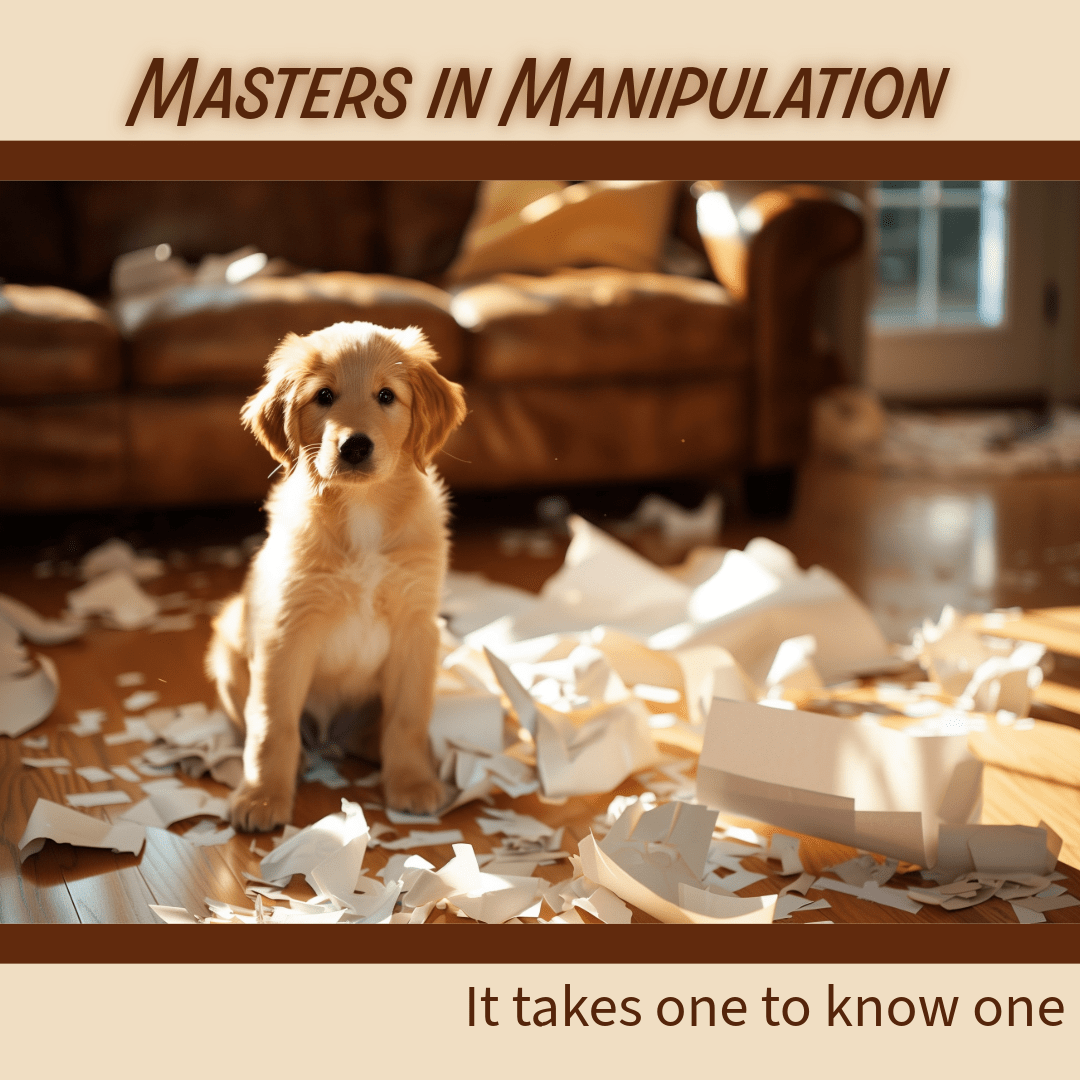
Masters in Manipulation

It takes one to know one.

For God has not given us a spirit of fear, but of power, and of love, and of a sound mind. 2 Timothy 1:7

I remember when I was stalled doing my fourth step. Each week when I met with my sponsor, he would ask how I was doing on my inventory. Each week I would say good. Then the day came when he said, “Ok, next week we start your fifth step.” I swallowed hard… gulp… voice quivering and quaking… “Already?” I mustered. He chuckled and said, “Yeah, it’s been long enough.” And he was right too. I was putting off doing the fifth step because I was afraid. I didn’t know what to expect and knew I would not be in control. I had never done this before. What if he laughed? What if he rejected me? What if he fired me? Would he still like me? What if he thought less of me? All of these thoughts were swirling around in my head.

I find that I often put off doing things that I don’t want to do. It’s not surprising, the things I want to do, I do or make time to do on purpose. But the things I don’t want to do seem to always get relegated off to the future. I wonder why? Sometimes it’s because I just don’t want to do it. Maybe I’m busy, or maybe I just don’t want to stop what I’m doing to do something else. Other times I don’t know why, I just don’t want to do it. But I was thinking about this today, and then I had another thought. Maybe procrastination is just another form of control. You see, if I put something off, I choose when I’m gonna do it. It doesn’t matter what it is either. It could be taking out the trash. It could be folding my clothes. It could be a project at work. It could be calling a relative or meeting up with a long-lost friend. Whatever it is, I’m realizing that when I put it off for the future, sometimes it’s because of control.

I think maybe some elements of fear also show themselves and could be another reason I put things off. I don’t care whether it’s fear or control… I don’t want either of these in my life. Maybe it’s because I have a Master’s degree in manipulation and control, that I can see it from afar off. It takes one to know one, you know what I mean. I realize that some may not see it this way or share my perspective. And this may just be the pendulum swinging back to overcompensate from my extreme dysfunction in this area. Once, I prided myself on being able to convince anyone and talk them into anything, or get them to acquiesce to my reasoning, all manipulation and control. It was in working the steps that I saw these two demons for what they really are, and I do not want anything at all to do with manipulation or control anymore, or ever again. So I run and flee from even the appearance. And boy, can I see it rear its ugly head from a mile away.

Reflection: What’s one thing I’ve been putting off that could bring me peace if I simply did it today?